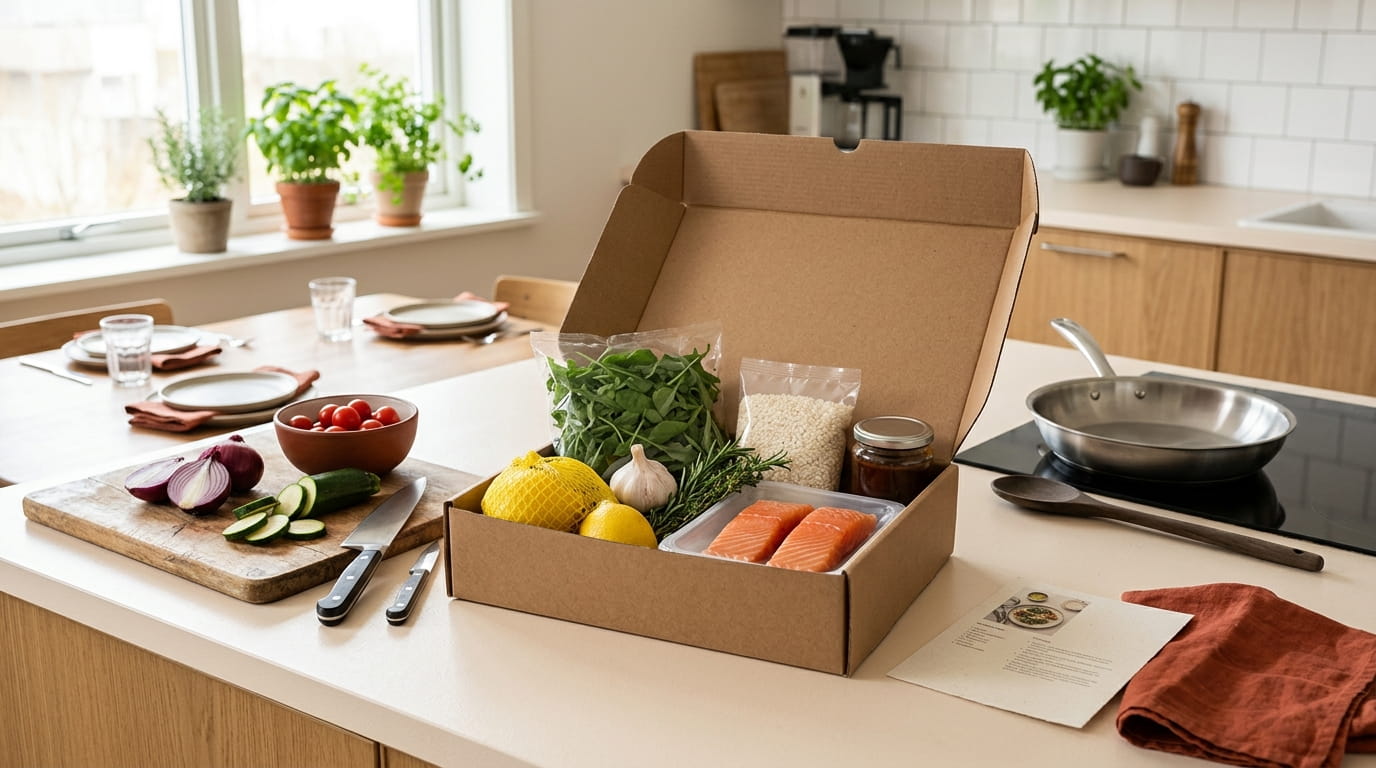
Picking a meal kit delivery service sounds simple until you actually try to compare fifteen websites, each one claiming to be the best option for families. The best meal kit delivery for families depends less on which company has the flashiest homepage and more on a few practical things: how many picky eaters you’re feeding, how much time you have on a Tuesday night, and whether “quick” actually means quick once the box shows up.
Most families don’t need every service on the market. They need two or three that actually fit their week, based on things like prep time, ingredient quality, and how forgiving the plan is when life gets busy and a box goes unused.
This list breaks down the services that consistently show up as strong picks for families in current reviews, along with the real tradeoffs each one comes with. Some are built for hands on cooking with the kids involved. Others are closer to a reheat and serve solution for the weeks nobody has the energy to chop an onion. Look through a few options below and see which pattern matches how your household actually eats.
1. HelloFresh: The Most Consistent Pick for Feeding a Whole Family

HelloFresh shows up as a top family pick across nearly every current review, and the reason is consistency. The recipes are chef designed but written simply enough that a first time cook can follow them without guessing.
The ingredient portions are sized generously enough that most families don’t need to order extra sides, which keeps the actual cost per meal more predictable than it looks at first glance.
Check current promotions directly on their site before signing up, since introductory offers change often and vary by region.
2. Home Chef: The Easiest Service to Customize Around Picky Eaters
Every family has at least one person who won’t eat mushrooms, or refuses anything with a sauce touching the rice. Home Chef built its whole reputation around solving that problem.
| Standard Meal Kit | Home Chef |
|---|---|
| Fixed recipe, no ingredient swaps. | Swap proteins or add extra portions per recipe. |
| One version of each meal for everyone. | Oven ready options for nights nobody wants to cook. |
That swap feature alone makes it worth a look if dinner in your house usually involves at least one round of negotiation.
3. EveryPlate: The Budget Option That Still Feels Like a Real Meal Kit
A lot of budget meal kits cut corners in ways you notice fast, thinner portions, fewer ingredients, recipes that taste like an afterthought. EveryPlate manages to stay affordable without most of those trade offs.
💡 Quick Tip
The menu rotates through simpler, pantry friendly recipes, which keeps the price down. If your family likes more adventurous flavors, pair this with one splurge meal from another service on off weeks.
It won’t wow anyone with a five star meal, but it consistently gets dinner on the table without straining a tight grocery budget.
4. Green Chef: The Organic Pick for Families With Specific Diets

Families managing a gluten sensitivity, a keto plan, or just a preference for organic ingredients often end up frustrated by services that treat those needs as an afterthought.
Start by filtering the weekly menu by your specific diet, not just browsing everything.
Check which ingredients are labeled organic versus which are simply diet compliant.
Compare the organic plan cost against a standard plan before committing.
Worth the higher price for families who already prioritize organic groceries anyway, since it removes a step from an already long shopping list.
5. Blue Apron: The Choice for Parents Who Actually Enjoy Cooking
Some parents don’t want dinner solved for them, they want an excuse to actually cook something worth the effort once the kids are old enough to sit through a real meal. Blue Apron leans into that.
The same five weeknight dinners on repeat, out of habit more than choice.
New techniques and ingredients that make weeknight cooking feel less routine.
Best for households where at least one adult treats cooking as a way to unwind, not just a chore to get through before bedtime.
6. Factor: Ready Made Meals for Weeks You Can’t Cook at All
Some weeks, cooking isn’t happening no matter how good the recipe is. Factor skips the prep step entirely and delivers meals that only need a few minutes in the microwave.
The meals arrive fully cooked and chilled, portioned for one person per container, which makes it easy for family members on different schedules to grab something without coordinating a shared dinner time.
This is the option for weeks when even a fifteen minute recipe feels like too much, not a replacement for regular family cooking.
Best treated as a backup plan for the busiest stretch of the month rather than the only meal option week after week.
7. The Mistake Families Make When Picking a Plan Size

Most services ask how many people you’re feeding and how many meals per week, and most families answer that question based on how they eat on a calm night, not a real one.
Size the plan for your hungriest eater, not your average one.
Start with fewer meals per week than you think you need.
Ordering the smallest portion size to save money upfront.
Committing to five meals a week before testing the service.
A smaller box that leaves everyone still hungry costs more in the end once you add a second dinner on top of it.
8. Marley Spoon: A Chef Driven Menu Without the Chef Driven Price
Martha Stewart’s name attached to a meal kit brings a certain expectation, and Marley Spoon generally lives up to it with recipes that taste more restaurant style than most competitors in the same price range.
Before signing up, here’s what actually stands out on the menu side:
What makes the menu different
One noted downside in reviews is packaging, so plan to have some extra room in the recycling bin on delivery day.
9. Hungryroot: A Hybrid Option for Families Who Want Groceries Too
Not every family wants a full meal kit every night. Some just want groceries with a few recipe suggestions attached, and Hungryroot fills that gap differently than a traditional service.
Works best for families who already grocery shop online and want the recipe planning built into that habit instead of layered on top of it.
10. Dinnerly: The No Frills Choice for Stretching a Grocery Budget

Dinnerly skips a lot of the extras other services build in, printed recipe cards instead of a glossy booklet, simpler packaging, fewer specialty ingredients, and that stripped down approach is exactly what keeps the price lower.
- Recipes lean on fewer, more common ingredients, which cuts prep time down too.
- Digital only recipe cards mean less paper waste with each box.
- Portion sizes run smaller than some competitors, worth checking before ordering for a big family.
- ▸A solid pick for families testing meal kits for the first time.
- ▸Menu variety runs a bit narrower than pricier competitors.
- ▸Good option to alternate with a pricier service on tighter weeks.
Best suited for a family easing into meal kits without committing to a bigger grocery budget change right away.
11. A Kid Involvement Angle: Which Kits Are Actually Easy Enough for Kids to Help
Getting kids into the kitchen sounds nice in theory, but a lot of meal kit recipes involve hot oil, sharp knives, or timing that falls apart the second a seven year old gets distracted.
💡 Quick Tip
Look for recipes labeled beginner friendly or under thirty minutes, and hand kids the mixing, measuring, and assembly steps rather than anything near the stove.
HelloFresh and Home Chef both tend to have a wider spread of simple, low step recipes each week, which makes it easier to find a kid friendly option without hunting through the whole menu.
12. What Changes When You Switch From a Meal Kit to Prepped Meals
A meal kit and a prepared meal service solve different problems, even though they get lumped together in the same category. Understanding the difference before signing up saves a lot of frustration later.
Thirty minutes of chopping, cooking, and cleanup most weeknights.
Five minutes in the microwave, one dish to wash, dinner done.
The trade off is control. Prepped meals save time but limit how much you can adjust seasoning or swap ingredients once the meal shows up ready to eat.
13. Meal Kit Versus Prepared Meal Delivery, and Which Fits a Busy Week Better
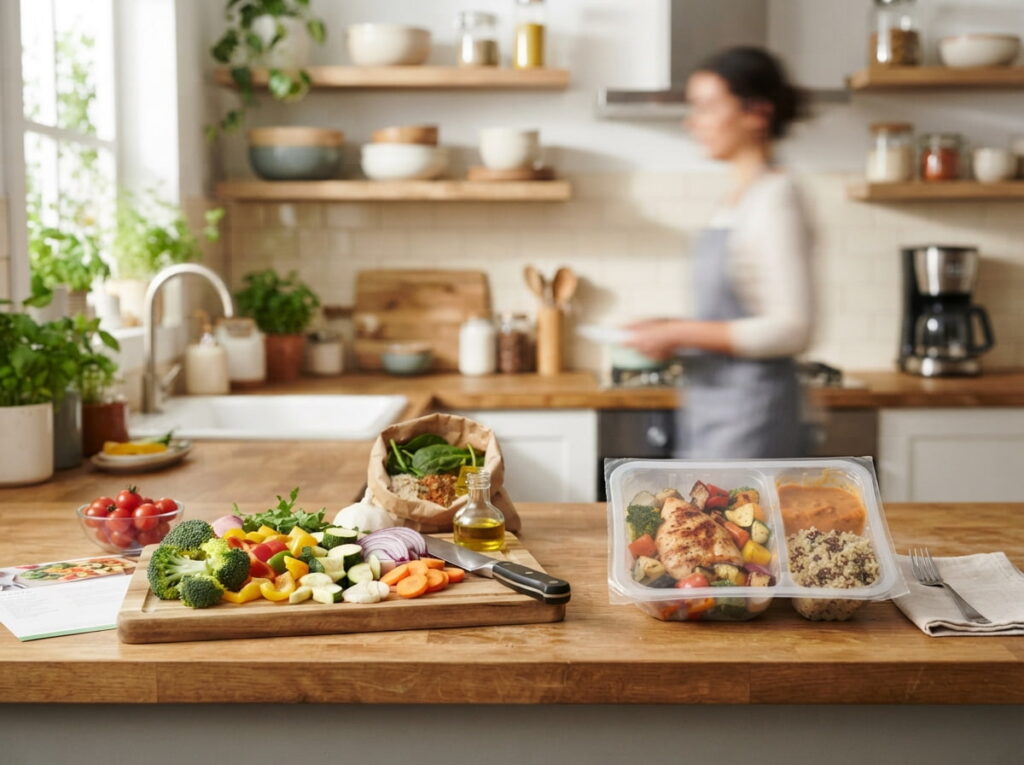
Neither option is universally better, it depends entirely on what a typical week actually looks like in your house.
| Meal Kit | Prepared Meals |
|---|---|
| Requires 20 to 40 minutes of active cooking. | Ready in 5 minutes or less, no real cooking. |
| Good for teaching kids cooking basics. | Good for solo eaters on different schedules. |
Some families do best mixing both, a meal kit for weekends and one or two prepared meals for the middle of a busy week.
14. The Subscription Trap Families Should Watch For
Most of these services run on auto renewing subscriptions, and the box ships automatically unless you actively skip a week before the cutoff deadline.
Set a calendar reminder a few days before the weekly cutoff.
Check the app’s skip feature the moment you sign up.
Assuming you can cancel or skip anytime with no deadline.
Ignoring the confirmation email until after the charge hits.
This one detail causes more customer complaints across every service than almost anything related to the actual food.
15. How to Actually Compare Cost Per Serving Across Services

The sticker price on a homepage rarely tells the full story, since shipping fees, portion sizes, and add ons all shift the real number.
Divide the full checkout total, including shipping, by the actual number of servings you’ll eat, not the number listed on the box.
Run that same math across two or three services before committing, since the cheapest looking plan on paper isn’t always the cheapest one once shipping and portion size are factored in.
Conclusion
Finding the best meal kit delivery for families usually comes down to matching a service to how your week actually runs, not which one has the flashiest ad. A service built for hands on cooking works great for a household that enjoys the process, while a fully prepared option makes more sense when the calendar is packed and nobody has the bandwidth to chop anything. Most families end up happiest mixing two services rather than betting everything on one.
Start with whichever pick above matches your biggest pain point right now, whether that’s picky eaters, a tight budget, or simply running out of time most weeknights. Save this list of the best meal kit delivery for families next time you’re deciding what to try, or when your current service stops fitting the way your household actually eats.