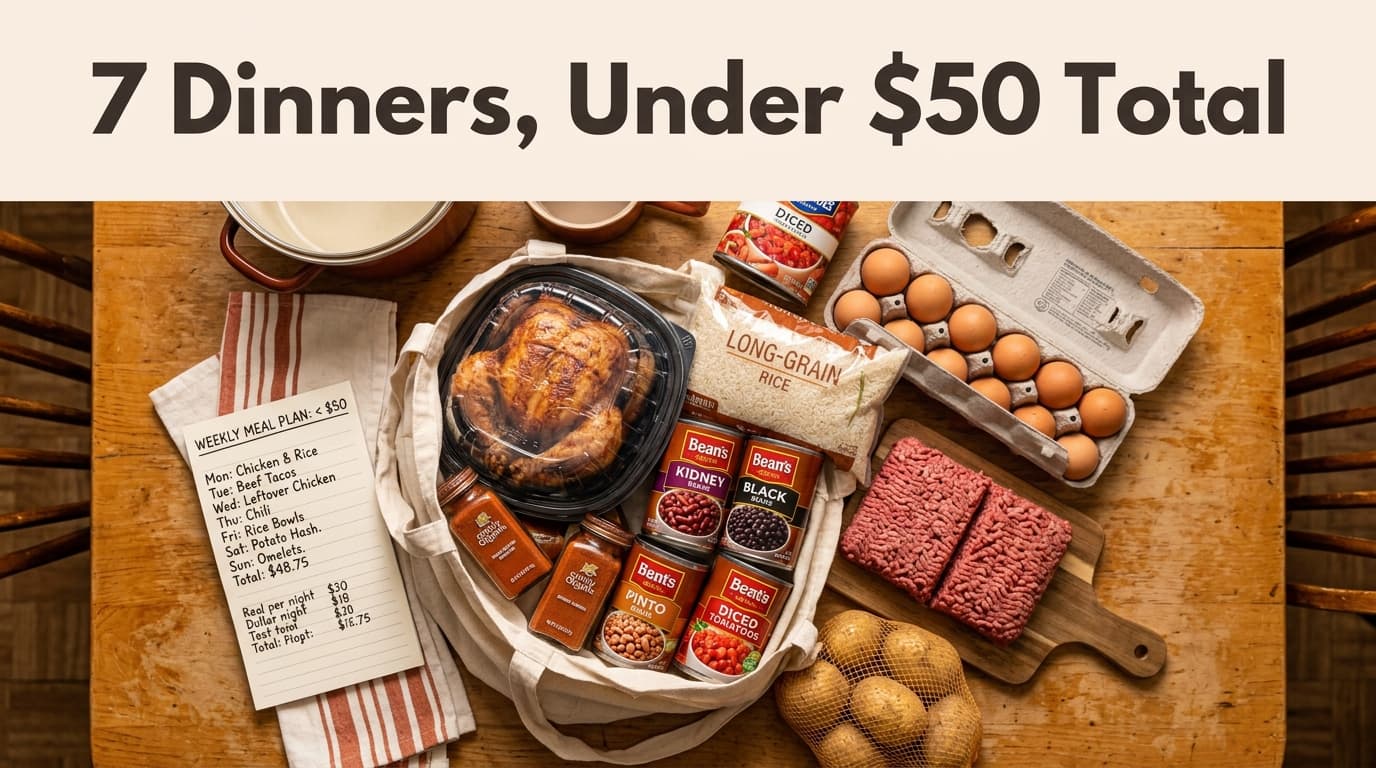
Grocery bills for a family of four climb fast, and most advice about cutting costs skips the part that actually matters, which is having a plan before you ever walk into the store. Budget meal prep ideas work best when they start with a process, not a stack of recipes you have to hunt down every week.
This guide walks through the actual planning habits that keep a grocery bill under control without turning Sunday into a second job. Some of it is about timing, checking sales before writing the menu instead of after. Some of it is about structure, building the week around a few proteins and repeatable categories instead of a brand new recipe every single night.
None of this requires giving up variety or eating the same five dinners on repeat. It is about building a system loose enough to stay interesting but tight enough to keep the grocery bill predictable. Work through these steps once, and planning stops being the part of the week that eats up your evening.
The Habits That Actually Matter
Four Moves That Keep the Bill Predictable
Check the Fridge Before Any Recipe
Building the week around what’s already there beats buying something new that duplicates it.
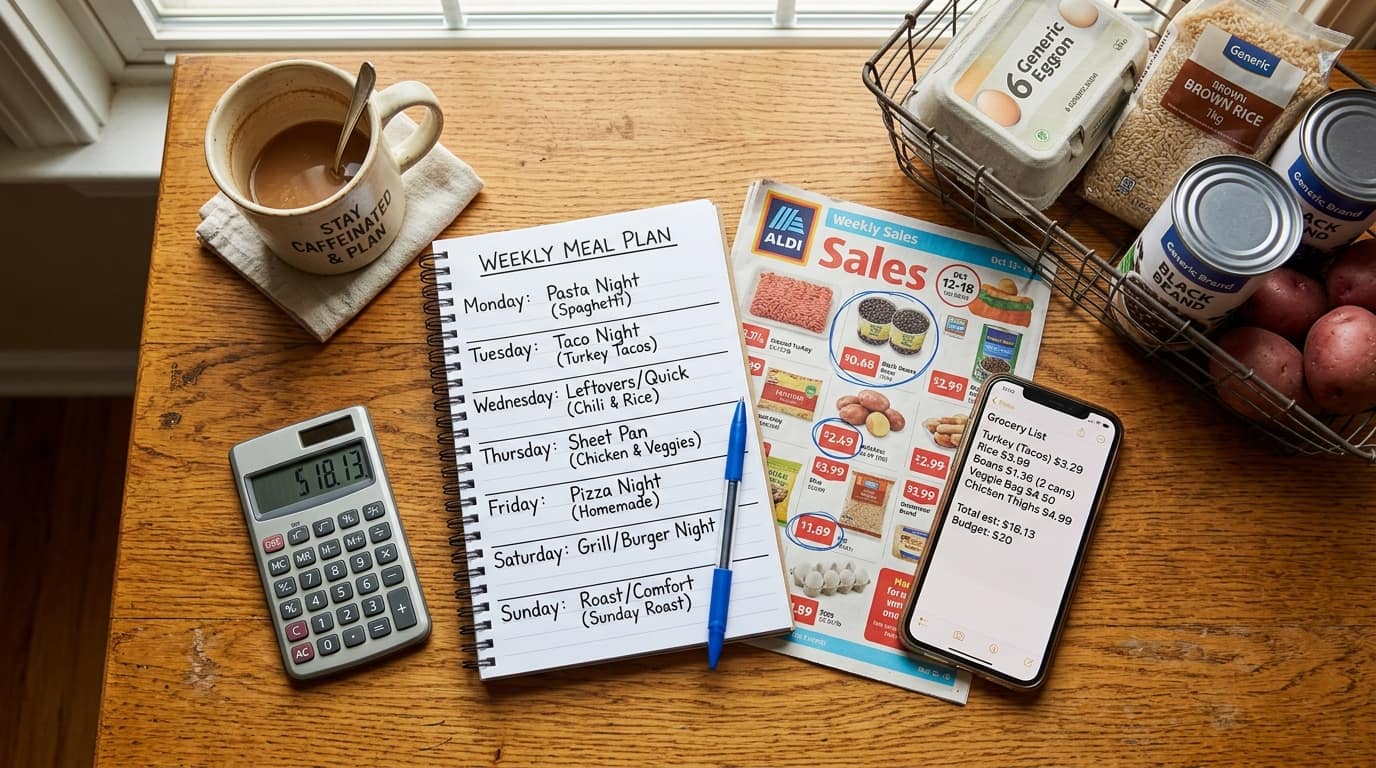
Check Sales Before Writing the Menu
Flip the order — let what’s discounted shape the plan instead of paying full price for whatever it calls for.
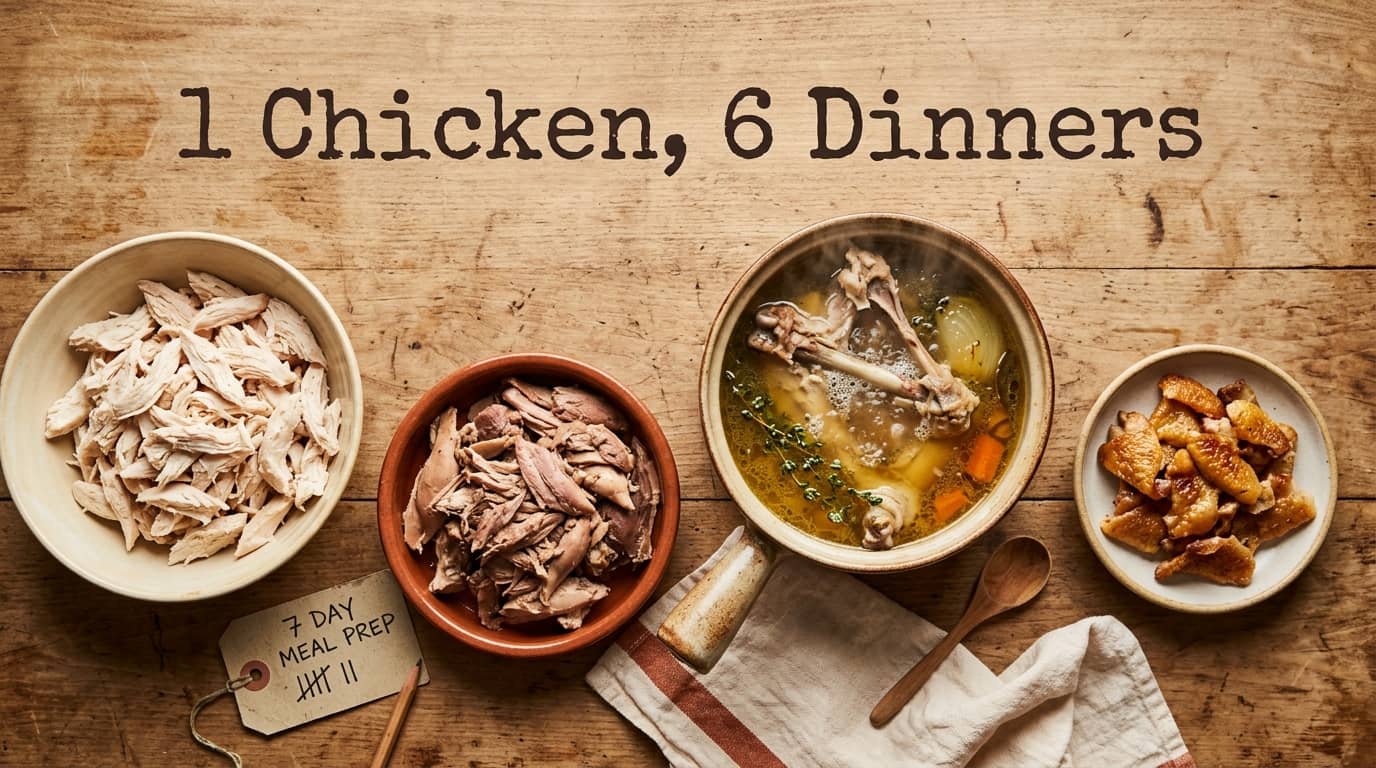
Cook Once, Serve It Two Ways
One big batch on Sunday splits cleanly into two separate dinners with different sides or sauces.
Leave One Night Blank on Purpose
A plan that fills every single night rarely survives contact with an actual week.
1. Starting With What Is Already in the Fridge Before Planning a Single New Meal
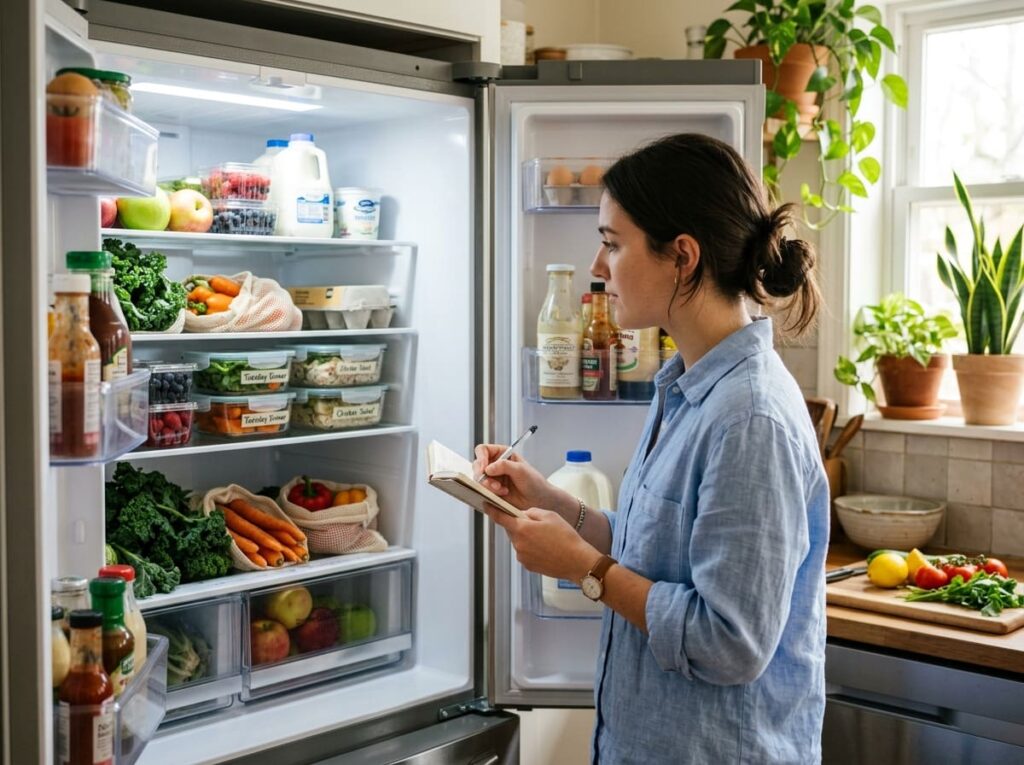
Most meal planning starts backwards, picking recipes first and building a grocery list around them, which usually means buying things that duplicate what is already sitting in the fridge going unused.
What to check before opening a single recipe:
- The fridge for anything close to expiring that needs to be used first
- The freezer for meat or vegetables already bought but forgotten
- The pantry for canned goods or grains that can anchor a meal
Building the week around what already exists cuts the grocery bill before the list is even written.
2. Building the Week Around Three or Four Proteins Instead of a Different One Every Night
Buying a different protein for every single dinner is one of the fastest ways to inflate a grocery bill without noticing.
💡 Quick Tip
Pick three or four proteins for the week and use each one twice in different forms, so buying in bulk actually pays off.
3. Checking the Weekly Sales Flyer Before Writing the Menu Instead of After
Most people write their meal plan first and then check what is on sale, which backs the whole process into the wrong order. Flipping it, checking the sales flyer first and building the menu around what is discounted, changes what actually lands in the cart.
Menu written first, then paying full price for whatever it calls for.
Sales checked first, menu built around what is already discounted.
4. Planning One Big Batch Recipe a Week That Covers Two Separate Dinners

One large pot of something, chili, soup, a casserole, made once but eaten across two different nights, cuts the number of separate dinners you actually have to plan and shop for.
What to have ready:
- One protein that scales up well, like ground beef or shredded chicken
- A base that stretches easily, rice, beans, or pasta
- Enough containers to split the batch into two separate meals
- A plan to change up the sides so it does not feel like a repeat
Serve it one way Monday and a slightly different way Thursday so it does not feel like leftovers twice.
What to grab first
5. Assigning Each Night a Simple Category Instead of a Specific Recipe
Naming Monday “taco night” and Wednesday “pasta night” instead of committing to an exact recipe leaves room to shop based on what is cheapest that week, without losing the sense of a plan.
6. The Order to Plan Meals In So Nothing Gets Wasted by Sunday
Planning dinners in a random order tends to leave perishable ingredients sitting too long before they get used, which is exactly how food ends up wasted by the end of the week.
- Plan meals using the most perishable ingredients, like fish or fresh greens, for the first two or three days
- Move to sturdier proteins like chicken or beef for the middle of the week
- Save shelf stable or freezer based meals, like a pasta bake or a bag of frozen dumplings, for the end of the week as a buffer
This order means nothing perishable is ever sitting around waiting for a day that comes too late.
Plan meals using the most perishable ingredients for the first two or three days.
Move to sturdier proteins like chicken or beef for the middle of the week.
Save shelf stable or freezer based meals for the end of the week as a buffer.
7. Shopping With a List Organized by Store Section Instead of by Recipe
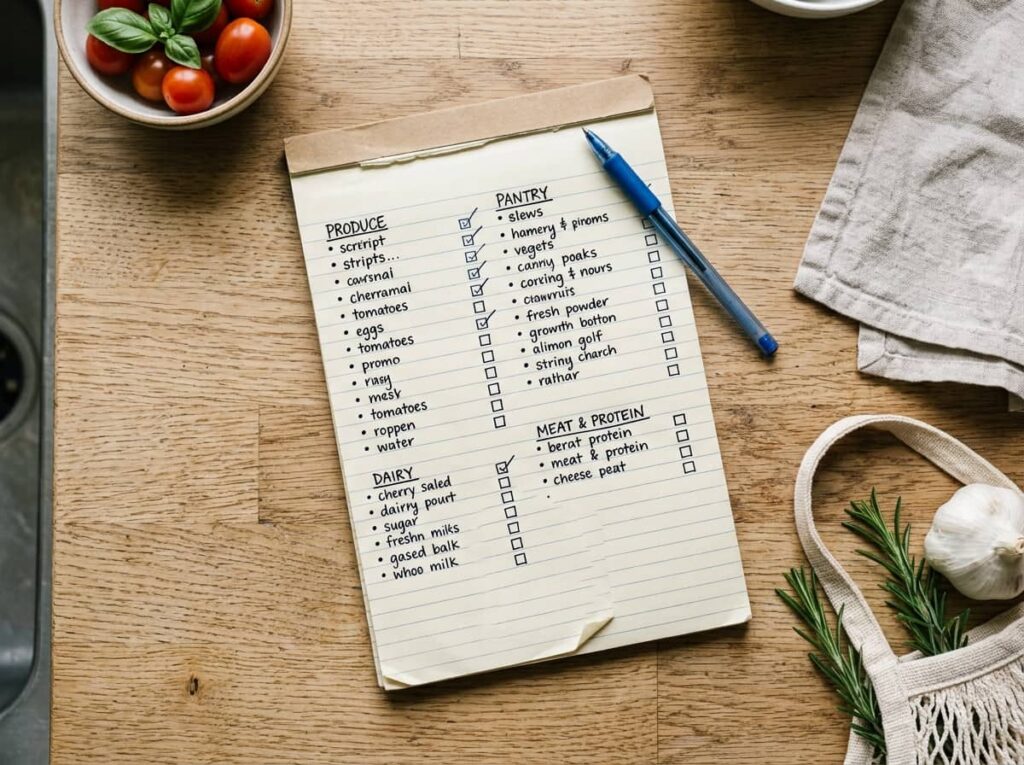
A list grouped by recipe means backtracking across the whole store multiple times, and every extra lap past the snack aisle is another chance for something unplanned to land in the cart.
Group the list by produce, meat, dairy, and pantry.
Walk the store in one direction instead of doubling back.
Listing ingredients recipe by recipe, which scatters the order.
Wandering aisles without a plan, which invites impulse buys.
8. Choosing Between a Weekly Shop and a Biweekly Shop for a Family of Four
Both approaches can work for a family of four, but the right one depends more on storage space and how well perishables hold up in your fridge than on which is objectively cheaper.
| Weekly Shop | Biweekly Shop |
|---|---|
| Fresher produce, more trips to the store. | Fewer trips, needs more freezer space for meat. |
| Easier to shop sales as they come up each week. | Fewer chances for impulse purchases overall. |
9. Letting One Meatless Night a Week Lower the Total Grocery Bill Without Anyone Noticing
Meat is usually the most expensive line item on a grocery receipt, and dropping it for just one dinner a week adds up over a month without anyone at the table feeling like they are missing something, especially when the meal is built around beans, eggs, or a hearty pasta.
One meatless dinner a week quietly lowers the grocery bill without anyone at the table noticing the difference.
10. Keeping a Running Price List So You Know What a Fair Price Actually Looks Like
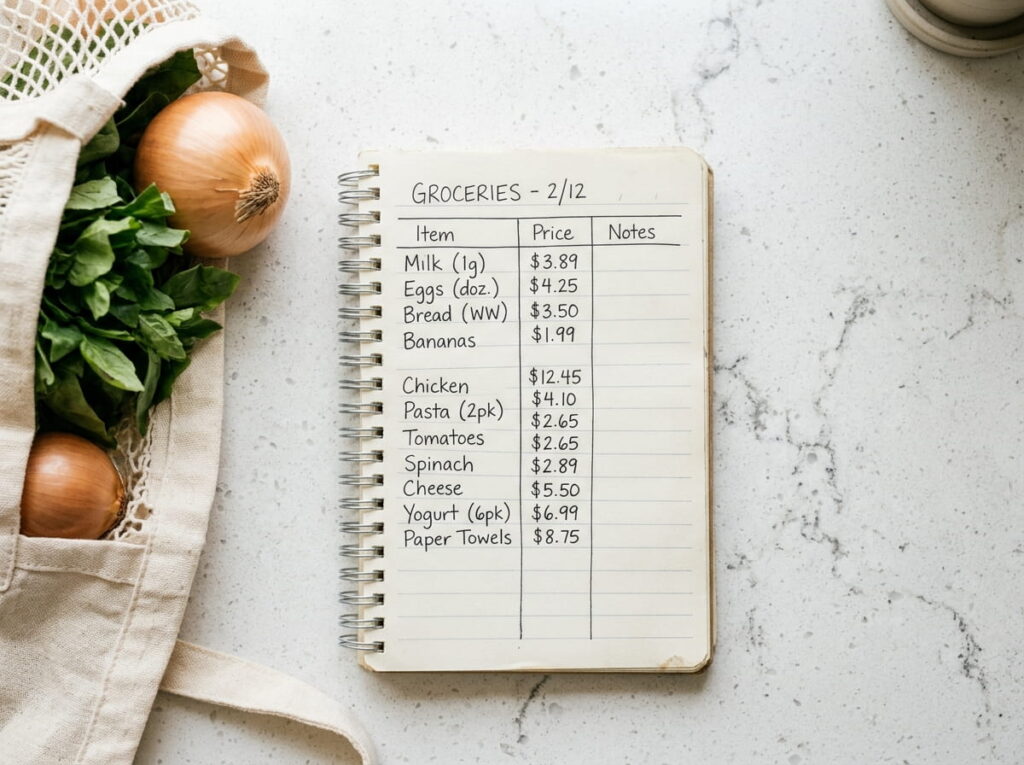
Without a reference point, it is hard to know if a sale is actually a good deal or just marketed to look like one.
- Track the regular price of five or six items your family buys often
- Note the price each time you shop, even when it is not on sale
- Compare that running list against sale prices before stocking up
- Update it every couple months, since prices shift over time
A simple note on your phone works fine, it does not need to be anything formal.
- ▸Track the regular price of five or six items you buy often
- ▸Note the price each time you shop, even without a sale
- ▸Compare that list against sale prices before stocking up
11. Cooking Once on Sunday for Two Different Meals Later in the Week
Roasting a large tray of chicken thighs or a big pot of rice on Sunday does not have to lock the week into eating the exact same dinner twice. The same base cooked once splits cleanly into two separate meals with different sauces or sides.
12. Leaving One Night a Week Completely Unplanned on Purpose
A plan that fills every single night rarely survives an actual week, since something always shifts, a late meeting, a sick kid, plans that fall through.
💡 Quick Tip
Leave one night blank on purpose so a schedule change does not knock the whole week off track or lead to an unplanned takeout order.
13. Turning Tuesday’s Extra Chicken Into Wednesday’s Completely Different Dinner
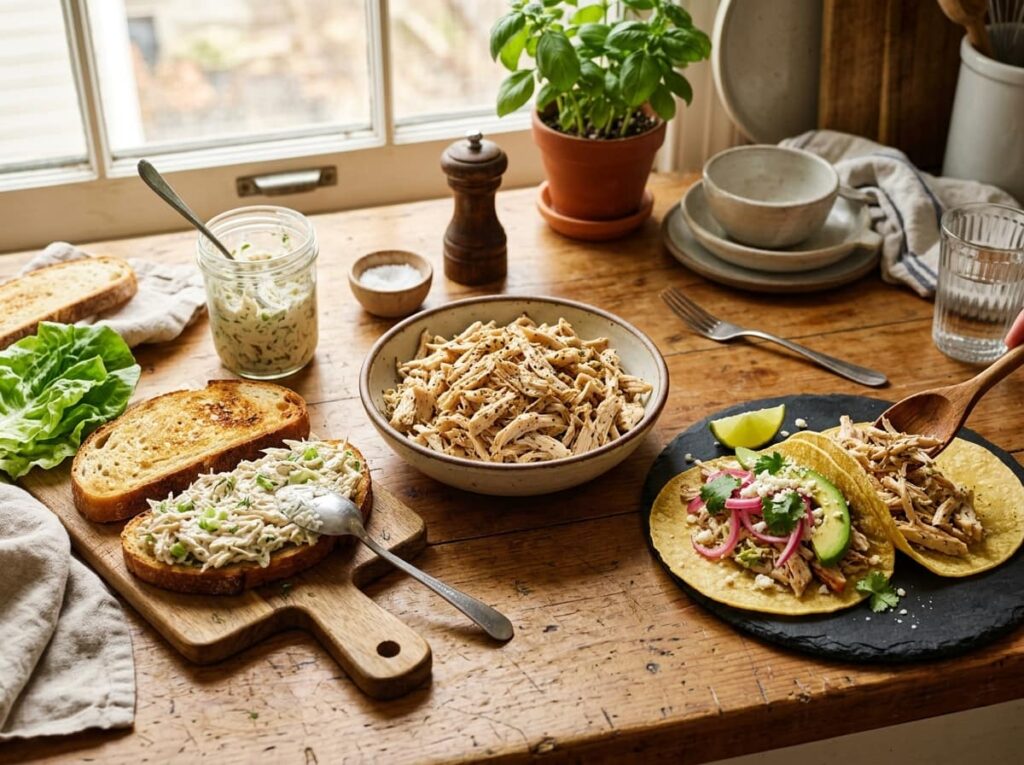
Cooking a little extra chicken on Tuesday does not mean Wednesday has to be a repeat. The same shredded chicken that went into tacos one night can turn into a completely different soup or salad the next, with almost no extra cooking involved.
Leftover chicken reheated the exact same way it was served the first night.
The same chicken turned into a totally different soup or salad.
14. Building a Rotating List of Ten Meals So Planning Never Starts From Zero
A short list of ten reliable dinners the family already likes means Sunday planning becomes picking from a list instead of inventing something new every single week.
What to have on the list:
- Two or three pasta based dinners
- Two or three dinners built around rice or grains
- A couple of soup or stew options for colder weeks
- One or two breakfast for dinner nights, since eggs are cheap
Rotate through this list first before reaching for a brand new recipe, saving new ideas for when there is actual time to try them.
What to grab first
15. Portioning Bulk Meat Right After the Grocery Trip Instead of Days Later
Bulk packs of meat are usually the better deal per pound, but only if they get portioned and frozen before they sit too long in the fridge going unused.
16. A Simple Way to Involve Kids in the Menu So Fewer Meals Go to Waste

Meals nobody actually wanted to eat are one of the quieter ways a grocery budget gets wasted, and giving kids even a small say in the plan tends to cut down on the picky refusals that lead to wasted plates.
- Offer two or three options for one night of the week and let kids vote
- Ask what they want to add to a meal already planned, like a topping or side
- Keep the choices limited to what is already budget friendly, so the vote does not turn into a request for something expensive
A small amount of input goes a long way toward getting a full plate eaten instead of scraped into the trash.
Offer two or three options for one night of the week and let kids vote.
Ask what they want to add to a meal already planned, like a topping or side.
Keep the choices limited to what is already budget friendly.
17. Comparing Warehouse Store Prices Against the Regular Grocery Store Before Committing
A warehouse membership only pays off if the prices there are actually lower for what your family buys regularly, and that is not automatically true for every item on the list.
Compare price per unit, not the total package price.
Only buy bulk sizes for things your family actually finishes.
Assuming bulk is always cheaper without checking the math.
Buying large quantities of anything perishable that spoils before use.
18. Reviewing What Actually Got Eaten Each Week So Next Week’s Plan Improves
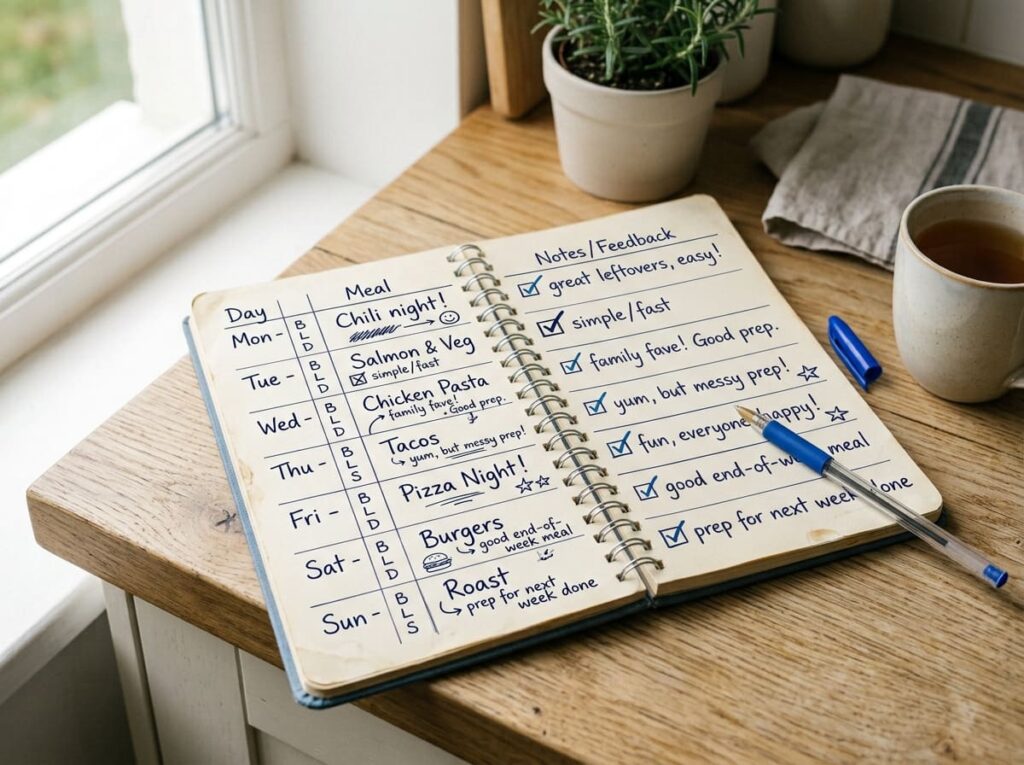
A meal plan is not fixed once it is written, and looking back at what actually got eaten versus what got thrown out is one of the most useful habits for tightening up next week’s grocery bill.
| What Got Eaten | What Got Wasted |
|---|---|
| Keep these meals on the rotating list. | Note what ingredient went unused and why. |
| Buy that protein or produce again with confidence. | Buy a smaller amount or skip it next time. |
Conclusion
None of this requires spending hours at the kitchen table with a spreadsheet. The real work of budget meal prep ideas happens in a handful of small habits, checking the fridge first, shopping with sales in mind, cooking once for two meals, that add up over a month more than any single recipe swap ever could.
Start with just two or three of these ideas instead of trying to overhaul the whole system at once. Once checking sales before planning or cooking a double batch on Sunday becomes automatic, add another habit from the list. The goal is a system that gets easier every week, not harder.
Save this list for the next Sunday that needs a plan that actually sticks.