Walking into the grocery store without a real plan is how a quick trip for a few things turns into eighty dollars and a cart full of stuff that doesn’t actually add up to dinner. It happens to almost everyone, and it’s rarely about willpower, it’s about not having a system in place before the cart even gets grabbed.
This budget grocery list guide is built around an actual method, not just vague advice to “shop smart.” It walks through how to set a number before you shop, how to build the list around real meals, and how to catch the small habits that quietly drain a grocery budget week after week.
None of this requires giving anything up. It’s about spending the same money more intentionally, so it stretches into more actual dinners instead of disappearing into snacks and last minute grabs. Whether groceries have gotten tighter lately or you’re just tired of wondering where the money went, this list covers the full process from start to finish.
1. Know Your Number Before You Write a Single Item

A grocery list without a set budget attached to it is really just a wish list.
Decide on a real number before writing anything down, based on what your household can actually spend that week, not what feels good in the moment. That number becomes the filter every other decision runs through, from which cuts of meat make the list to whether the fancy crackers get added.
2. Build the List Around Meals, Not Random Items You Might Use
Grabbing things that seem useful is how a cart fills up with ingredients that never actually turn into a finished meal.
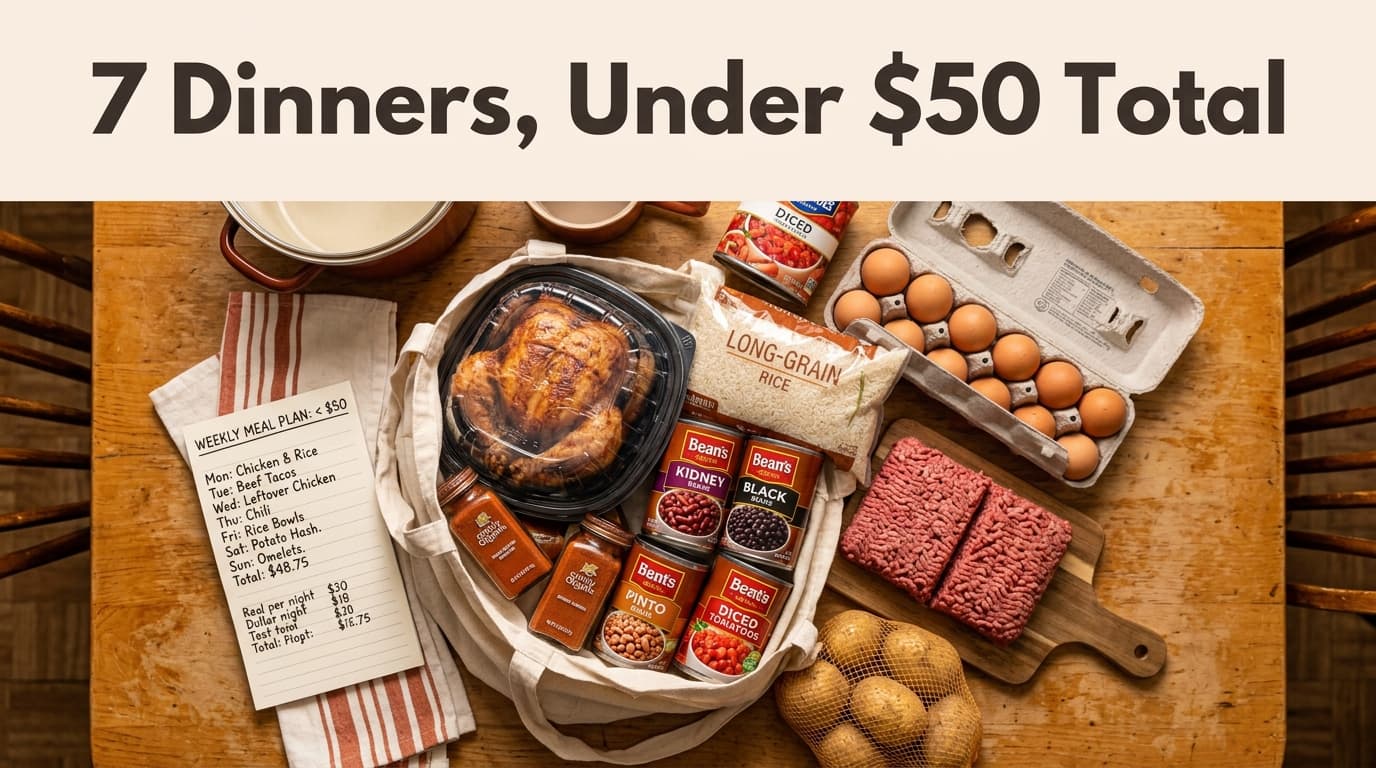
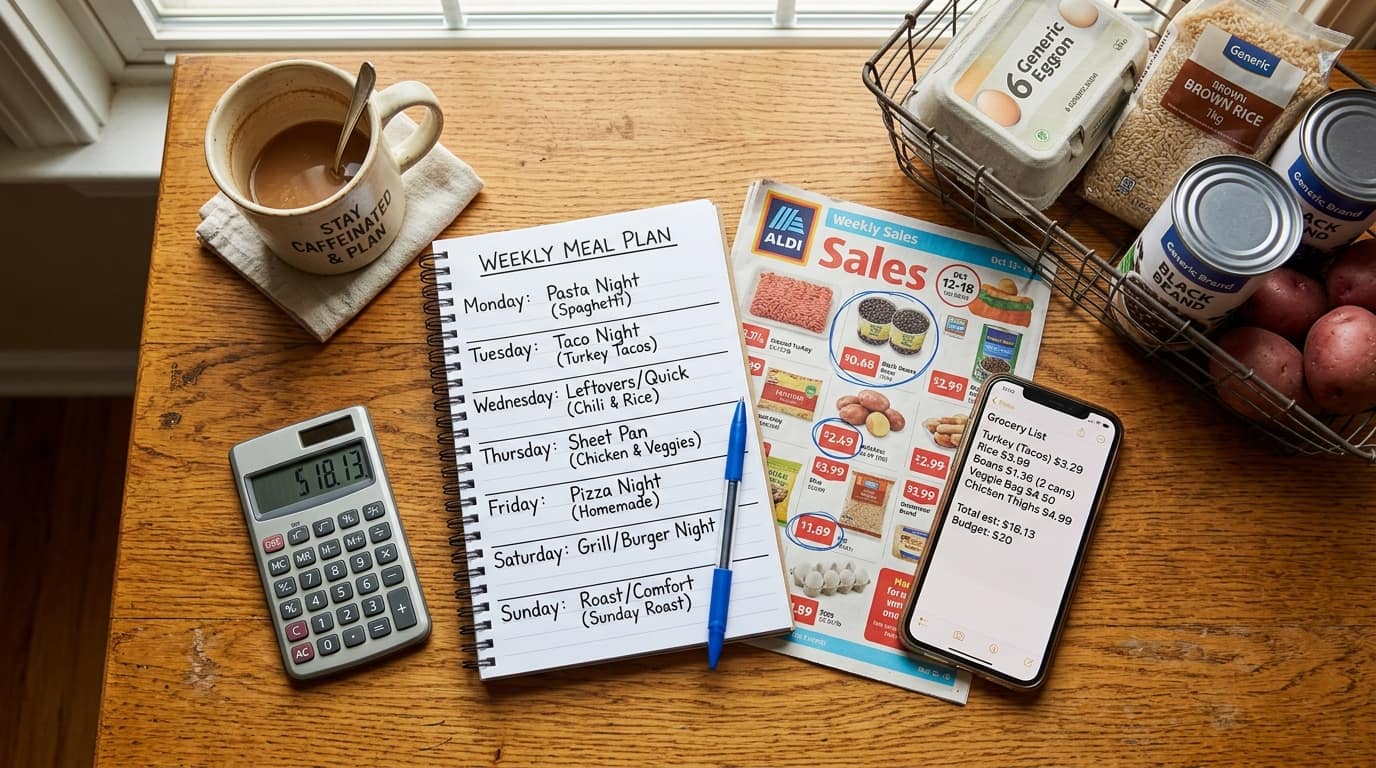
Start from the other direction instead. Decide on the meals for the week first, then work backward into exactly what each one needs. A list built this way naturally avoids the random extras that seemed like a good idea in the aisle but don’t connect to anything you’ll actually cook.
💡 Quick Tip
Write the meal name next to each grocery item, it keeps the list anchored to something real.
3. Sort the List by Store Layout Before You Ever Leave the House
Wandering back and forth across the store isn’t just annoying, it’s also where impulse items sneak into the cart the most.
Group the list into produce, dairy, meat, pantry, and frozen before heading out, matching the general layout of most grocery stores. Walking a straight path through the store means fewer passes by tempting end cap displays, and a noticeably faster trip overall.
4. Separate Needs From Wants Into Two Visible Columns
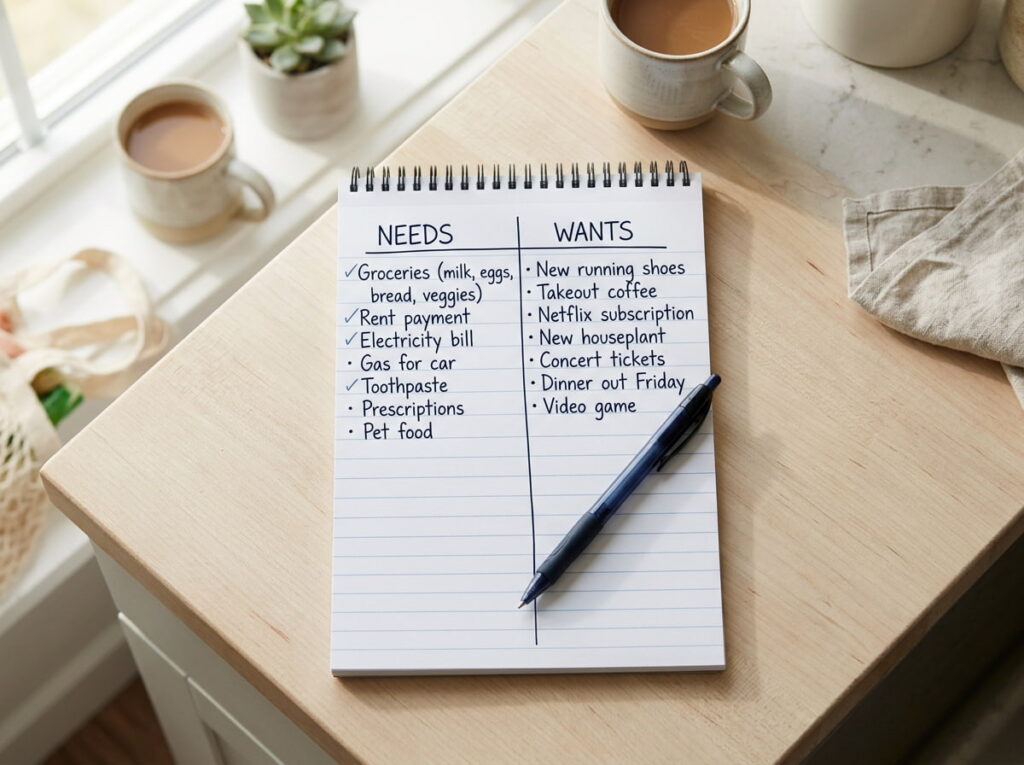
Everything looks equally important when it’s all crammed into one list, which makes it hard to know what to cut if the total runs high.
- Write true needs, the ingredients your planned meals actually require, in one column.
- Write wants, snacks or extras that would be nice but aren’t essential, in a second column.
- If the total goes over budget at checkout, the wants column is the first place to cut.
Draw two columns on your list, labeled needs and wants.
Sort every item honestly, meal ingredients go in needs.
Use the wants column as your first cut if the total runs high.
5. Price Per Unit Beats Price Per Package Every Time
The bigger package isn’t automatically the better deal, even though it usually looks that way on the shelf.
Check the small price per unit label, often per ounce or per pound, tucked under the shelf price tag. That number is the only one that actually compares apples to apples between package sizes and brands, since sticker prices alone can be misleading.
Check the price per unit label under the shelf tag.
Compare that number across brands and sizes.
Assuming the bigger package is automatically cheaper.
Comparing sticker prices without checking the unit cost.
6. Keep a Running List of Your Household’s Actual Staples
Rebuilding a grocery list from scratch every single week wastes time you don’t need to spend, especially when most households buy the same core items over and over.
- Write down the ten to fifteen items your household buys nearly every week.
- Keep this master list saved somewhere permanent, not just in a single week’s notes.
- Pull from it first before adding anything new to a fresh weekly list.
What to grab first
7. Check the Pantry and Freezer Before Adding Anything New
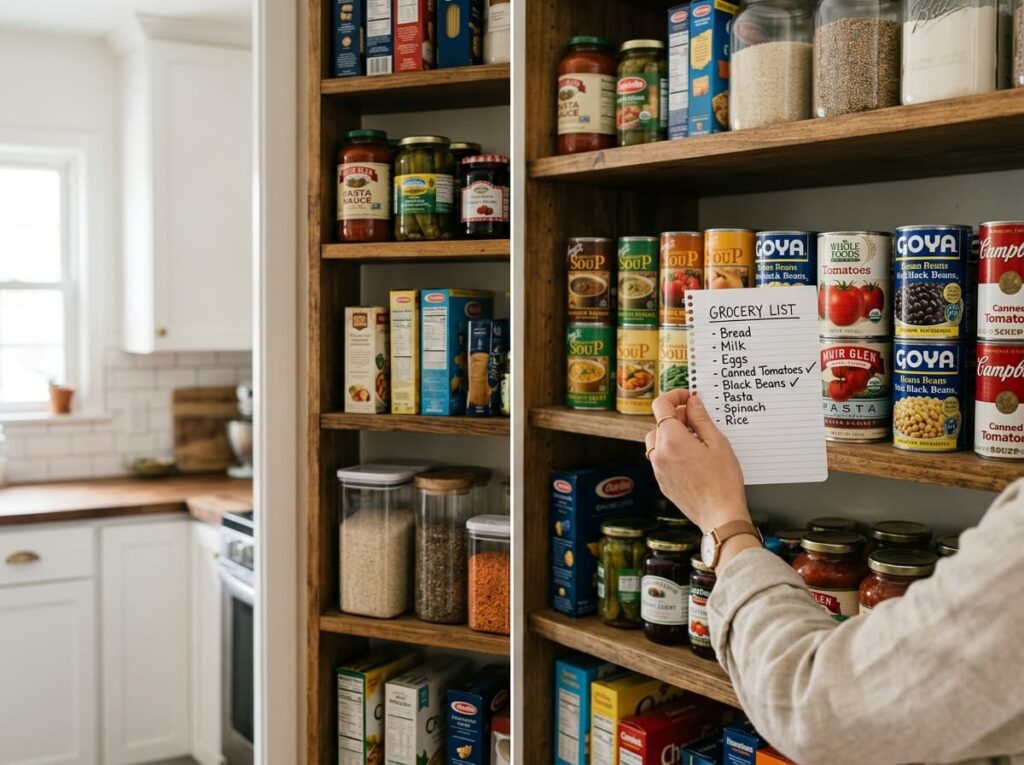
Buying a second bag of rice while an unopened one sits in the back of the cabinet is one of the quietest ways a grocery budget leaks.
Walk through the pantry, fridge, and freezer with the list in hand before finalizing anything. What used to be a list built purely from memory, guessing at what’s probably running low, becomes a list built from what’s actually confirmed to be missing.
A list built from guessing what’s probably running low.
A list built from confirming what’s actually missing.
8. Generic Versus Name Brand, Where the Difference Actually Matters
Store brands aren’t automatically the right choice everywhere, but on a lot of items the difference is closer to nothing than people assume.
Basics like flour, sugar, canned beans, and frozen vegetables are usually near identical between store brand and name brand. Items where recipe or texture depends heavily on the brand, certain cheeses or specific sauces, are where paying more can still make sense.
| Store brand usually fine | Name brand worth it |
|---|---|
| Flour, sugar, canned beans, frozen vegetables. | A specific cheese or sauce a recipe depends on. |
| Near identical ingredients and taste. | Noticeable difference in flavor or texture. |
9. Build in a Buffer Line Instead of Pretending Nothing Goes Wrong
A budget with zero room for anything unplanned tends to break the very first time the store is out of something or a price jumped since last week.
Add a small buffer line to the list total, an amount set aside on purpose for the unexpected. It’s not overspending, it’s planning for the reality that grocery totals rarely land exactly where predicted.
A small buffer built into the budget beats a total that breaks the moment something changes.
10. Shop the Sales Flyer First, Then Build the List Around It

Meal planning and then hoping the ingredients happen to be on sale has it backwards.
Check the store’s weekly flyer or app before writing the list, and build meals around what’s actually discounted that week. This flips the order most people use by default, and it’s usually where the biggest savings on a grocery trip actually come from.
💡 Quick Tip
Most grocery apps show the weekly flyer without needing to visit the store first.
11. Keep Protein as Its Own Category With Its Own Budget Line
Protein is usually the single most expensive category on any grocery list, which is exactly why it deserves its own dedicated line instead of blending into general food costs.
Set a specific amount for protein before shopping, separate from produce or pantry spending. Watching that one number closely does more to control the overall total than tracking every small item individually.
12. Write Quantities Next to Every Item, Not Just Names
“Onions” on a list can mean one onion or five, and that gap is exactly where extra spending sneaks in at the store.
Add a number next to every single item before heading out. It sounds like a small habit, but it removes the in aisle guessing that often leads to grabbing more than a recipe actually calls for.
Go back through the finished meal plan line by line.
Write the exact quantity each recipe actually calls for.
Combine repeated items into one total number to avoid duplicates.
13. The Five Categories Every Budget List Should Cover
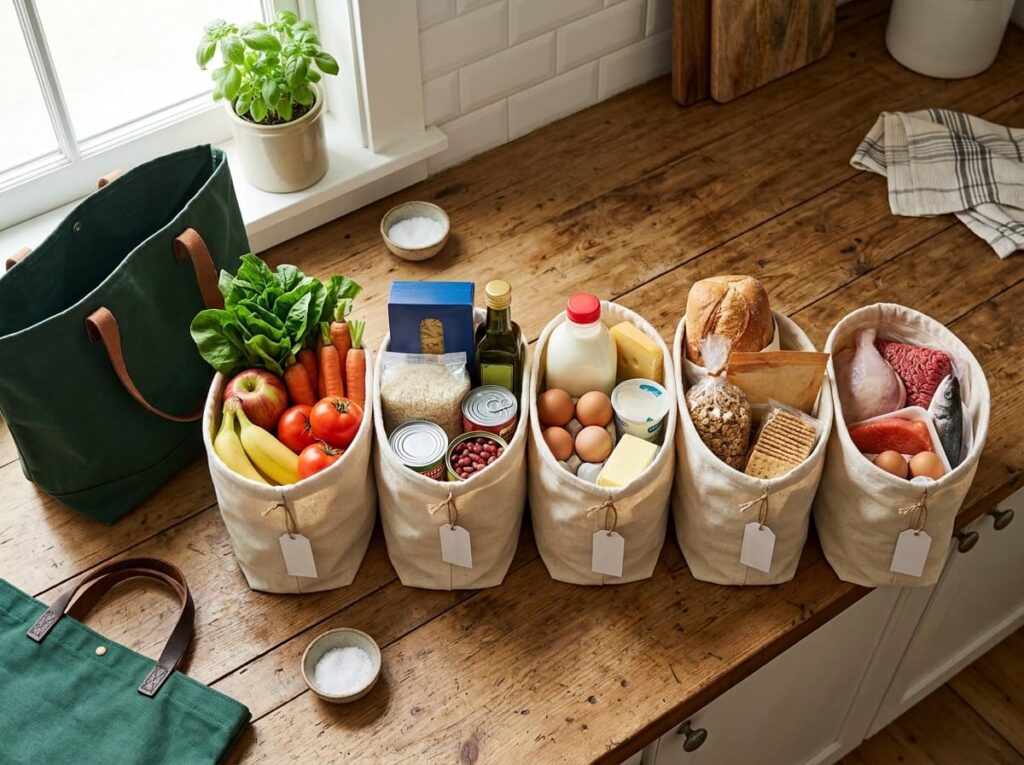
A complete grocery list covers more than just what’s for dinner, it accounts for the full range of what a household actually needs in a week.
Produce, protein, dairy, pantry staples, and household basics like paper towels or dish soap. Missing an entire category usually means an extra unplanned trip later in the week, which almost always costs more than including it upfront.
14. Frozen and Canned Aren’t Downgrades, They’re Budget Tools
Frozen and canned goods carry a reputation as the lesser choice, and on a tight budget that reputation costs real money for no good reason.
- Frozen vegetables are picked and frozen at peak ripeness, often more nutritious than wilted fresh options.
- Canned beans and tomatoes cost a fraction of fresh and last for months in the pantry.
- Both skip the food waste problem that comes with fresh produce going bad before it’s used.
What to grab first
15. Avoid the Middle of the Store Until the List Says You Need It
The outer edges of most grocery stores hold produce, dairy, and meat, the actual staples. The middle aisles hold most of the processed, higher markup items that aren’t usually on a real meal plan.
Stick to the perimeter first, and only cut into the middle aisles for specific items already written on the list. Wandering those center aisles without a clear reason is where a lot of unplanned spending quietly happens.
Shop the perimeter first for produce, dairy, and meat.
Enter the middle aisles only for listed items.
Wandering the center aisles without a specific reason.
Browsing displays that aren’t connected to the list.
16. Bulk Buying Only Saves Money on Certain Kinds of Items

Bulk sizes look like an automatic win, but they only actually save money under the right conditions, otherwise they just tie up cash in food that spoils before it gets used.
Shelf stable items like rice, canned goods, and pasta make sense in bulk since they store indefinitely. Perishables in bulk sizes only pay off if there’s a real plan to use or freeze the extra before it goes bad.
| Good for bulk | Risky in bulk |
|---|---|
| Rice, pasta, and canned goods, they don’t spoil. | Fresh berries or greens without a clear use plan. |
| Frozen meat, if the freezer has the space. | Perishable dairy that expires before it’s finished. |
17. Use Last Week’s Receipt to Catch What You’re Overspending On
Most people throw the receipt away the second they leave the store, missing the one document that actually shows where the money went.
Look back at last week’s receipt before writing this week’s list. What used to be a vague sense that groceries feel expensive turns into an actual answer, maybe it’s the specialty coffee, maybe it’s the snack aisle, once the categories are laid out in front of you.
A vague sense that groceries feel more expensive than they should.
A specific category identified as the actual source of overspending.
18. Keep the List on Your Phone So Nothing Gets Left Behind
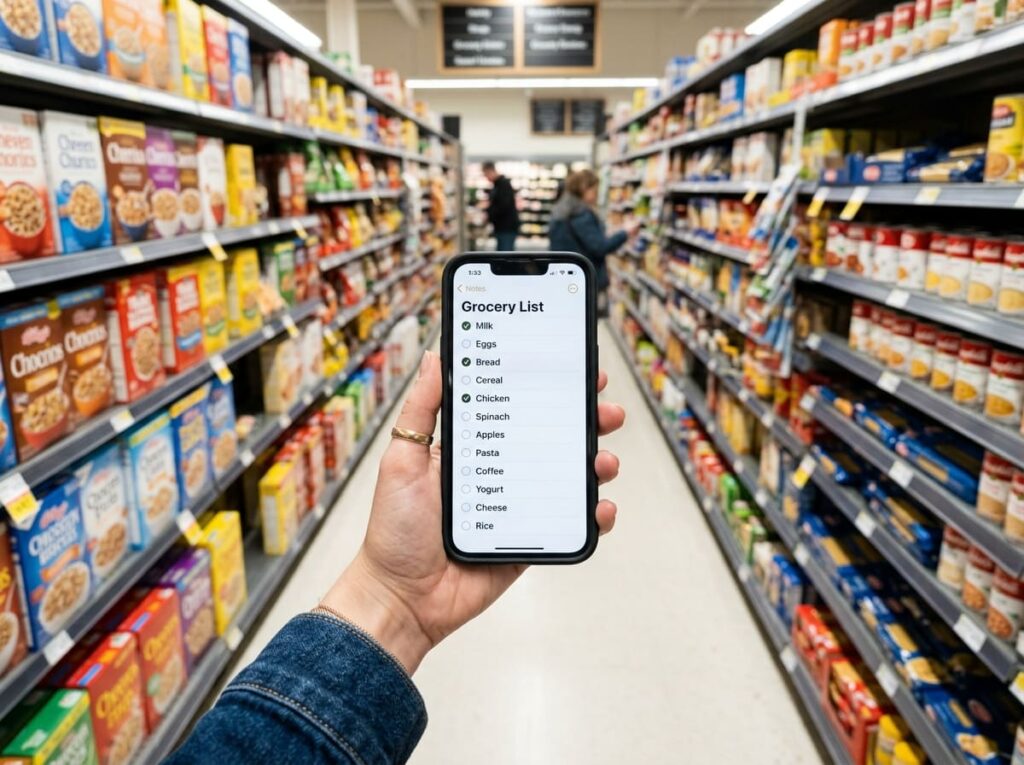
A paper list left on the kitchen counter does nothing for you standing in the store aisle trying to remember what was on it.
Use a simple notes app instead, something that syncs and stays with your phone no matter where the trip happens. It also makes adding items mid week easy the moment something runs out, instead of trying to remember it later.
A list that lives on your phone is a list that actually makes it to the store with you.
19. Round Up as You Shop So the Total Never Surprises You
Watching the checkout total climb higher than expected is one of the most stressful parts of a grocery trip, and it’s completely avoidable.
Round each price up to the nearest dollar as items go into the cart, keeping a running total in your head or on your phone. That habit means checkout confirms a number you already expected instead of delivering an unwelcome surprise.
💡 Quick Tip
The calculator app works fine for this, no special budgeting tool needed.
20. Review the List After Checkout to Build a Smarter One Next Time
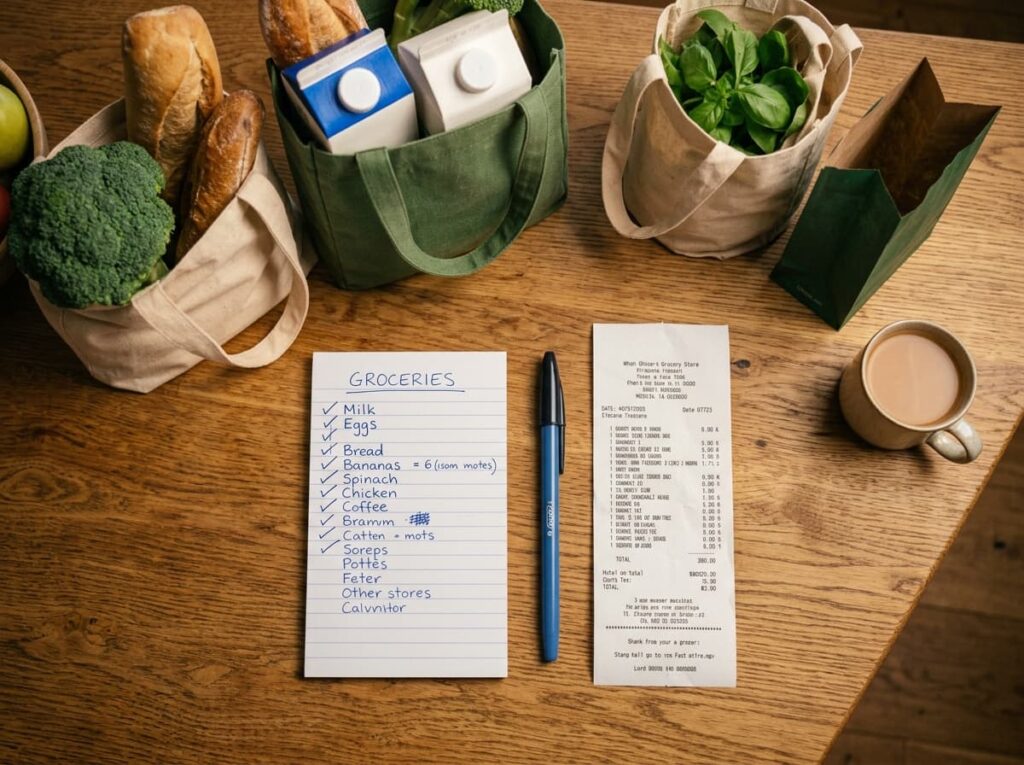
The receipt in your hand right after checkout holds more useful information than most people ever actually use.
- Circle anything that cost more than expected before forgetting why.
- Note any item bought that never made it into an actual meal.
- Fold in what worked well this week when writing next week’s list.
- ▸Every receipt is a small lesson for the next list.
- ▸Patterns show up after a few weeks of doing this.
- ▸The list gets sharper each time instead of starting from zero.
Conclusion
None of this requires giving anything up, it just means spending the same money with a little more intention behind it. A real budget grocery list guide isn’t about restriction, it’s about making sure every dollar actually turns into a meal instead of disappearing into random extras and forgotten pantry duplicates.
Start with just one or two of these habits, maybe setting a real number before you shop or checking the pantry first, and build from there. The full system gets easier the more it becomes routine, and most people notice the difference in their total within the first few trips.
Save this list for the next time you’re staring at a blank notes app trying to figure out where to even start.