A salad that’s mostly lettuce and a few sad cherry tomatoes isn’t lunch, it’s a side dish pretending to be one. That’s usually why salads get a bad reputation for leaving people hungry an hour later, reaching for something else to actually fill the gap.
Learning how to make salad a full meal comes down to one thing most recipes skip over entirely: real protein, in a real amount, added the right way so it doesn’t just sit on top looking optional. Once that clicks, a salad stops being something you settle for and starts being something you actually plan dinner around.
This list walks through the specific proteins, amounts, and small techniques that turn a bowl of greens into something that holds you over for hours instead of forty minutes. Some of these take zero cooking. Others take five minutes in a hot pan. All of them are built around the same core idea, protein isn’t a garnish here, it’s the point.
1. Know the Real Protein Amount a Salad Needs to Count as a Meal

A sprinkle of chicken scattered across a big bowl of greens looks like protein but doesn’t actually function like one.
For a salad to hold up as a real meal, it generally needs somewhere around four to six ounces of protein, not a token handful tossed on top for color. That’s roughly the size of a deck of cards, a number worth keeping in mind when portioning anything from chicken to tofu.
2. Grilled Chicken Is the Default for a Reason, Here’s How to Not Dry It Out
Grilled chicken shows up on most salads for good reason, it’s neutral enough to work with almost any dressing.
The problem is usually the cooking, not the ingredient itself. Pound the chicken to an even thickness before grilling, so it cooks uniformly instead of drying out on the thin edges while the center stays underdone. Let it rest for five minutes before slicing, that pause keeps the juices in instead of running out onto the cutting board.
💡 Quick Tip
Pound chicken breast to about half an inch thick, it cooks faster and stays juicier throughout.
3. Canned Proteins That Turn a Salad Into Lunch With Zero Cooking
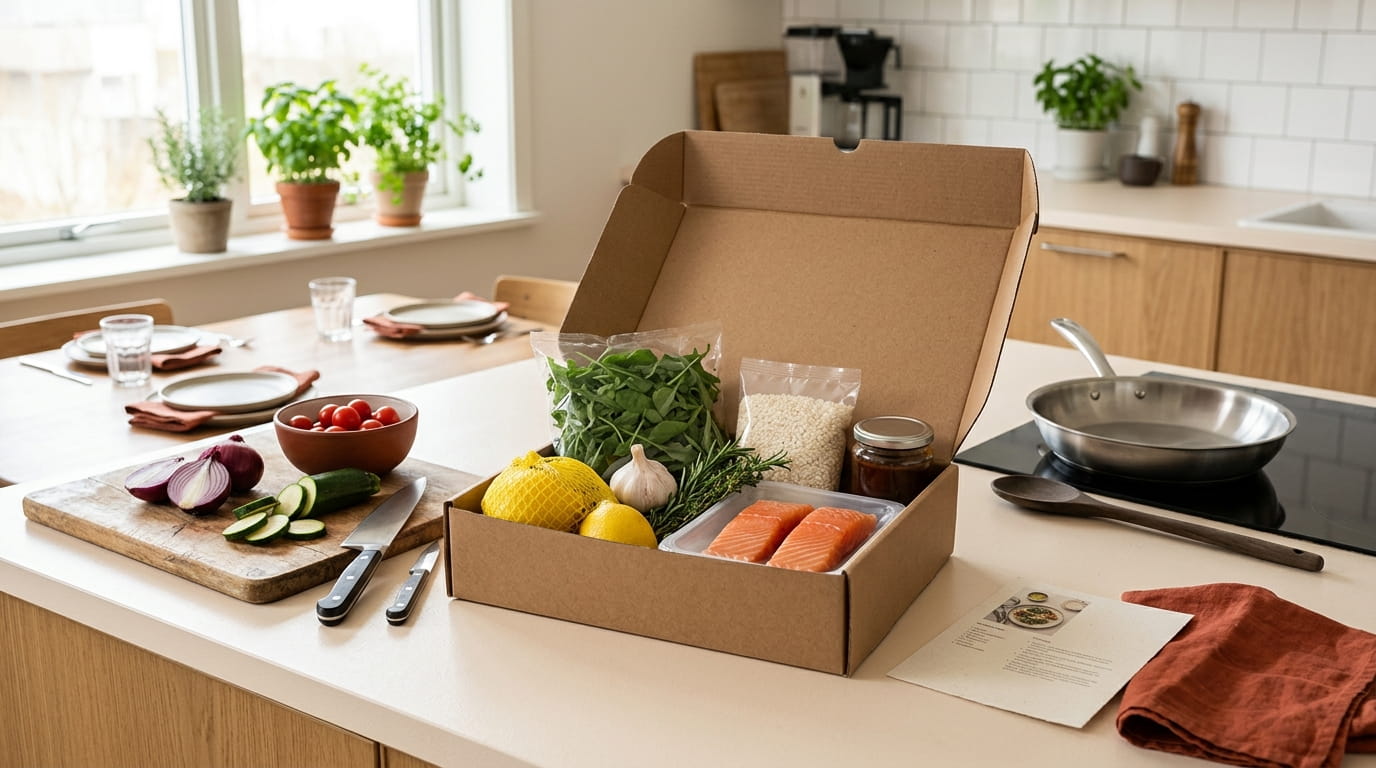
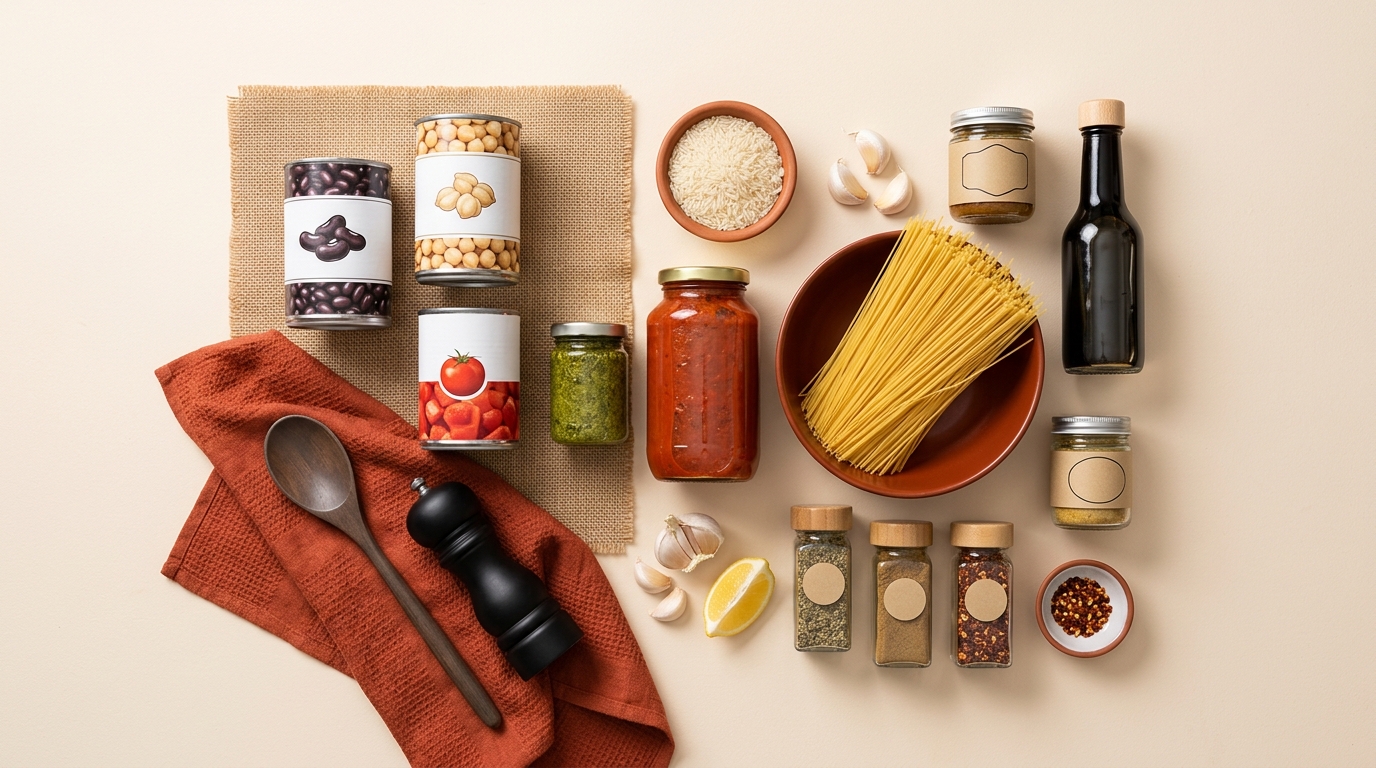
Some days there’s no time or energy for a pan, and that’s exactly what canned protein is for.
Canned salmon, tuna, or chickpeas go straight from the can to the bowl, no prep beyond opening the lid and draining. They’re not a downgrade from fresh, they’re the fastest legitimate path to a real protein amount when the clock is working against you.
4. Build the Bowl in This Order So Nothing Gets Soggy
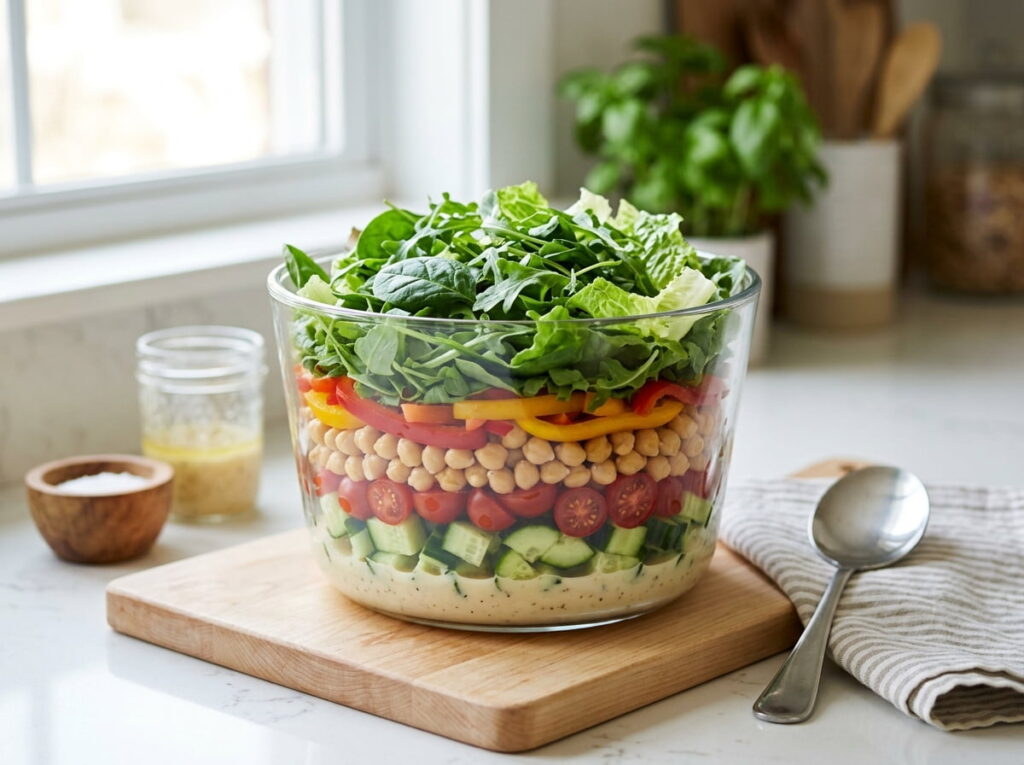
Dumping everything into a bowl at once is how a promising salad turns into a wilted, dressing soaked mess within minutes.
- Add dressing to the bottom of the bowl first, before anything else.
- Layer in sturdy ingredients like grains, beans, or roasted vegetables next.
- Add greens and protein last, then toss everything together right before eating.
Pour dressing into the bottom of the bowl first.
Layer sturdier ingredients like grains or beans next.
Add greens and protein last, then toss right before eating.
5. A Fried Egg Adds More Staying Power Than People Expect
An egg on top of a salad looks like a small addition, but it adds more real protein and staying power than most people give it credit for.
One large egg adds a meaningful boost on its own, and a runny yolk works as a natural dressing that coats the greens as it breaks. It’s also one of the fastest additions on this whole list, ready in under five minutes with almost no cleanup.
Fry the egg with a soft, runny yolk.
Place it on top right before serving.
Overcooking the yolk until it’s fully hard.
Adding it too early, it cools off fast.
6. Roast a Big Batch of Protein on Sunday for Salads All Week
Cooking protein fresh every single day is the main reason most people give up on making salads a real meal by the middle of the week.
- Roast two pounds of chicken thighs or a large batch of tofu on Sunday.
- Let it cool completely before portioning into containers.
- Store in the fridge for up to four days, ready to add cold or reheated.
What to grab first
7. Beans and Lentils Versus Meat, the Real Protein Numbers
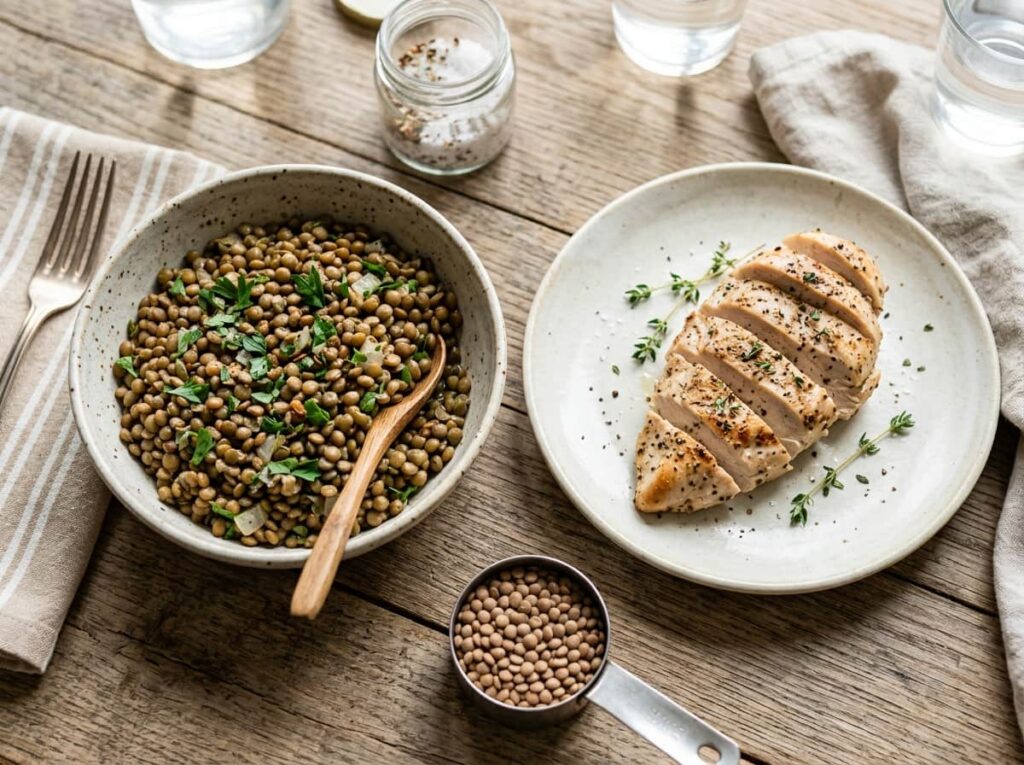
Plant based protein has a reputation for falling short compared to meat, but the actual numbers are closer than most people assume.
A cup of cooked lentils holds a respectable amount of protein, not quite matching a chicken breast ounce for ounce, but combined with a grain like quinoa the gap closes considerably. For anyone skipping meat, doubling up on beans, lentils, and a grain in the same bowl gets close to the same staying power.
| Beans and lentils | Meat |
|---|---|
| Solid protein, especially paired with grains. | Higher protein density per ounce. |
| No cooking needed if using canned versions. | Usually requires actual cooking time. |
8. Steak Salad Doesn’t Need a Restaurant, Just a Hot Pan
Steak on a salad sounds like something from a restaurant menu, but it’s genuinely one of the fastest proteins to cook at home.
A hot cast iron pan and a thin cut of steak, like flank or skirt, gets seared and rested in under ten minutes total. Slice it against the grain in thin strips, since that one detail is what separates a tender bite from something chewy and tough.
Assuming steak salad means going out to eat.
A hot pan and ten minutes is really all it takes.
9. The One Rule That Keeps a Salad From Feeling Like a Snack
Every idea on this list really comes back to the same single principle, and it’s worth remembering more than any specific protein choice.
Protein needs to be the anchor of the bowl, not an afterthought sprinkled on top. Build the salad around the protein first, then fill in greens, vegetables, and dressing around it, instead of building a salad and wondering where to squeeze protein in later.
Build the salad around the protein first, not the other way around.
10. Tofu Only Works as a Real Protein If You Do This One Step First
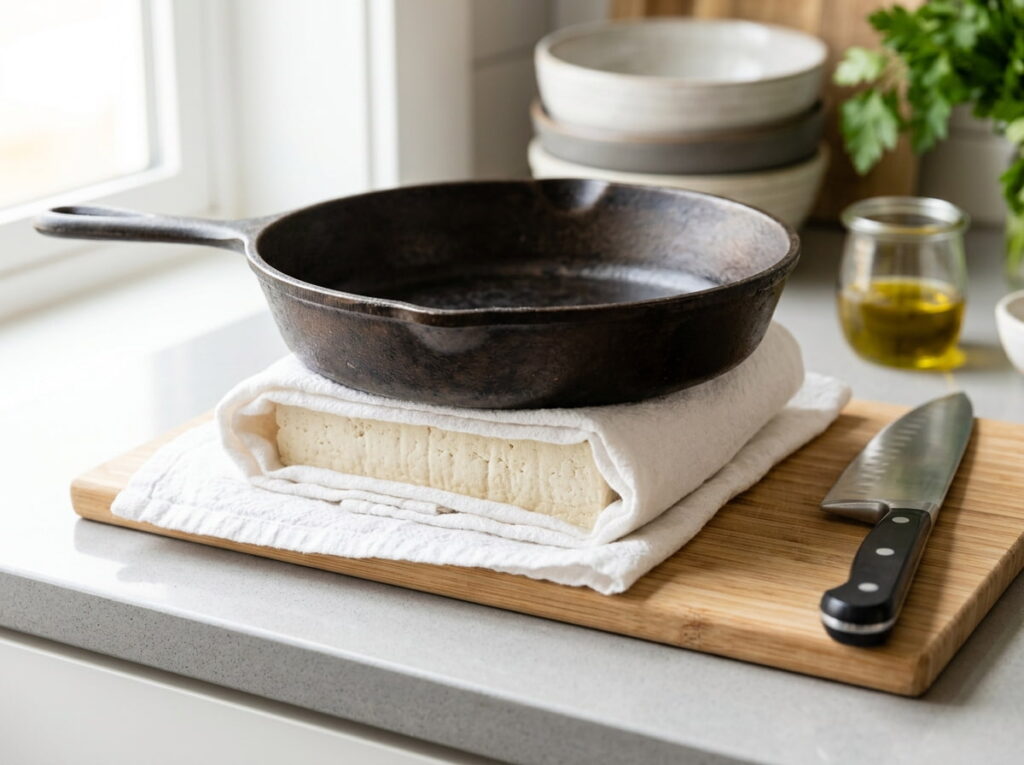
Tofu gets a bad reputation for being bland and mushy, and that’s almost always a pressing problem, not a tofu problem.
Press the block for at least fifteen minutes before cooking, using a clean towel and something heavy on top, to force out the excess water. Without that step, tofu steams instead of crisping in the pan, and it never develops the texture that makes it work as a real protein instead of a filler.
💡 Quick Tip
A tofu press works well if you make tofu often, but a heavy skillet on a towel does the job too.
11. Leftover Rotisserie Chicken Is the Fastest Protein on This List
A rotisserie chicken picked up on the way home solves the protein problem faster than almost anything else on this entire list.
Shred or slice whatever’s left over, hot or cold, and it’s ready to go straight into a bowl. One chicken usually covers protein for three or four salads across the week, which makes it one of the better value options too, not just the fastest.
12. Layer in a Grain So the Salad Actually Holds You Over
Protein alone can leave a salad feeling incomplete, and a grain layer is usually what’s missing to make it actually satisfying for hours.
- Cook a batch of quinoa, farro, or brown rice ahead of time.
- Add about half a cup to the bowl underneath the greens.
- Let the grain absorb a little dressing before adding protein on top.
Cook a batch of quinoa or farro ahead of time.
Add about half a cup underneath the greens layer.
Let it soak up a little dressing before adding protein.
13. Five Protein and Dressing Pairings That Actually Make Sense Together
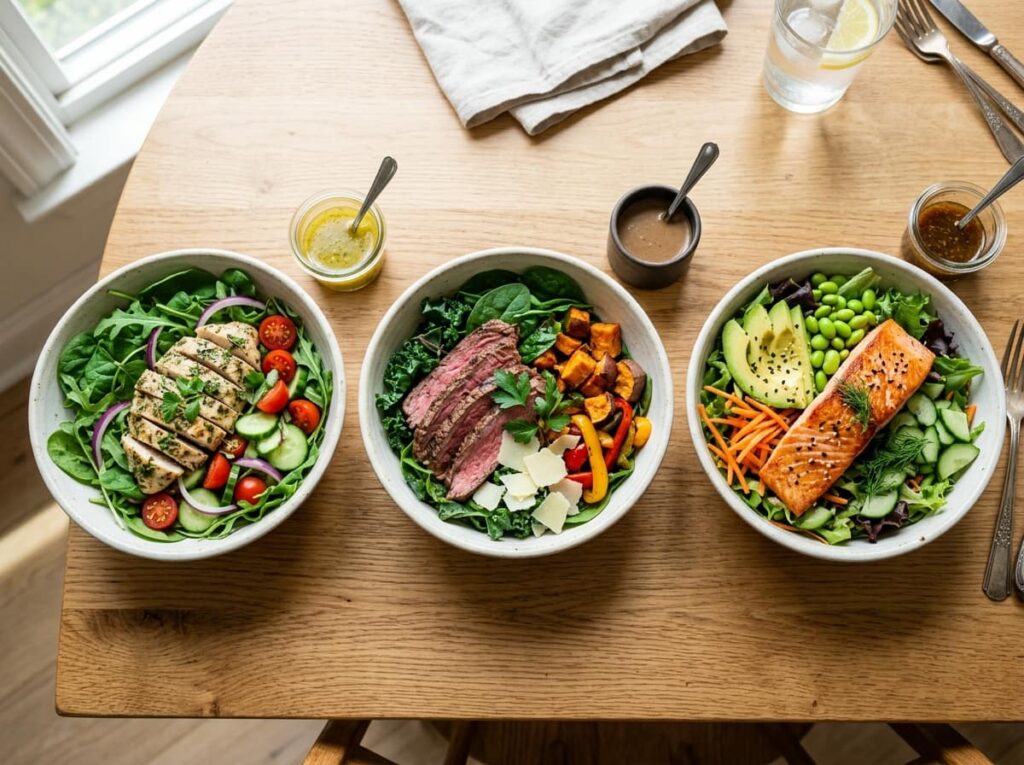
Not every protein and dressing combination works well together, and matching them thoughtfully makes a real difference in the final bowl.
Grilled chicken pairs naturally with a lemon vinaigrette, since the brightness cuts through the neutral flavor. Steak works well with a bold blue cheese dressing, and salmon leans into something citrus based like an orange miso dressing that complements the richness of the fish.
14. Shrimp Cooks Fast Enough to Add Straight to a Warm Salad
Shrimp goes from raw to fully cooked in just a few minutes, which makes it one of the quickest proteins to add to a salad without any advance planning.
- Season shrimp simply with salt, pepper, and a little paprika or garlic powder.
- Cook in a hot pan for about two minutes per side until pink and opaque.
- Add it warm, straight from the pan, right on top of the greens.
What to grab first
15. How Much Protein to Add Depending on Your Base Salad Size
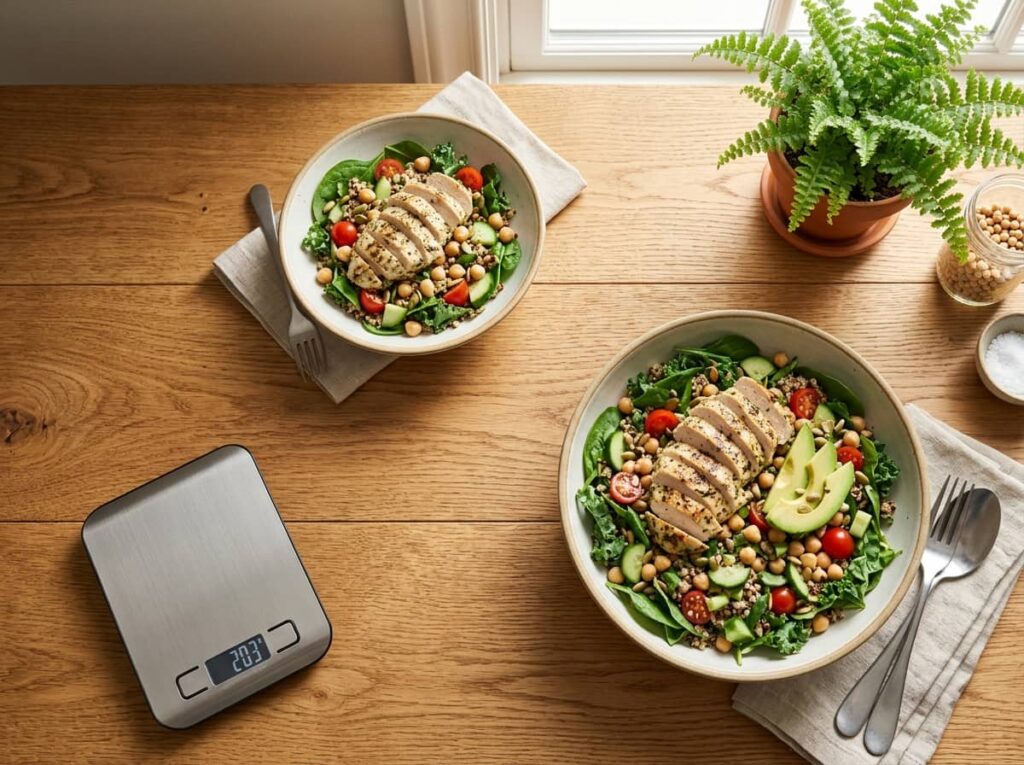
A small side salad and a giant dinner bowl obviously don’t need the same amount of protein, but a lot of people use the same portion regardless.
For a smaller bowl, around four ounces usually works fine. For a larger main course sized salad, closer to six ounces keeps the proportions balanced instead of drowning the greens in protein or leaving them underwhelmed by too little.
Scale protein to about 4 ounces for a small bowl.
Go closer to 6 ounces for a full dinner sized salad.
Using the same protein amount regardless of bowl size.
Guessing the portion instead of checking against the greens.
Conclusion
None of this requires a complicated recipe or a special trip to the store, just a shift in how the bowl gets built. Once protein becomes the starting point instead of an afterthought, learning how to make salad a full meal stops feeling like a compromise and starts feeling like an actual dinner plan.
Start with whatever protein is easiest this week, a rotisserie chicken or a can of chickpeas both work, and build the rest of the bowl around it. The method matters more than any single ingredient, so once it clicks, almost any salad in your rotation can get the same treatment.
Save this list for the next time salad needs to actually count as dinner.