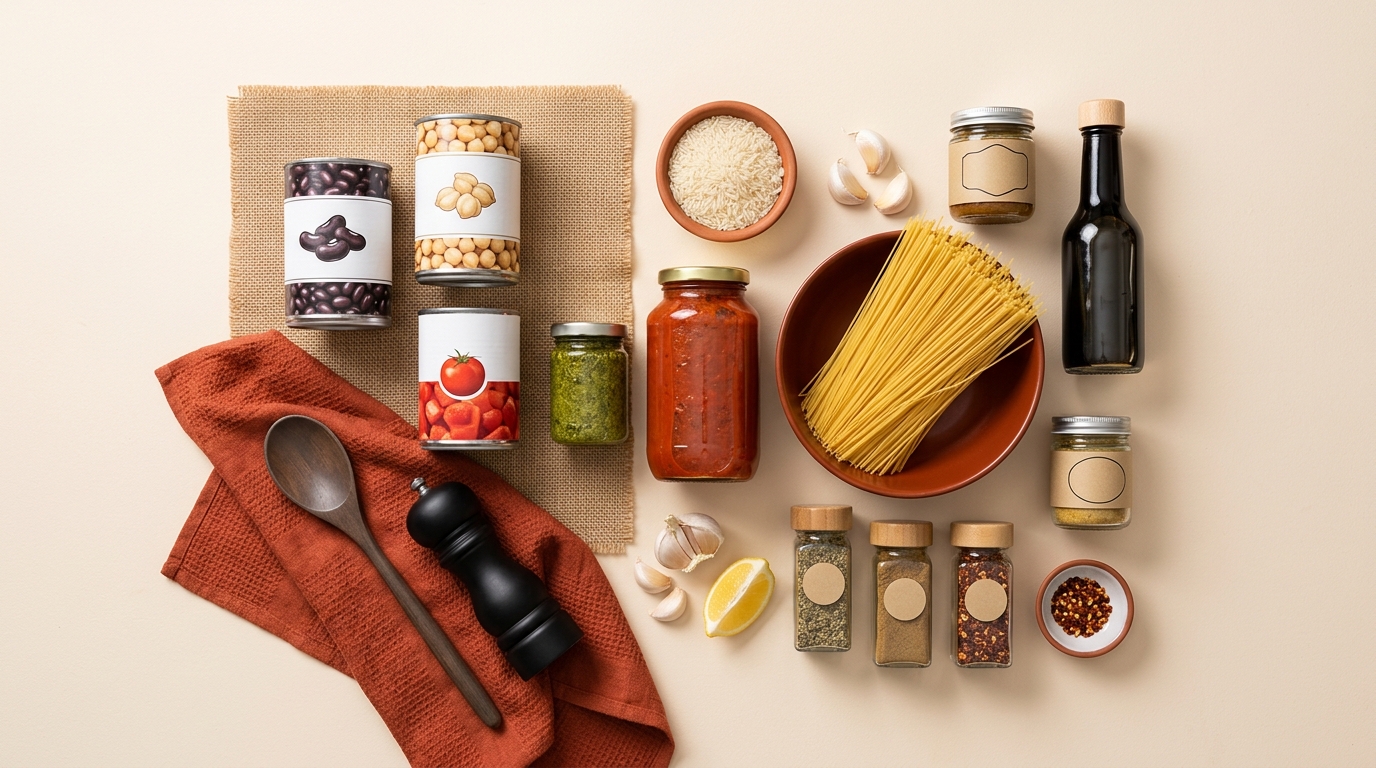
Most meal planning advice assumes you have a free evening, a fresh notebook, and the patience to research seven new recipes. That’s not realistic for most weeks, and it’s probably why the habit never sticks.
Learning how to meal plan quick dinners doesn’t require any of that. It requires a system you can run through fast, using what you already know your family eats, sitting down once and getting the whole week handled in about the time it takes to watch two sitcom episodes.
This isn’t about becoming a meal prep influencer or filling a fridge with matching glass containers. It’s about opening a notebook or an app, making a handful of fast decisions, and walking away with a plan that actually survives contact with a Tuesday.
The steps below build on each other, so working through them in order the first few times will help the system click. After that, most people find they can run the whole process in well under twenty minutes.
The 20-Minute Version
The Fast Path Through the Whole System
Set a 5-Minute Timer
A hard stop turns a rough skeleton into a plan instead of an hour of scrolling recipe blogs.
Sort Nights by Speed, Not by Meal
Label each night fast, medium, or slow before matching any actual recipe to it.
Build Around One Bulk Protein
One package of chicken thighs becomes a stir fry, a soup, and tacos across three different nights.
Keep One Backup in the Freezer
A standing meal for the night plans fall apart, replaced the moment it actually gets used.
1. Set a Five Minute Timer Before You Even Open the Fridge
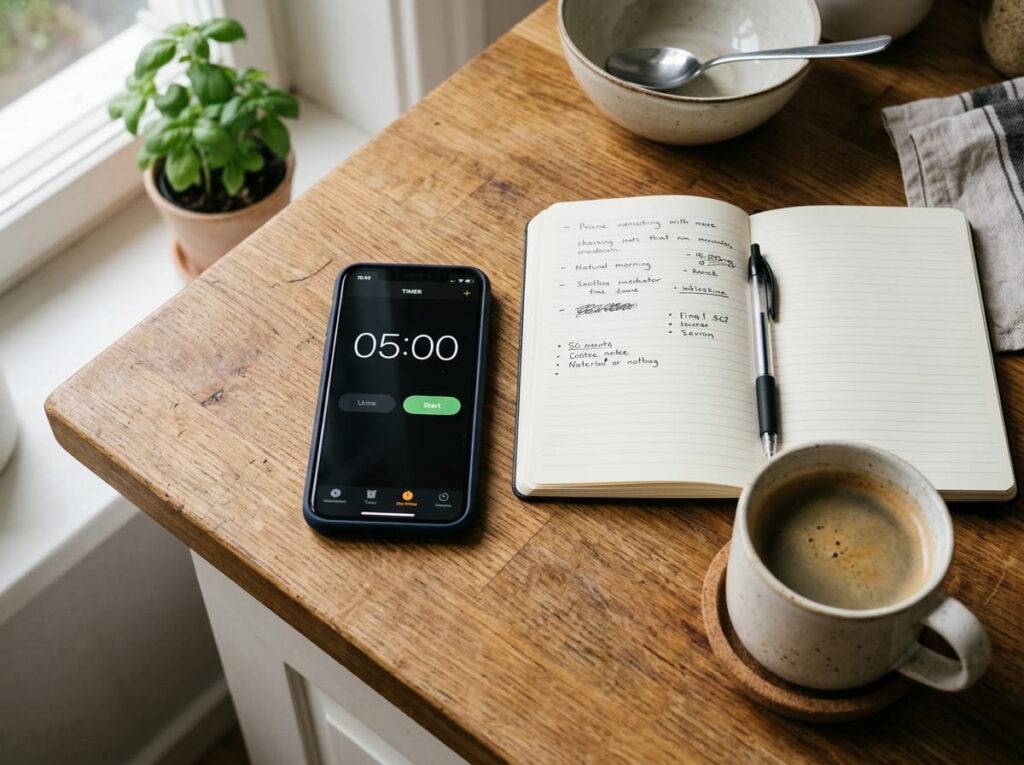
Planning without a timer tends to expand to fill however much time you give it, which is exactly how a quick task turns into an hour of scrolling recipe blogs.
Set a real timer for five minutes and treat it as a hard stop for this first pass. The goal isn’t a perfect plan, it’s a rough skeleton you’ll fill in during the next steps. Most people are surprised how much they can decide once there’s a clock forcing quick calls instead of second guessing.
2. Pull Up Last Week’s Plan Instead of Starting From a Blank Page
A blank page is the slowest possible place to start, since it makes every single meal feel like a decision from scratch.
Keep last week’s plan somewhere you can find it fast, a notes app, a photo, a magnet on the fridge. Glance at what worked, cross off what fell flat, and reuse the parts that landed well. This alone can cut planning time in half, since you’re editing instead of inventing.
💡 Quick Tip
Snap a photo of your plan each week so it’s always one tap away the next time.
3. Check What’s Already in Your Fridge and Freezer First
The fastest way to waste planning time is deciding on meals before you know what you’re already sitting on.
Open the fridge, freezer, and pantry, and jot down anything that needs using soon. That half bag of spinach and the chicken thighs in the freezer aren’t just ingredients, they’re your starting point. Planning around what’s already there also trims the grocery list down to what you’re actually missing.
4. Sort Your Week Into Three Speeds Instead of Seven Separate Meals

Not every night needs the same amount of cooking energy, so stop planning as if it does.
- Label each night as fast, medium, or slow before you assign any actual recipe.
- Fast nights get a 15 minute meal, something like eggs or a quick stir fry.
- Slow nights, usually a weekend, can carry something that simmers or bakes longer.
Write out the seven nights and mark your known busy ones first.
Label each night fast, medium, or slow based on your schedule.
Only then start matching actual meals to each speed category.
5. Build Around One Protein Bought in Bulk, Not Seven Different Ones
Buying a different protein for every single dinner is one of the biggest hidden time and money drains in weekly planning.
Pick one or two proteins to anchor the week, a big pack of chicken thighs or ground beef, and build multiple meals around them in different forms. One package of chicken can become a stir fry, a soup, and tacos across three separate nights without repeating the same meal.
Buy one protein in bulk and split it across the week.
Change the sauce or seasoning to keep meals feeling different.
Buying a new, different protein for every single night.
Letting small packages drive up your grocery total.
6. Keep a Running List of Ten Dinners Your Household Already Likes
Most households actually rotate through a smaller set of meals than people realize, the trick is having that list written down instead of trying to recall it under pressure.
- Write down ten dinners your family reliably eats without complaint.
- Pin the list somewhere visible, a notes app or the inside of a cabinet door.
- Pull from this list first before searching for anything new.
What to grab first
7. Match Each Meal to the Night It Actually Fits Your Schedule

A plan that ignores your actual week falls apart by Wednesday, no matter how good the recipes are.
The old way was picking seven recipes first and hoping they’d fit wherever they landed, which meant the slow braised dish often ended up scheduled for the one night with a late meeting. The better way is checking your calendar first, then slotting meals into the nights that can actually support them.
A slow cooked meal scheduled on the busiest night of the week.
Meals scheduled around your calendar instead of fighting it.
8. Choose One New Recipe a Week Instead of Reinventing Every Night
Trying something new every single night sounds fun in theory, but it quietly adds research time, extra ingredients, and a much higher chance dinner flops.
Cap it at one new recipe per week and build the rest of the week around meals you already know work. This keeps the excitement of trying something new without the risk of six failed experiments in a row.
| One new recipe a week | A new recipe every night |
|---|---|
| Grocery list stays short and familiar. | List balloons with one off ingredients. |
| Low risk if the new recipe misses. | A bad night can wreck the whole week. |
9. Write the Grocery List by Store Section, Not by Recipe
A list organized recipe by recipe means backtracking across the whole store for the third time you need onions.
Group everything by section instead, produce, dairy, meat, pantry, so you walk the store once in a straight line. This single change usually cuts actual shopping time by ten minutes or more, and it’s the difference between a fast trip and standing in an aisle rereading your list twice.
Sort your list by store section once, and every future trip gets faster automatically.
10. Prep Sauces and Seasoning Mixes During Sunday Downtime
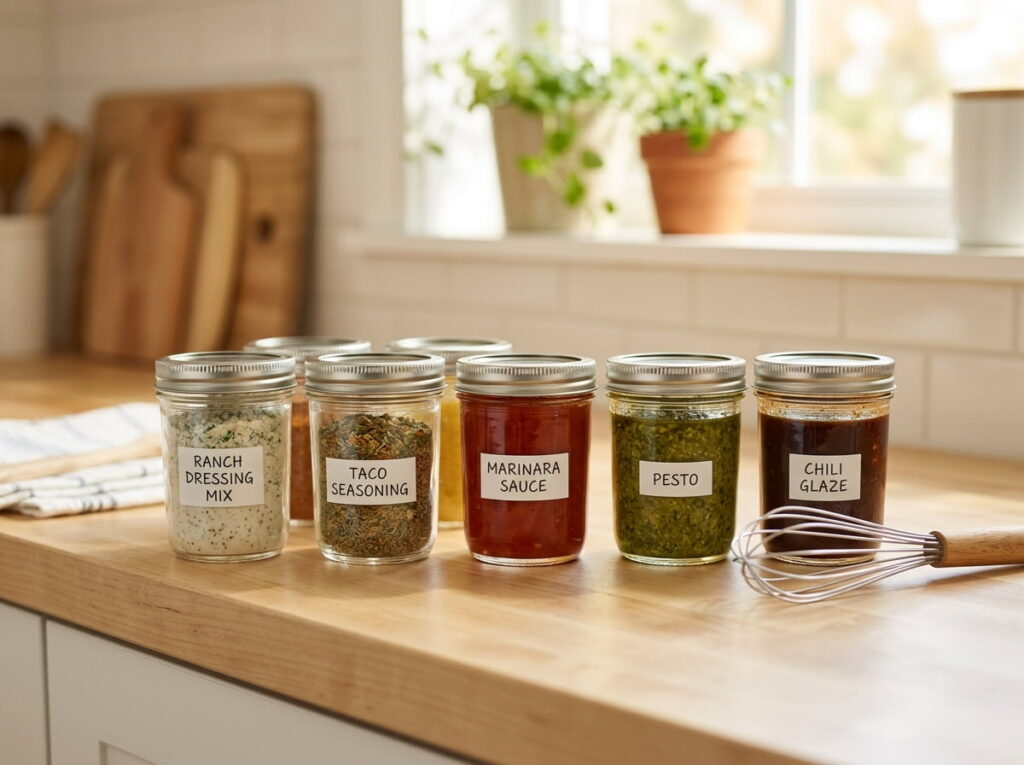
The parts of cooking that actually eat up weeknight time are rarely the cooking itself, it’s the small prep steps done from scratch every single night.
Mix a marinade, whisk a stir fry sauce, or blend a spice rub while something else is already happening, dinner simmering, a show playing in the background. Store each one in a labeled jar so weeknight you just grabs and pours instead of measuring from scratch.
💡 Quick Tip
Small mason jars work well here, label with the date and which meal it’s for.
11. Double One Recipe on Purpose So Tuesday Is Already Done
Cooking twice as much rice or sauce takes almost no extra time compared to cooking it from scratch a second time later in the week.
Pick one meal that freezes or reheats well, and double it on purpose. Portion half for tonight and freeze or fridge the rest for a night you already know will be tight. This turns one cooking session into two finished dinners without any extra planning required.
12. Keep One Backup Meal in the Freezer for the Night Plans Fall Apart
Plans fall apart. A meeting runs long, someone gets sick, the whole week shifts, and the planned meal for that night just doesn’t happen.
That’s what a standing backup meal is for. Keep one dependable dish in the freezer at all times, replace it the moment you use it, and never let that slot sit empty. It’s the difference between takeout on a hard night and something warm you already have.
Pick one freezer friendly meal your household reliably likes.
Keep it stocked at all times, treat the slot as never empty.
Replace it right away the day you actually use it.
13. Use a Single Page Template Instead of a Complicated App

Fancy meal planning apps promise a lot, but most people abandon them within a few weeks because they add more steps than they save.
A single printed page or one simple note works just as well, and it removes the friction of opening an app, waiting for it to load, and tapping through menus. The best system is the one you’ll actually use every single week without dreading it.
14. Chop All Your Vegetables in One Sitting, Not Meal by Meal
Pulling out the cutting board five separate times during the week adds up to a lot more total time than doing it once.
- Wash and chop onions, peppers, and other sturdy vegetables right after grocery shopping.
- Store them in clear containers so you can see what’s ready to grab.
- Save anything delicate, like herbs or avocado, to chop closer to cook time.
What to grab first
15. Plan Leftovers as Their Own Meal, Not an Afterthought
Leftovers treated as a maybe end up thrown out more often than leftovers actually built into the plan from the start.
Assign one night on the calendar as a leftovers night before the week even starts. That way it’s not a last minute decision made out of guilt, it’s a planned meal that happens to already be cooked. This one move also quietly cuts food waste without any extra effort.
Pick the leftovers night before the week starts.
Treat it as a real meal slot on the calendar.
Deciding on leftovers night at the last minute.
Letting containers sit until they’re tossed out.
16. Keep a Standing Grocery List Taped Inside a Cabinet Door
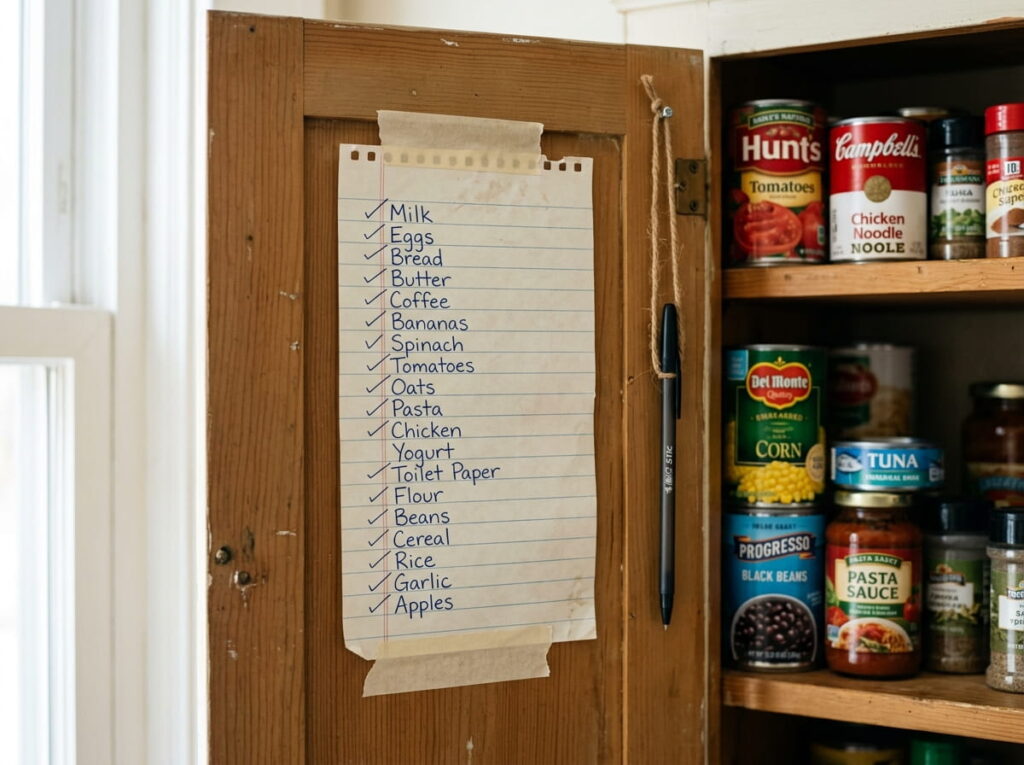
A grocery list built entirely from memory always misses something, usually the one thing you needed most.
Tape a running list inside a cabinet door and add to it all week as things run low, not just on planning day. Compare that to trying to recall everything in a rushed five minutes before heading to the store, one version is accurate, the other guarantees a second trip.
| Running list all week | Recalled from memory |
|---|---|
| Catches items the moment they run low. | Misses things you didn’t think of in time. |
| One trip usually covers everything. | Often means a second trip mid week. |
17. Give Yourself One No Cook Night Built Into Every Week
Not every dinner has to involve the stove, and pretending otherwise is part of what makes planning feel heavier than it needs to be.
Build in one night a week where dinner is sandwiches, a big salad, or breakfast for dinner, something that takes minutes, not a real recipe. It’s less a meal and more a break, and having it already planned means it doesn’t feel like giving up when you use it.
Every single night planned as a full stovetop meal.
One planned night off built right into the week.
18. Review What Worked on Sunday Before You Plan the Next Week
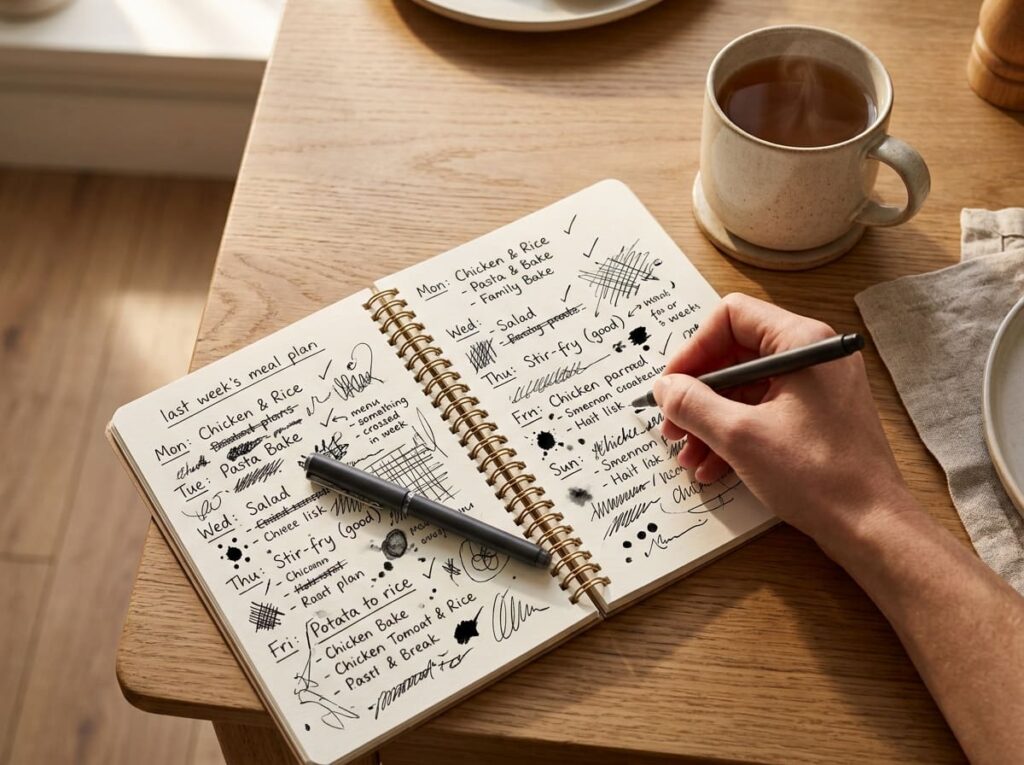
The whole system gets faster over time, but only if you actually look back at what happened the week before.
Spend two minutes before your next planning session thinking through what got eaten, what got skipped, and what felt like too much effort. That short review is what turns meal planning from a weekly chore you dread into a system that keeps getting easier to run.
A two minute review each week is what makes the whole system faster every time you run it.
Conclusion
None of these steps require a special app, a spreadsheet, or a spare Saturday. That’s really the point behind learning how to meal plan quick dinners, the system should fit into a normal week, not become one more thing competing for your time.
Run through the steps once and it might take closer to thirty minutes while you build your go-to list and template. After that, most of the heavy lifting is already done, and each week becomes mostly editing instead of starting over. The version that actually works long term is the one simple enough to repeat without dreading it.
Save this list for the next Sunday you’re staring at a blank week with no idea where to start.