Feeding a household for a week without blowing the grocery budget usually comes down to planning, not just picking cheap ingredients at random. Dinners for under $50 are possible, but only if the whole week gets planned together instead of deciding meal by meal at the store with no real strategy.
The trick is building meals that share ingredients. A bag of rice, a couple pounds of chicken thighs, and a few cans of beans can stretch across several nights if the menu is planned around what repeats, not what’s different every single day. Buying whole vegetables instead of pre-cut, checking the sales flyer first, and leaning on the freezer all add up fast too.
This guide walks through eighteen steps and dinner ideas that work together as a real plan, not just a list of cheap recipes thrown together. Some are specific dinners for individual nights, others are shopping and cooking habits that make the whole week stretch further. Follow them together, and a full week of dinners fits comfortably under fifty dollars.
1. Build the Week Around Two or Three Base Proteins
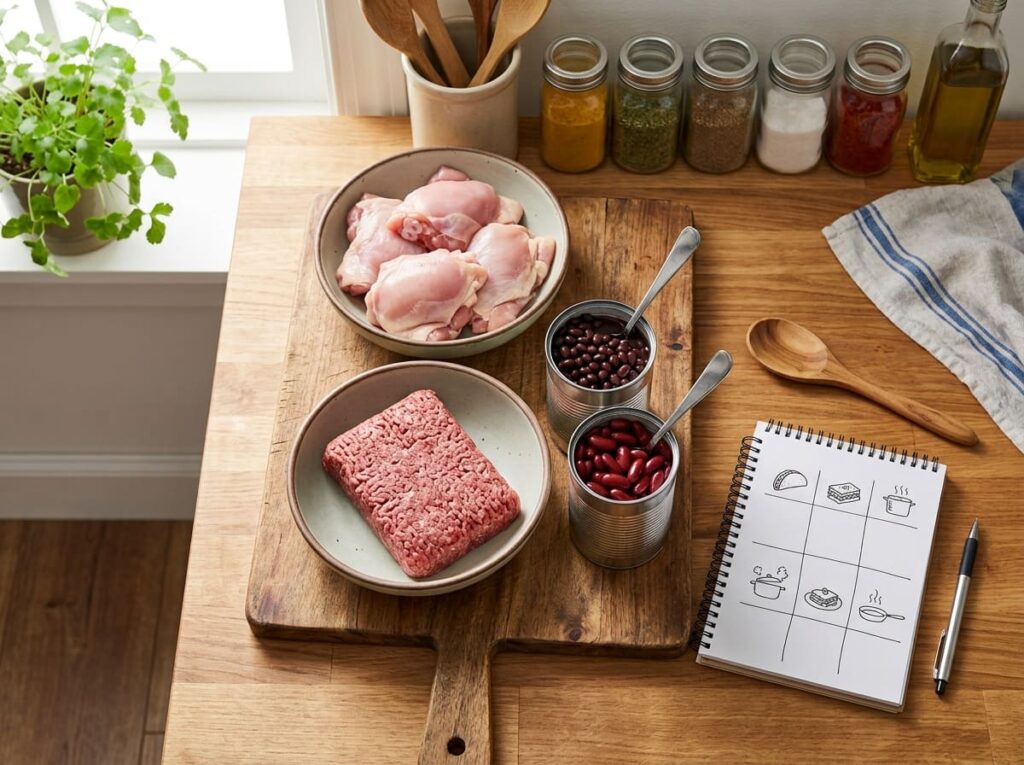
Buying five different proteins for five different meals adds up fast, and it’s the single biggest reason grocery bills run over budget without anyone noticing until checkout.
Pick two or three proteins, something like chicken thighs, ground beef, and a couple cans of beans, and build every dinner that week around those three things instead of buying something new for each recipe.
2. Shop the Sales Flyer Before Building the Menu
Deciding on the menu first and shopping second usually means paying full price for whatever the recipe calls for, even when something similar is on sale two feet away.
💡 Quick Tip
Check the store’s sales flyer before planning meals for the week, not after. Building the menu around what’s already discounted saves more than any coupon.
Flip the order instead, checking what proteins and produce are discounted first, then building the week’s dinners around whatever comes up.
3. Baked Chicken Thighs and Rice for Night One
Bone-in chicken thighs cost less per pound than boneless breasts and stay juicier through a longer bake, which makes them a better fit for a budget-focused week.
Season the thighs simply, bake until the skin crisps, and cook a big batch of rice alongside it, since extra chicken and rice both carry over into later meals this week.
4. Repurpose Leftover Chicken Into Tacos for Night Two

Cooking extra chicken on night one only pays off if it actually gets used again, and tacos are one of the fastest ways to turn the same meat into something that doesn’t taste like a repeat.
Shred the leftover chicken and warm it with a little taco seasoning.
Warm tortillas in a dry skillet for about 30 seconds per side.
Top with whatever’s left in the fridge, shredded cheese, salsa, or a squeeze of lime.
This is the meal that makes cooking extra chicken on night one worth the effort in the first place.
5. Lean on Dried Beans Instead of Canned When Time Allows
Dried beans cost noticeably less per serving than canned, and the only real trade-off is a longer cook time that mostly happens without any attention needed.
Soak dried beans overnight when there’s time to plan ahead.
Cook a large batch and freeze what isn’t used right away.
Relying only on canned beans out of habit, even with time to spare.
Cooking a small batch when a larger one costs barely more.
6. Bean and Rice Burrito Bowls for Night Three
The rice cooked in bulk on night one and the beans prepped ahead in item five both meet back up here, which is really the point of planning the week this way in the first place.
Grab before you start:
What to grab first
Warm the rice and beans together, then build bowls with whatever vegetables and toppings are already on hand, no shopping list required for this one.
7. Buy Whole Vegetables Instead of Pre-Cut
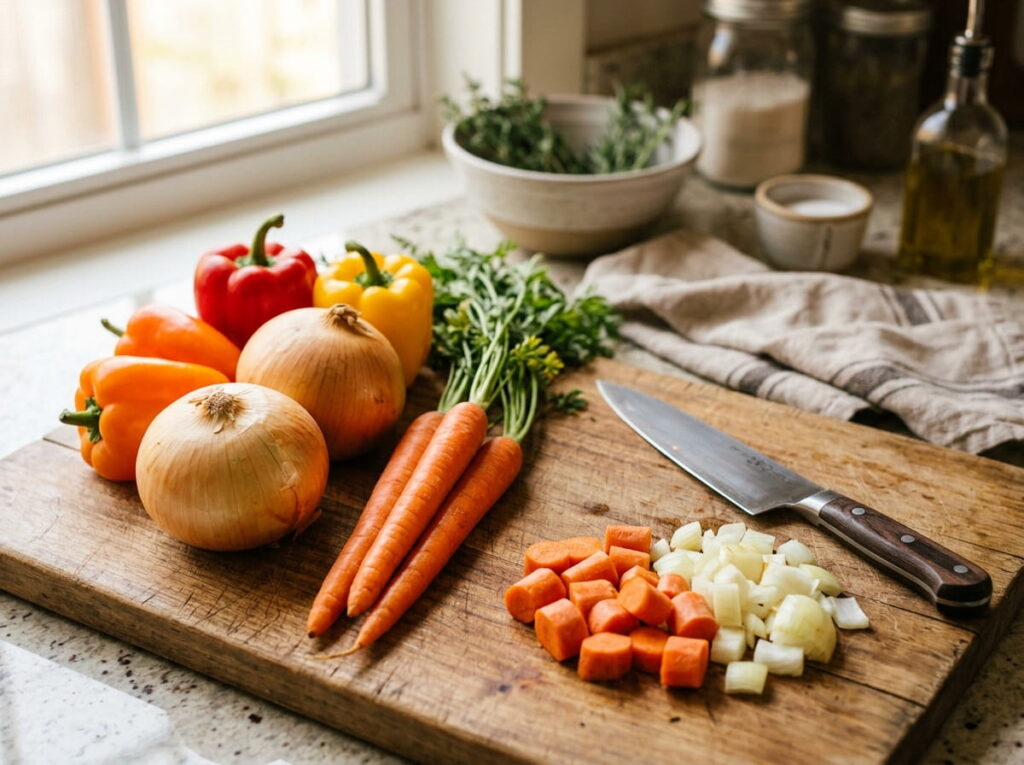
Pre-chopped vegetables cost more per pound for the exact same food, and the extra time saved rarely matters on a night when dinner is already planned out.
A bag of pre-diced onions costing noticeably more than a whole one.
The same onion, whole, for less, with only a few extra minutes of chopping.
8. Egg-Based Breakfast for Dinner on a Lighter Night
Eggs cost far less per serving than most meats, which makes a breakfast-for-dinner night one of the easiest ways to bring the weekly average down.
Eggs vs. meat as a protein source per meal:
| Eggs | Meat |
|---|---|
| Lower cost per serving | Higher cost per serving |
| Ready in minutes | Often needs longer prep or cook time |
Scrambled eggs with toast, or a simple omelet with whatever vegetables are left, makes a real dinner without leaning on the week’s meat budget at all.
9. Pasta With a Simple Vegetable Sauce for Night Four
A box of pasta and a jar of marinara cost less combined than almost any other dinner on this list, and adding vegetables stretches it into a full meal without needing meat at all.
Cook pasta while sautéing whatever vegetables are left in the fridge, then toss everything with a jar of marinara sauce and a little parmesan on top.
This is the night to use up whatever vegetables are close to going bad, since almost anything works stirred into pasta.
10. Stretch Ground Meat Further With Rice or Beans Mixed In
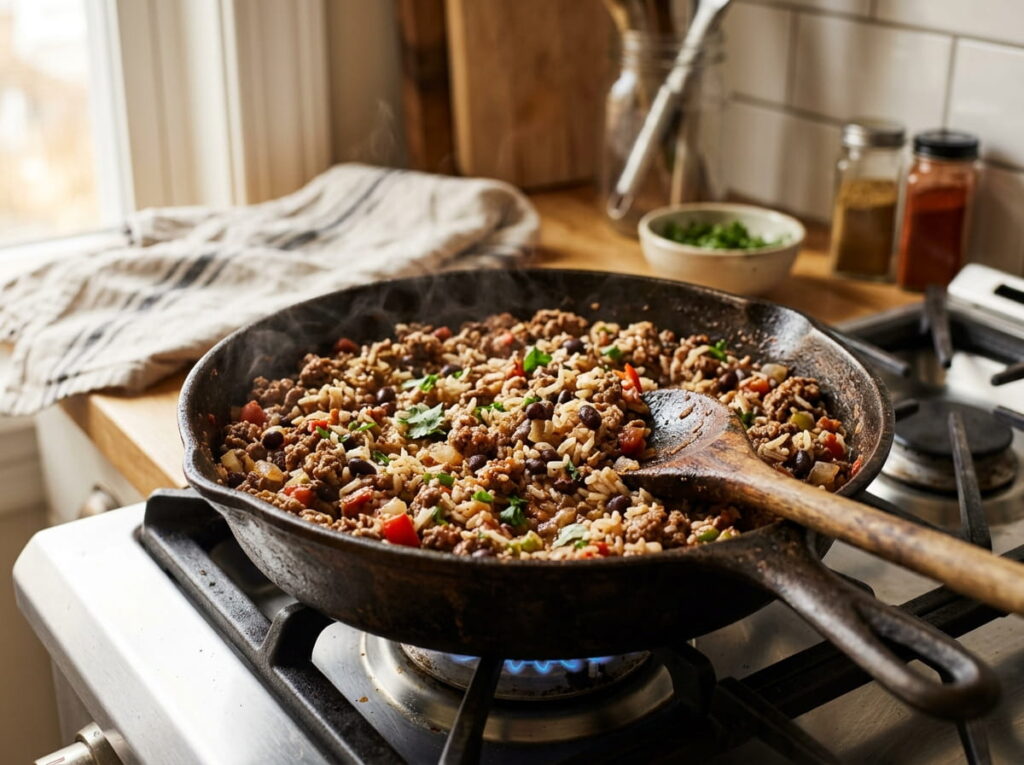
A pound of ground beef feeding four people goes further once it’s mixed with something else, and the meal barely tastes different once it’s seasoned well.
⚠️ Watch Out
Adding too much rice or beans can water down the flavor. Start with a small amount stirred in and adjust from there.
A dish like taco filling or chili barely changes in flavor once beans or rice make up part of what would otherwise be all meat.
11. Sheet Pan Sausage and Vegetables for Night Five
One pan handling both the protein and the vegetables means less cleanup and less pressure to buy a separate side dish for this meal.
Toss sliced sausage with whatever vegetables are left this week, drizzle with oil, and roast on one pan until everything caramelizes at the edges.
12. Use the Freezer to Avoid Food Waste Mid-Week
Vegetables and meat that won’t get used before they spoil are money already wasted, and the freezer is the simplest fix for that problem before it happens.
Check the fridge partway through the week for anything close to spoiling.
Freeze meat that won’t be cooked within a day or two.
Freeze vegetables that are starting to wilt for use in soup later.
This one habit alone can save more over a month than most single coupon or sale ever would.
13. Lentil Soup Using What’s Left in the Produce Drawer

A bag of dried lentils costs very little and turns whatever vegetables are lingering in the produce drawer into a real, filling dinner.
Simmer lentils with broth and any chopped vegetables that need using, and this is the meal that clears out the fridge before the next grocery trip.
14. Skip Pre-Made Sauces and Build Your Own From Pantry Basics
A jar of pre-made sauce costs more than the handful of pantry ingredients it takes to build something similar at home.
Grab this basic rotation:
What to grab first
It takes about fifteen extra minutes over a jarred sauce, but the cost difference adds up fast across a week of meals that all lean on some kind of sauce.
15. Leftover Night Instead of a Seventh New Recipe
Planning six new dinners and one leftover night instead of seven fresh recipes is one of the simplest ways to stretch the same groceries further.
Seven separate recipes, seven separate grocery lists, no real repeats.
Six planned meals and one night built entirely from what’s already leftover in the fridge.
16. Plan One Meatless Night to Cut Costs Further

Meat is usually the most expensive part of any plate, and cutting it out entirely for even one night makes a real difference by the time the whole week adds up.
Meat-based vs. meatless cost per plate:
| Meat-Based | Meatless |
|---|---|
| Meat usually the biggest single cost | Beans, lentils, and eggs cost far less |
| Familiar, easy to plan around | Just as filling with the right combination |
A bean-based chili, a lentil soup, or a simple pasta with vegetables all work fine as the one meatless night in the week’s rotation.
17. Make a Shopping List and Stick to It in the Store
Walking into the store without a list is one of the fastest ways to blow past a budget, since extra items always seem to end up in the cart along the way.
A written list, checked against the actual menu, is the single easiest way to keep the whole week’s total under control.
Write the list based on the actual planned meals, not a general guess, and try to stick close to it once inside the store.
18. Batch Cook Rice and Beans at the Start of the Week
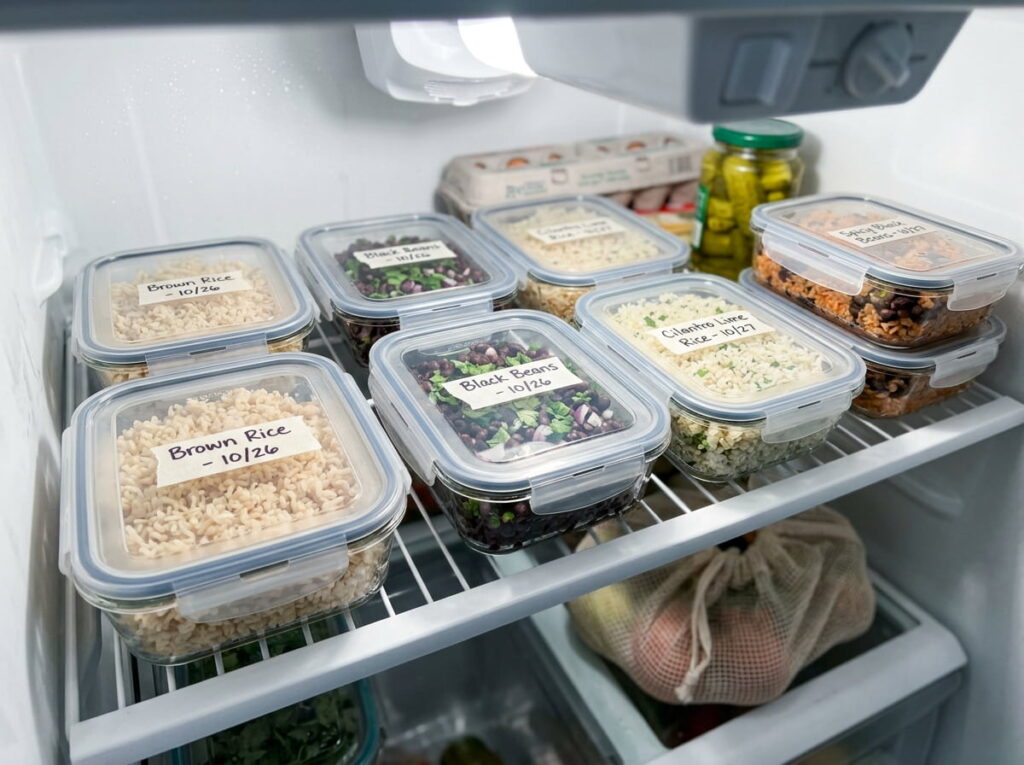
Cooking a big pot of rice and a big pot of beans on the same day, right at the start of the week, means several dinners are already halfway finished before they’re even planned out.
Cook a large pot of rice and a large pot of beans on the same day.
Store both in the fridge in separate containers, ready to grab.
Pull from both throughout the week for bowls, tacos, or soup.
Conclusion
Getting dinners for under $50 for a full week isn’t about one clever trick, it’s about a handful of small habits working together. Building the menu around a few shared proteins, batch cooking rice and beans early, and planning one leftover night instead of a seventh new recipe all add up by the time Friday rolls around.
None of these steps ask for anything complicated, just a little planning before the grocery trip instead of figuring it out meal by meal. Pick a few of these habits to start with, add more as they become routine, and the weekly total starts shrinking without dinner ever feeling like it’s missing something.
Save this list for the next time the grocery budget needs a real plan behind it.