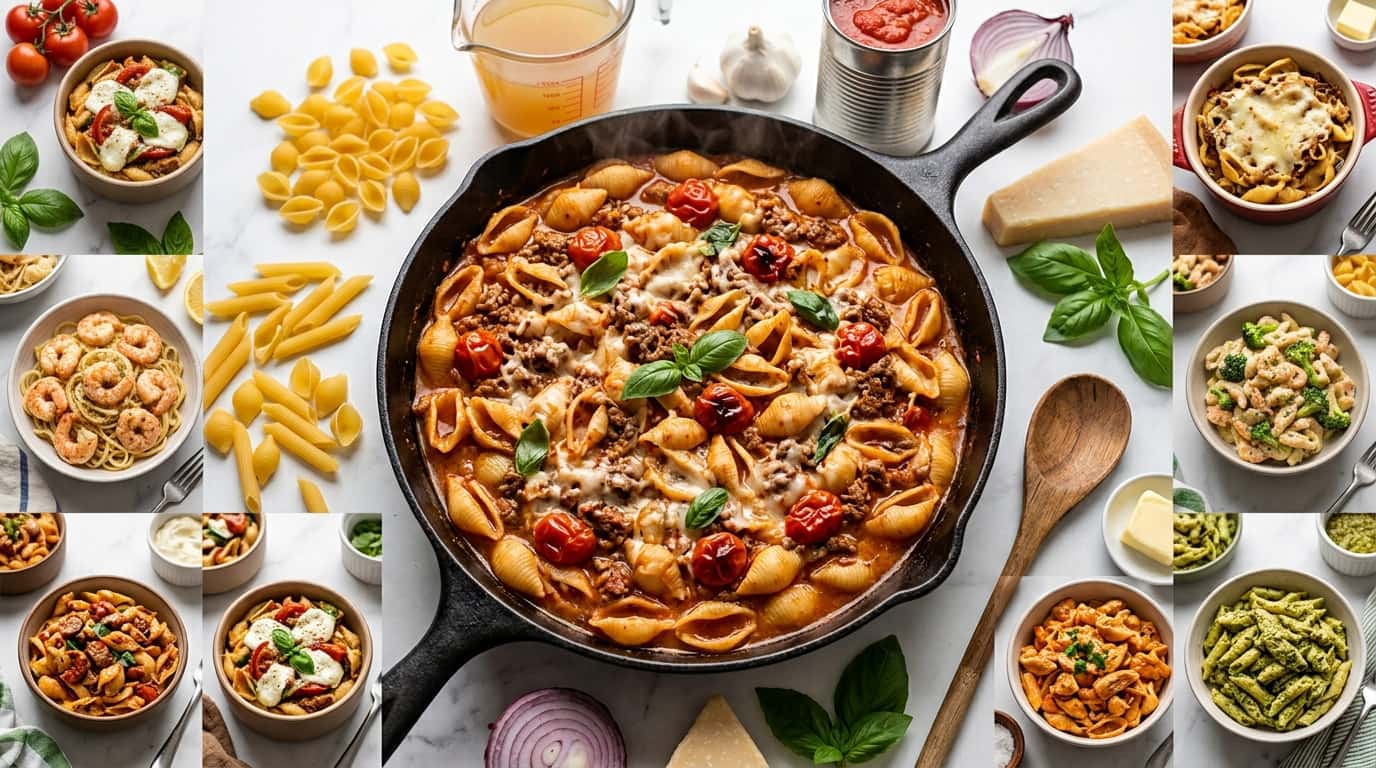
Boiling pasta in one pot, building a sauce in another, and then dirtying a colander on top of it all is a lot of cleanup for a weeknight dinner that should not need that much effort. One pan pasta dinners solve that problem by cooking the noodles directly in the sauce, using just enough liquid for everything to finish together in a single skillet.
This list covers real dinners, not just a sauce poured over already cooked noodles. Every recipe here builds the pasta right into the pan alongside the protein and sauce, so by the time dinner is ready, there is exactly one thing sitting in the sink afterward. Some lean on pantry staples like canned tomatoes and broth. Others use quicker proteins like shrimp that come together in under twenty minutes total.
Pick a few that fit what is already in the fridge, get the liquid ratio right the first time, and cleanup on a pasta night stops being the part everyone dreads. The pan does almost all the work here, which is really the whole point.
1. A One Pan Beef and Shell Pasta Dinner That Cooks the Noodles Right in the Sauce
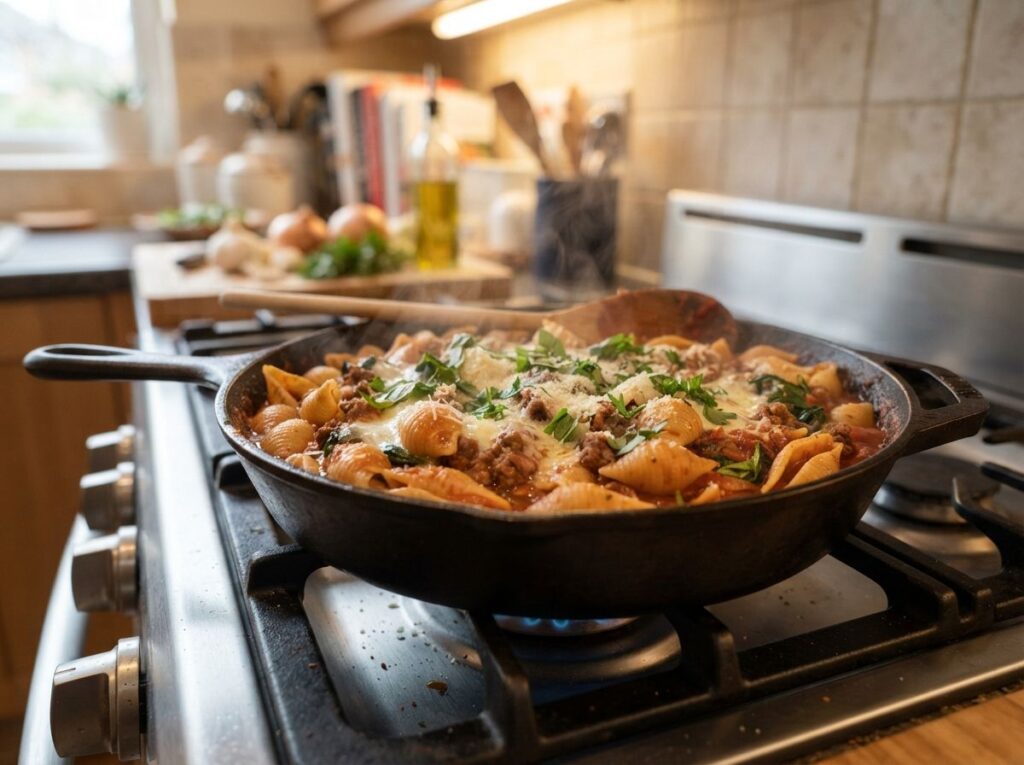
Ground beef browned first, then simmered with pasta shells, broth, and crushed tomatoes right in the same pan, builds a dinner close to a skillet lasagna without ever needing a separate pot for the noodles.
What makes this one so reliable:
- The pasta absorbs the broth as it cooks, thickening the sauce naturally
- Beef browns first, so the fat flavors everything that goes in after
- One pan means one thing to wash once dinner is over
Stir occasionally as it simmers so the pasta on the bottom does not stick before it is fully cooked.
2. Turning Chicken and Broccoli Into a One Pan Alfredo Without Boiling a Separate Pot
Most alfredo recipes assume a separate pot of boiling water for the pasta while the sauce comes together elsewhere. Cooking the noodles right in the cream and broth mixture instead means the starch that normally goes down the drain stays in the pan, helping the sauce thicken on its own.
💡 Quick Tip
Add the broccoli during the last five minutes of cooking so it stays bright green instead of turning mushy the whole way through.
3. A One Pan Sausage and Tomato Pasta That Builds Its Own Sauce as It Cooks
Sliced sausage browned first releases enough fat and flavor that the sauce practically builds itself once canned tomatoes and pasta go into the same pan, no separate sauce simmering on another burner.
Sauce simmering on one burner while pasta boils separately on another.
Sausage, tomatoes, and pasta building the sauce together in one pan.
4. Getting the Liquid Ratio Right So One Pan Pasta Does Not Turn Out Soupy or Dry
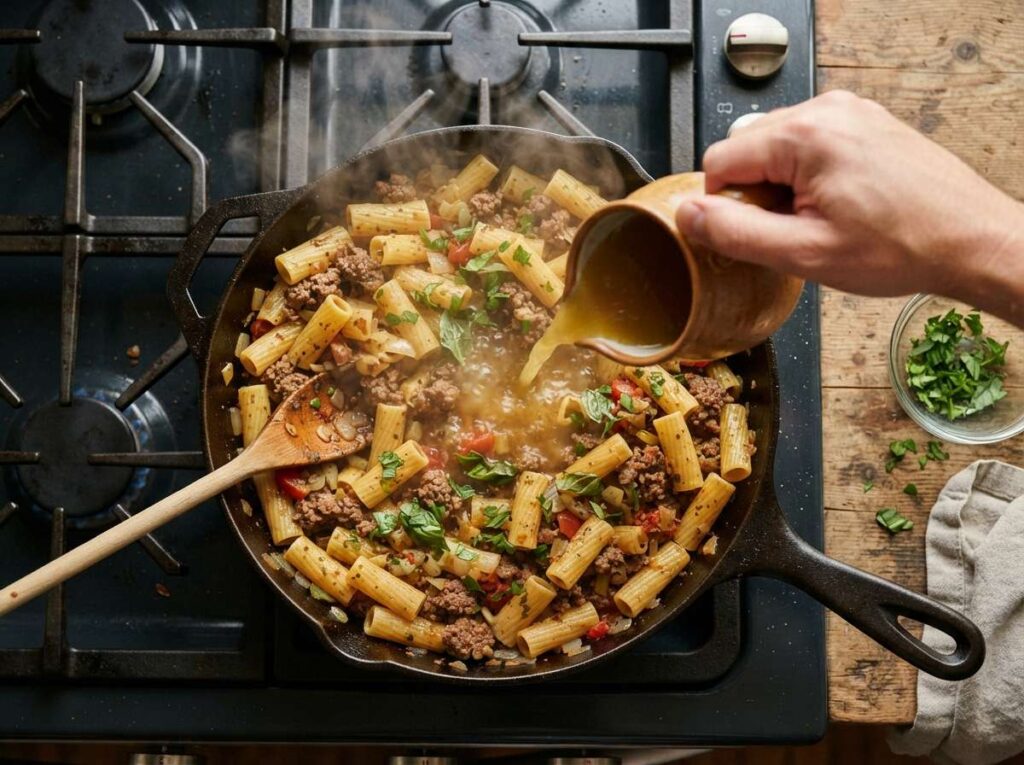
Too little liquid leaves the pasta undercooked and starchy, while too much turns dinner into a thin soup instead of a coated dish.
What to keep in mind:
- Use about 2.5 to 3 cups of liquid per 8 ounces of dry pasta as a general starting point
- Broth or a broth and canned tomato combination works better than water alone
- Check the pasta a few minutes before the package time, since it cooks a little faster in a shallow simmer
Adjust with a splash more liquid if the pan looks dry before the pasta is fully tender.
What to keep in mind
5. A One Pan Taco Pasta Dinner That Uses Half the Dishes a Regular Taco Night Needs
Ground beef, taco seasoning, pasta, and a can of diced tomatoes with green chiles all cook together in one skillet, cutting down on the usual taco night spread of shells, toppings, and separate pans.
6. The Order to Add Ingredients So the Pasta Cooks Evenly in One Pan
Dumping everything in at once usually leaves some pasta undercooked and clumped in one spot while the rest overcooks nearby.
- Brown the protein first, then remove it or push it to the side of the pan
- Add aromatics like garlic and onion, cooking briefly before the liquid goes in
- Add pasta and liquid together, stirring once to submerge the noodles evenly before letting it simmer mostly undisturbed
Stirring too often once it starts simmering actually works against even cooking, so a few stirs are enough.
Brown the protein first, then remove it or push it to the side.
Add aromatics like garlic and onion, cooking briefly before the liquid.
Add pasta and liquid together, stirring once to submerge the noodles evenly.
7. A Common Mistake That Leaves One Pan Pasta Starchy Instead of Silky
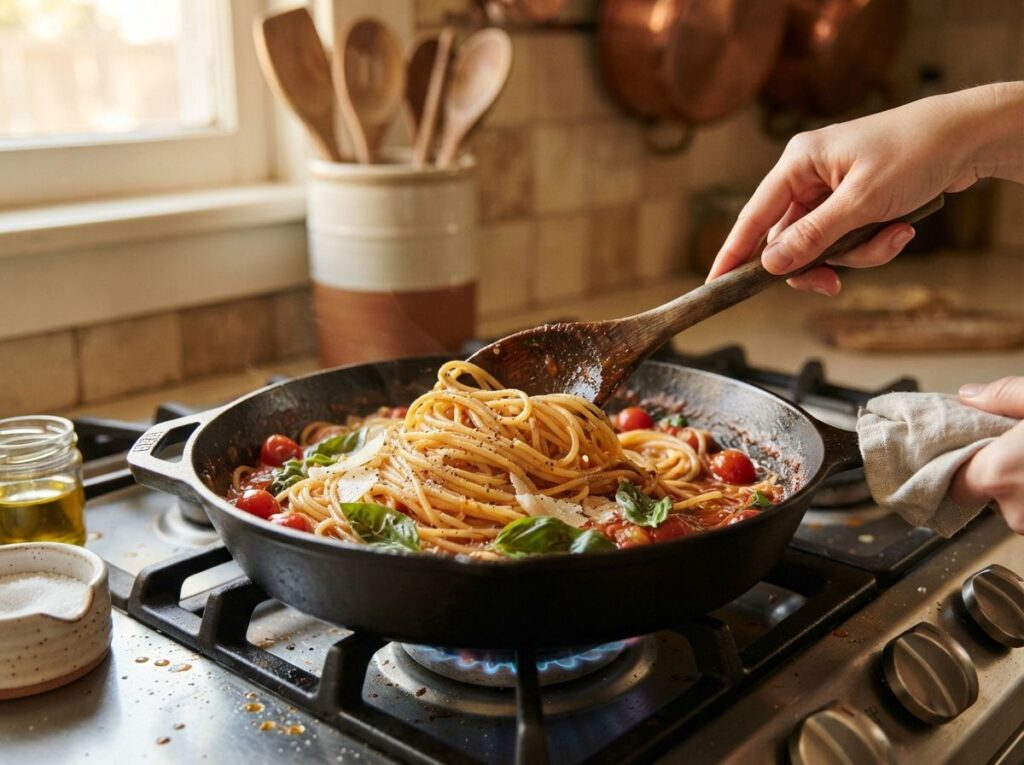
Skipping the stir at the very end, right as the liquid finishes absorbing, is the most common reason one pan pasta ends up gluey instead of glossy.
Give the pasta one final good stir once the liquid mostly absorbs.
Stir in a pat of butter or a splash of cream at the very end for shine.
Walking away right as the liquid finishes absorbing.
Serving straight from the pan without stirring in whatever settled at the bottom.
8. A One Pan Caprese Chicken Pasta That Finishes With Fresh Mozzarella Melted Right In
Chicken, cherry tomatoes, and pasta simmer together in one pan, and fresh mozzarella torn in at the very end melts into pockets throughout instead of sitting as a separate topping.
| Cheese Added Early | Cheese Added at the End |
|---|---|
| Melts into the sauce completely, loses its distinct texture. | Stays in soft, stringy pockets throughout the dish. |
| Blends the whole sauce into one uniform color. | Keeps the tomato and basil colors visible and distinct. |
9. A One Pan Lemon Garlic Shrimp Pasta Ready Before the Table Even Gets Set
Shrimp cooks fast enough that this whole dinner comes together in the time it takes to boil water for a separate pot on any other night, lemon, garlic, and butter building a sauce that clings to the noodles as everything finishes together.
Shrimp cooks so fast this whole dinner is often ready before a separate pot of water would even reach a boil.
10. Choosing the Right Pasta Shape So It Cooks Evenly Without Constant Stirring
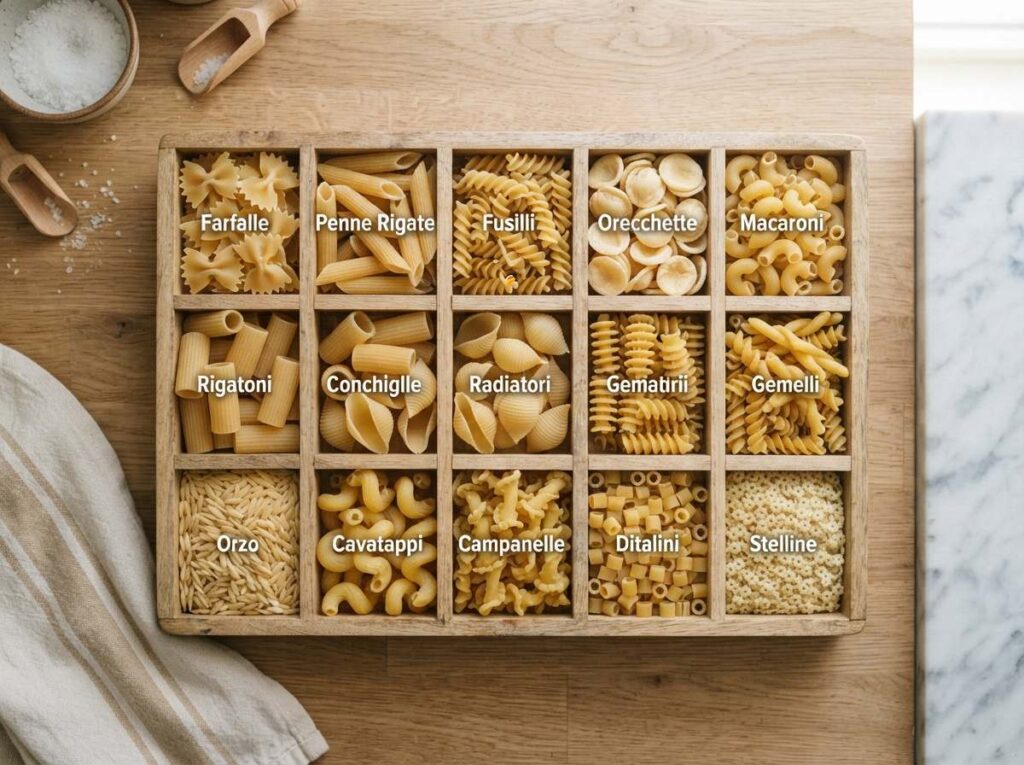
Not every pasta shape behaves the same way sitting in a shallow simmer, and picking the wrong one means uneven cooking no matter how carefully the liquid ratio gets measured.
- Short shapes like penne, shells, and rotini hold up best in a one pan method
- Long noodles like spaghetti can work but need to be broken in half first
- Avoid delicate shapes like angel hair, which overcook fast in this style
- Whole grain or gluten free pasta may need slightly more liquid, since they absorb differently
Stick with short, sturdy shapes for the most consistent results across every recipe on this list.
- ▸Short shapes like penne, shells, and rotini work best
- ▸Long noodles work but need breaking in half first
- ▸Avoid delicate shapes like angel hair, which overcook fast
11. A One Pan French Onion Pasta That Builds Deep Flavor Without a Separate Broth Pot
Caramelized onions and beef broth simmered right into the pasta borrow the flavor of French onion soup without needing a separate pot of broth simmering elsewhere on the stove.
12. Keeping a One Pan Pasta From Sticking to the Bottom Halfway Through Cooking
Pasta sitting in the same spot too long without any movement is the most common reason it scorches or sticks before the liquid has fully absorbed.
💡 Quick Tip
Give the pan a gentle stir every five minutes or so while it simmers, just enough to keep the pasta moving without breaking it apart.
13. A One Pan Buffalo Chicken Pasta That Turns Wing Night Into an Actual Dinner
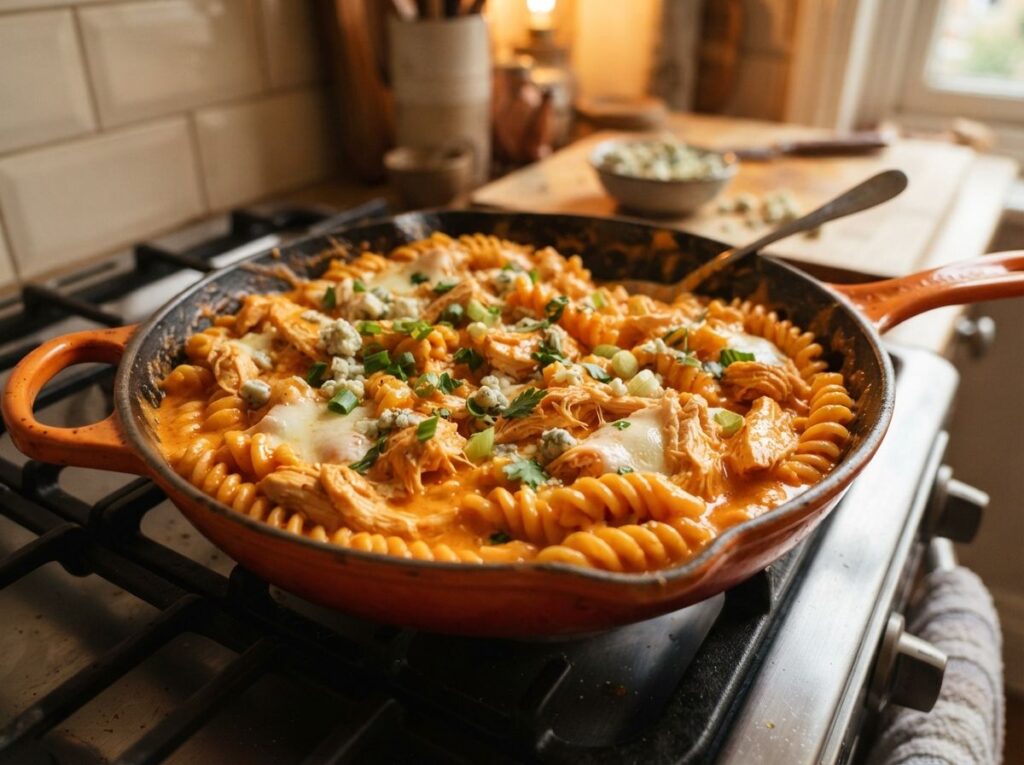
Shredded chicken tossed with buffalo sauce and simmered right into the pasta gives this one the same flavor as wing night, just built into a dinner that counts as a full meal instead of an appetizer.
Buffalo wings as an appetizer, not really counting as dinner.
The same buffalo flavor built right into a full pasta dinner.
14. Building a One Pan Vegetable Pasta Primavera That Uses Whatever Is Left in the Fridge
The end of the week vegetable drawer, a few carrots, half a zucchini, some spinach going soft, works just as well here as anything bought specifically for the dish.
What to have ready:
- Whatever vegetables are on hand, chopped into similar sizes
- 8 ounces short pasta
- 2.5 cups vegetable or chicken broth
- Parmesan and fresh herbs to finish
Add sturdier vegetables like carrots earlier and softer ones like spinach in the last few minutes so nothing turns to mush.
What to have ready
15. A One Pan Pesto Chicken Pasta That Skips the Food Processor Cleanup Entirely
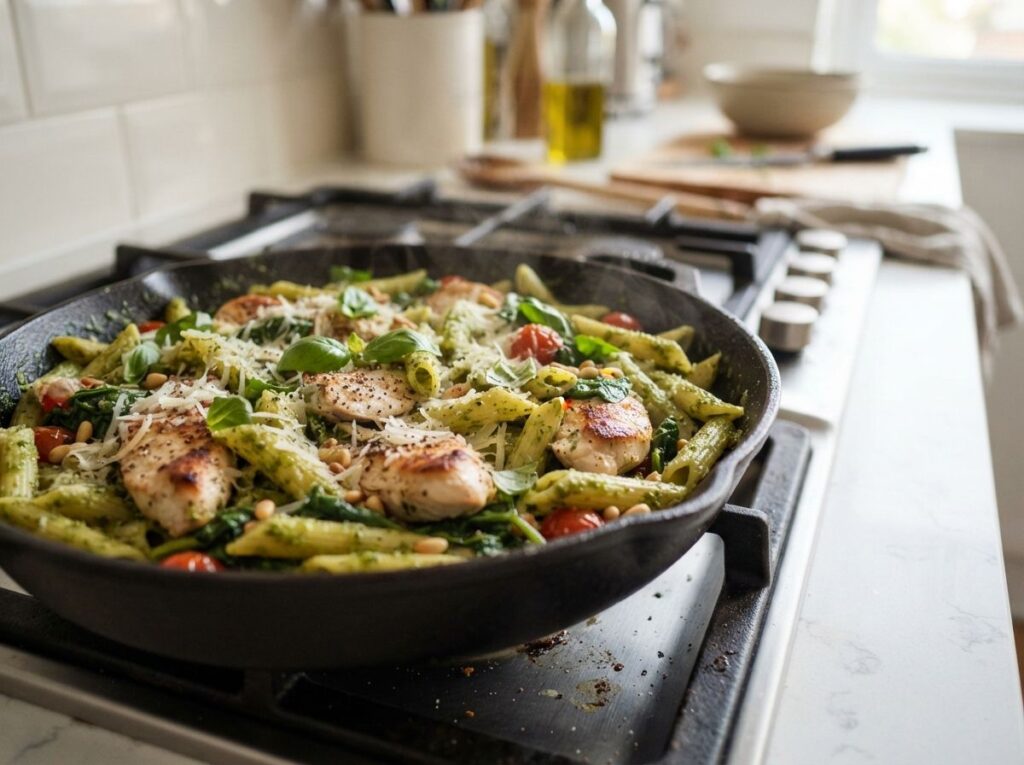
Store bought pesto stirred in at the end skips the food processor, the extra bowl, and the cleanup that comes with making pesto from scratch, while still delivering the same herby flavor over chicken and pasta cooked together in one pan.
Conclusion
The real appeal of one pan pasta dinners is not just the flavor, it is what does not happen after dinner, no second pot to scrub, no colander to rinse, no extra burner left dirty. Getting the liquid ratio right and giving the pan an occasional stir is really all it takes to land somewhere between a boiled pot of noodles and a proper skillet dinner.
Keep a few of these in rotation, from the fifteen minute shrimp version to the slower French onion one worth the extra time, and pasta night stops meaning extra dishes piling up in the sink.
Save this list for the next night that needs dinner without the cleanup that usually comes with it.