Staring into the fridge trying to figure out dinner usually turns into more decisions than anyone has energy for after a long day, protein here, vegetable there, some kind of starch nobody remembered to plan for. That scattered feeling is exactly what a repeatable formula fixes.
Learning how to build a sheet pan dinner isn’t about memorizing dozens of recipes. It’s five decisions, made in the same order every time, that turn whatever’s in the fridge into a complete, balanced meal on one pan.
This list walks through those five steps in detail, along with the small adjustments, like cut size and seasoning timing, that make the difference between a dinner that actually roasts and one that steams into a soggy pile. Once the formula clicks, dinner stops being a blank page every single night.
Let’s build it piece by piece.
1. Start With a Protein Big Enough to Anchor the Whole Pan
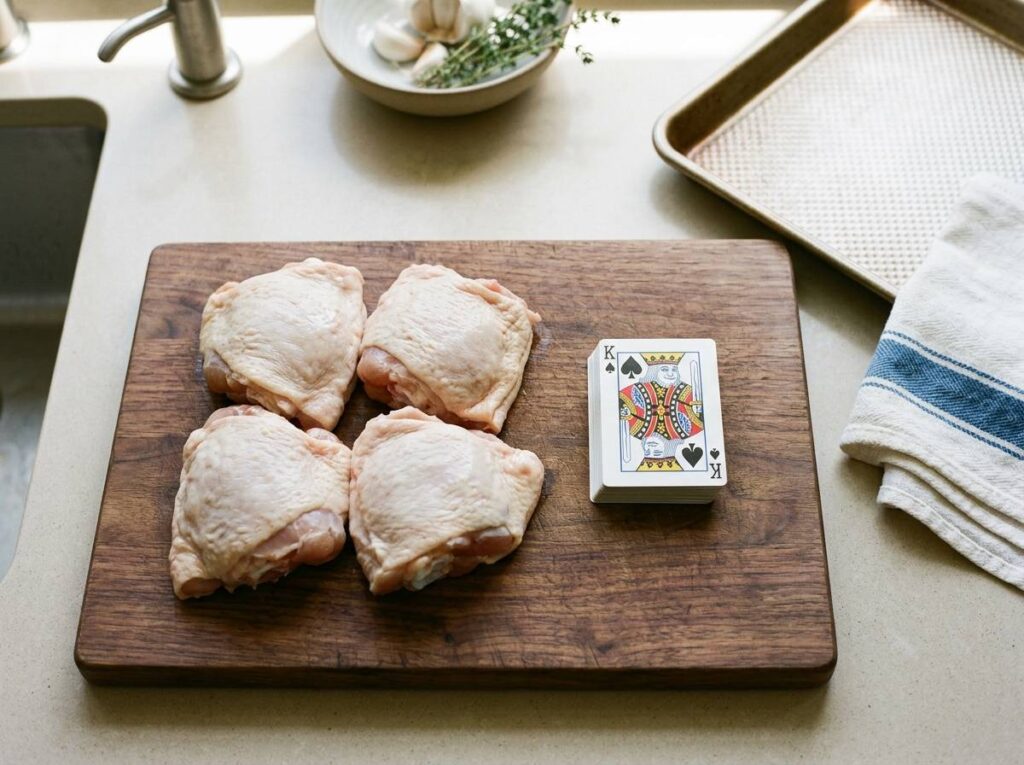
Every balanced sheet pan dinner starts in the same place, with enough protein to actually make the meal filling.
Aim for four to six ounces per person, roughly a deck of cards worth, whether that’s chicken thighs, salmon, sausage, or tofu. This is the anchor everything else gets built around, so choosing it first before touching a single vegetable keeps the rest of the pan from feeling like an afterthought.
2. Pick One Vegetable That Cooks Fast and One That Takes Its Time
A pan with only quick cooking vegetables finishes too soon, and a pan with only dense ones takes forever to get anywhere.
Pair one fast vegetable, like zucchini or cherry tomatoes, with one slower one, like carrots or Brussels sprouts. That combination gives the pan some balance in timing and texture, instead of everything finishing mushy or everything staying half raw.
💡 Quick Tip
Keep a mental list of fast and slow vegetables, it makes pairing them almost automatic after a few tries.
3. Add a Starch That Doesn’t Need Its Own Pot on the Stove
A sheet pan dinner loses part of its appeal the moment a pot of rice or pasta gets added on the side, since now there’s a second thing to time and clean.
Small potatoes, sweet potato cubes, or even canned chickpeas roasted alongside everything else cover the starch category without touching the stove. Each one roasts in a similar timeframe to the vegetables, so nothing needs separate tracking.
4. Match Cut Size to Cook Time Instead of Cutting Everything the Same
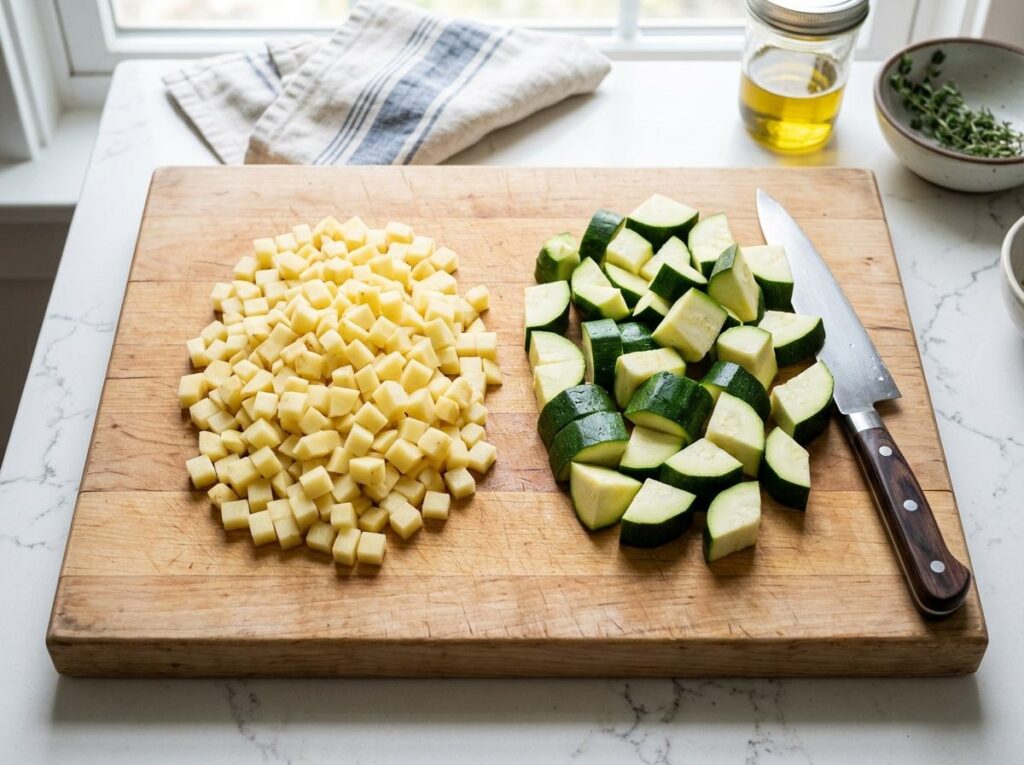
Cutting every ingredient into identical pieces sounds tidy, but it actually ignores how differently each one cooks.
- Cut dense vegetables like potatoes and carrots small, since they need more surface area to cook through in time.
- Cut quicker vegetables like zucchini or peppers larger, so they don’t overcook before everything else is ready.
- Leave protein in larger pieces or whole, since it usually needs the full cook time regardless.
Cut dense vegetables small so they cook through in time.
Cut fast cooking vegetables larger to slow them down slightly.
Keep protein whole or in larger pieces most of the time.
5. Season in Layers Instead of Dumping Everything On at Once
Tossing every seasoning onto the pan in one pile means some pieces get coated heavily while others barely get touched.
Season the protein directly first, on its own, before it ever meets the vegetables. Then season the vegetables separately once they’re arranged on the pan. That extra thirty seconds of layering means every single piece actually gets seasoned instead of just whatever happened to land near the spice pile.
Season the protein on its own before adding vegetables.
Season vegetables separately once they’re on the pan.
Dumping seasoning over everything in one pile.
Assuming tossing the pan evenly distributes it enough.
6. Give Every Ingredient Its Own Space So Nothing Steams Instead of Roasts
Crowding the pan is probably the single most common reason a sheet pan dinner comes out soft instead of properly roasted.
- Use a pan large enough that ingredients sit in a single layer.
- Leave visible gaps between pieces instead of pushing everything together.
- Split into two pans if the ingredients genuinely don’t fit with room to spare.
What to grab first
7. One Sauce Versus Three Separate Seasonings, Which Actually Saves Time
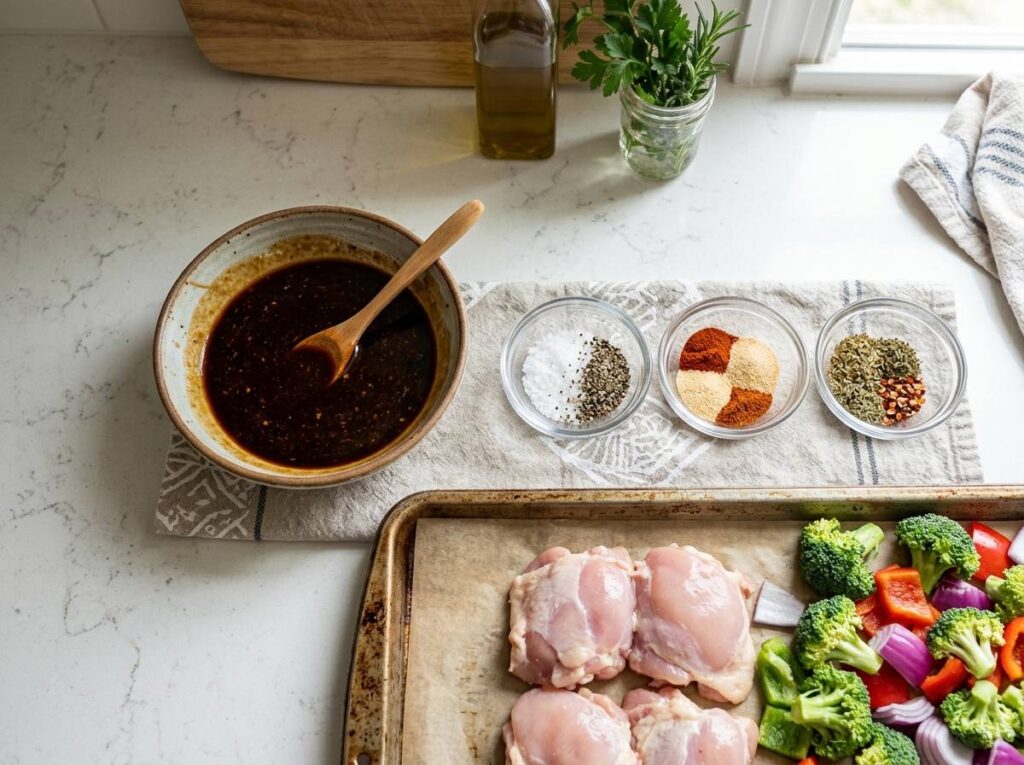
Both approaches work, but they trade off differently depending on how much time is actually available on a given night.
A single sauce brushed over everything is faster to prep but limits flavor variation across the pan. Three separate seasonings take a few extra minutes to portion out, but they let the protein and each vegetable taste distinct instead of everything tasting like the same glaze.
| One sauce | Three separate seasonings |
|---|---|
| Fastest option, minimal prep. | Takes a few extra minutes to portion. |
| Everything tastes similar across the pan. | Each element tastes distinct on its own. |
8. Stagger When Each Ingredient Joins the Pan Based on Density
Adding everything to the oven at the exact same moment ignores the fact that different ingredients simply need different amounts of time.
What used to mean raw potatoes sitting next to burnt zucchini on the same pan becomes a properly timed dish once the denser ingredients start first. Give potatoes or carrots a ten to fifteen minute head start before adding quicker vegetables to the same pan.
Raw potatoes sitting next to burnt zucchini on the same pan.
Every ingredient finishing at exactly the right point.
9. The One Ratio That Keeps a Sheet Pan Dinner From Feeling Unbalanced
Every step so far supports this same underlying goal, worth keeping in mind more than any single ingredient choice.
Aim for roughly a third protein, a third starch, and a third vegetables by volume on the pan. That rough ratio is what keeps a sheet pan dinner feeling like a real, complete meal instead of a pile of roasted vegetables with a little meat scattered on top.
Roughly a third protein, a third starch, a third vegetables, that ratio keeps the whole pan balanced.
10. Add a Fresh Element After the Pan Comes Out, Not Before It Goes In
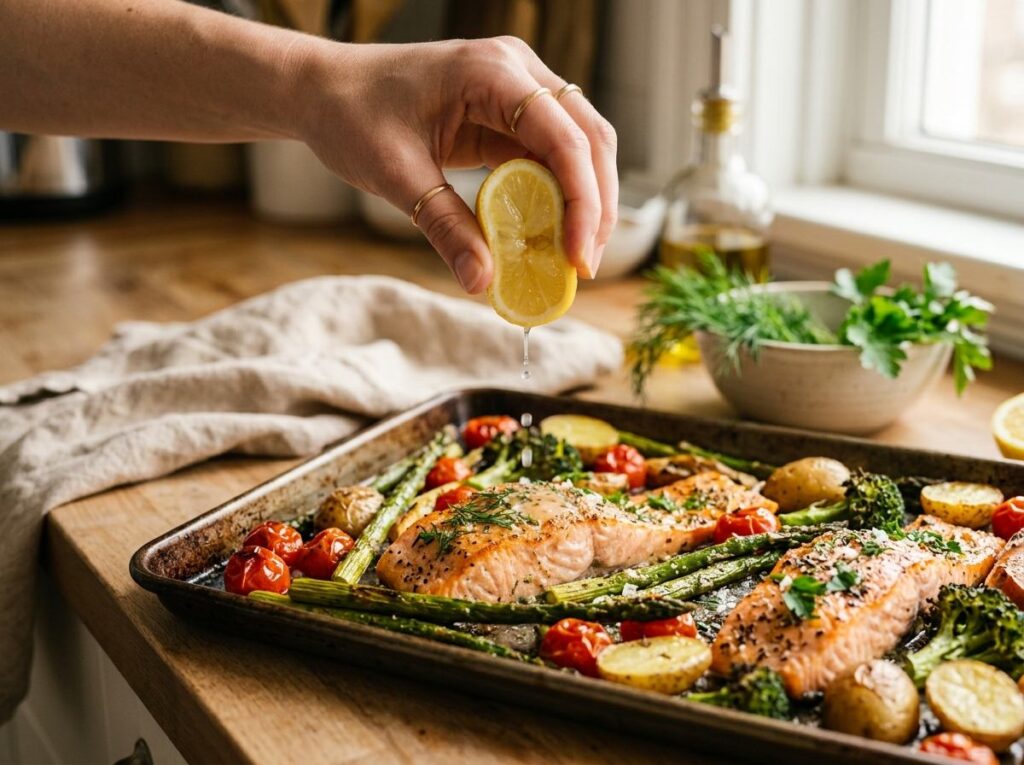
Every sheet pan dinner benefits from something that wasn’t cooked at all, added right at the very end.
A squeeze of lemon, a handful of fresh herbs, or a scattering of feta cheese right before serving adds brightness that nothing on the pan itself can provide after forty minutes in the oven. It’s a small step that makes the finished dish taste intentional rather than just roasted.
💡 Quick Tip
Keep a lemon on hand specifically for this step, it’s the fastest way to brighten almost any combination.
11. Five Protein and Vegetable Pairings That Always Work Together
Some combinations just make sense together, and knowing a few reliable pairings takes the guesswork out of building a new pan from scratch.
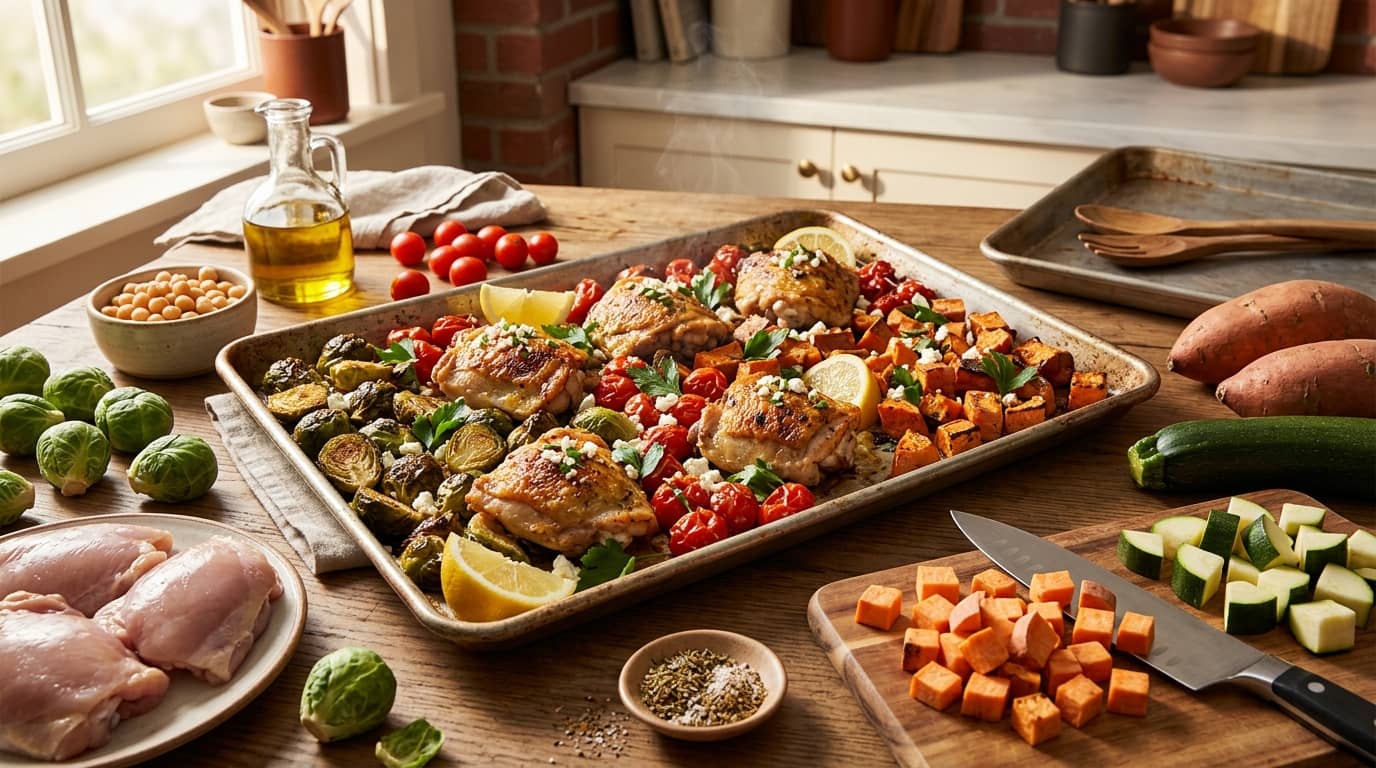
Chicken thighs pair naturally with Brussels sprouts and sweet potato. Salmon works well with asparagus. Sausage goes easily with peppers and onion, while tofu pairs nicely with broccoli, and shrimp with zucchini and cherry tomatoes.
12. Build the Formula Step by Step on an Actual Pan
Seeing the whole method laid out on one real example makes it click faster than reading each step separately.
- Season chicken thighs on their own, then place them on one side of a large pan.
- Toss cubed sweet potato and Brussels sprouts separately, staggering the sweet potato start by ten minutes.
- Roast at 425, adding a squeeze of lemon over everything right before serving.
Season the protein separately, then place it on the pan.
Stagger the vegetables based on how dense each one is.
Finish with a fresh element right before serving.
13. Choose the Right Pan Size So Ingredients Aren’t Crowded Together
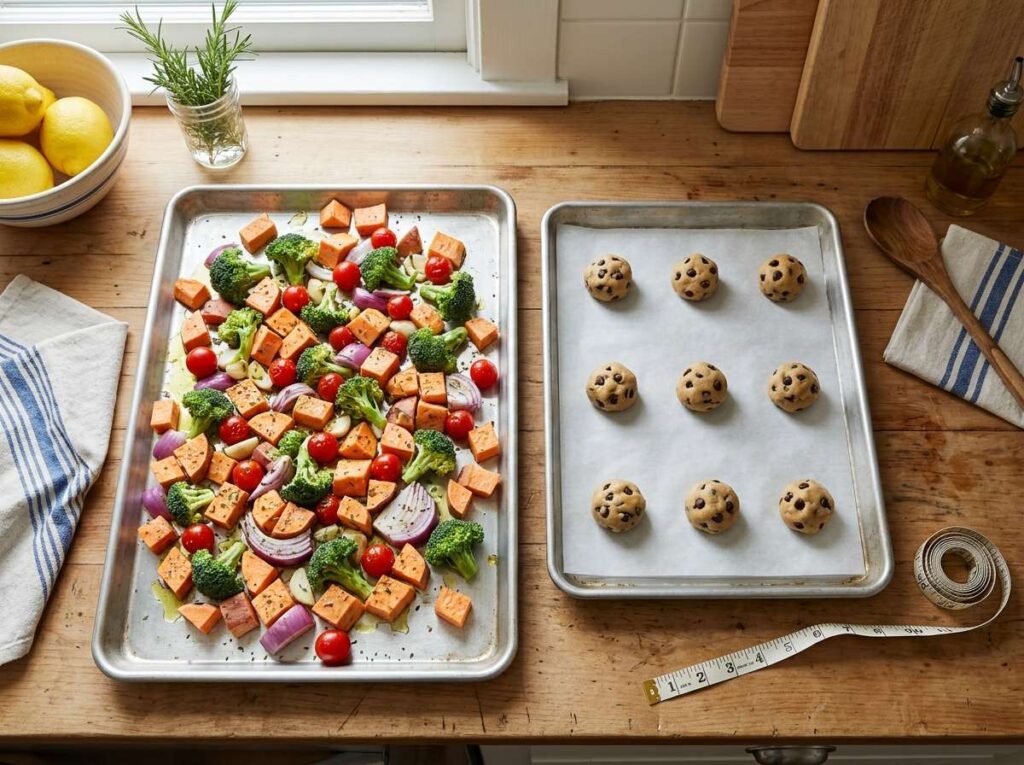
The pan itself is easy to overlook, but the wrong size undermines every other step in this formula before the oven even turns on.
A standard half sheet pan, roughly 13 by 18 inches, comfortably fits a full meal for two to three people without crowding. Smaller quarter sheet pans work for one or two servings, but trying to fit a full dinner for four onto one usually forces ingredients too close together.
14. Save the Dairy or Cheese Topping for the Very End of the Bake
Cheese added at the start of a long roast tends to turn greasy and separated instead of staying appealingly melted.
- Roast the protein and vegetables through most of the cook time first.
- Add shredded cheese or a dollop of feta only in the final five minutes.
- Watch closely, cheese goes from perfectly melted to burnt fast at high heat.
What to grab first
15. A Quick Reference for Building Any Sheet Pan Dinner From Scratch
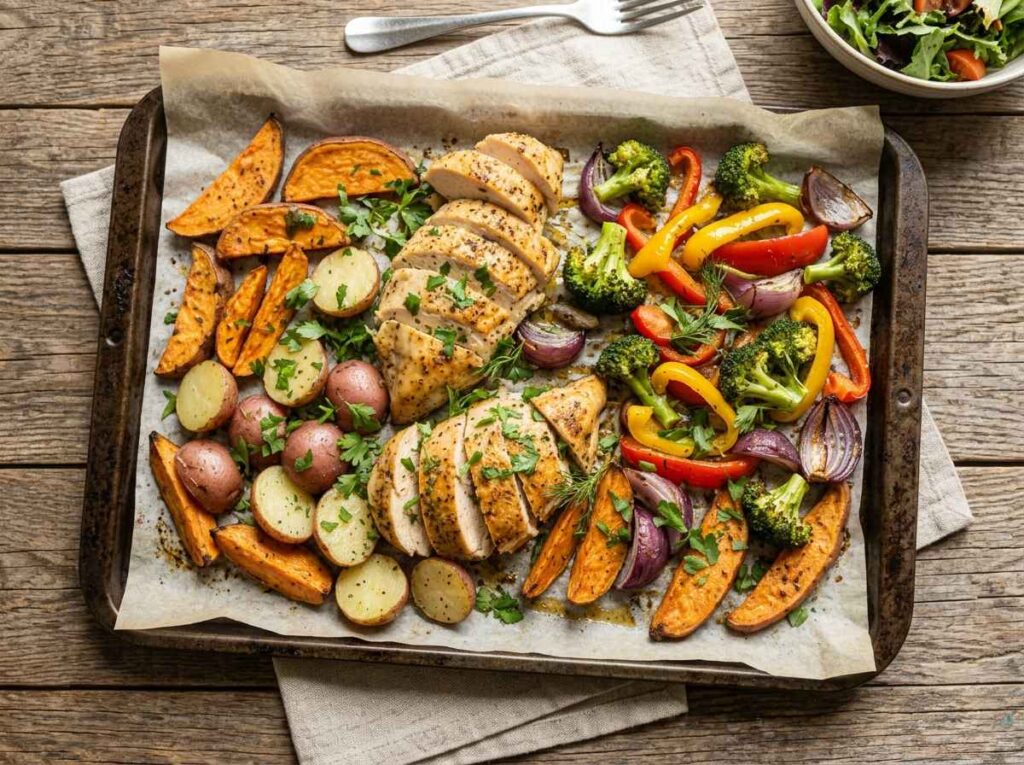
With all five steps covered, a short recap makes it easier to build a brand new combination without flipping back through the whole list.
Protein first, then a fast and slow vegetable pair, a starch that doesn’t need a pot, matched cut sizes, layered seasoning, staggered timing, and a fresh finish at the end.
Pick protein first, then build around it in order.
Finish with something fresh added after the bake.
Choosing every ingredient at once without an order.
Skipping the fresh finishing element entirely.
Conclusion
None of this requires memorizing recipes, just five decisions made in the same order each time. Once you know how to build a sheet pan dinner using this formula, almost anything in the fridge can turn into a complete, balanced meal without a recipe card in sight.
Start with a pairing you already know works, chicken and Brussels sprouts is hard to get wrong, then build confidence from there. The formula stays the same every time, only the specific protein and vegetables change based on what’s actually on hand that week.
Save this list for the next night the fridge feels like a question with no obvious answer.