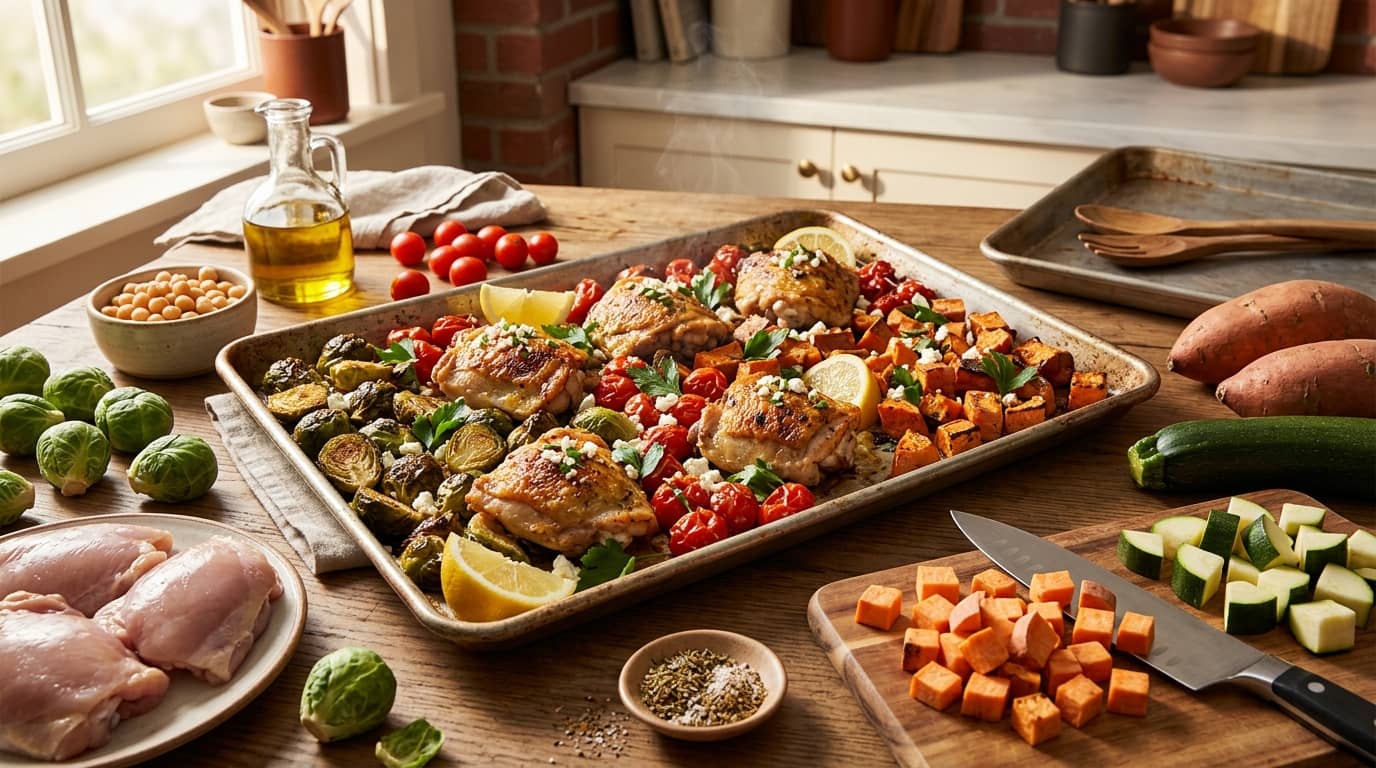
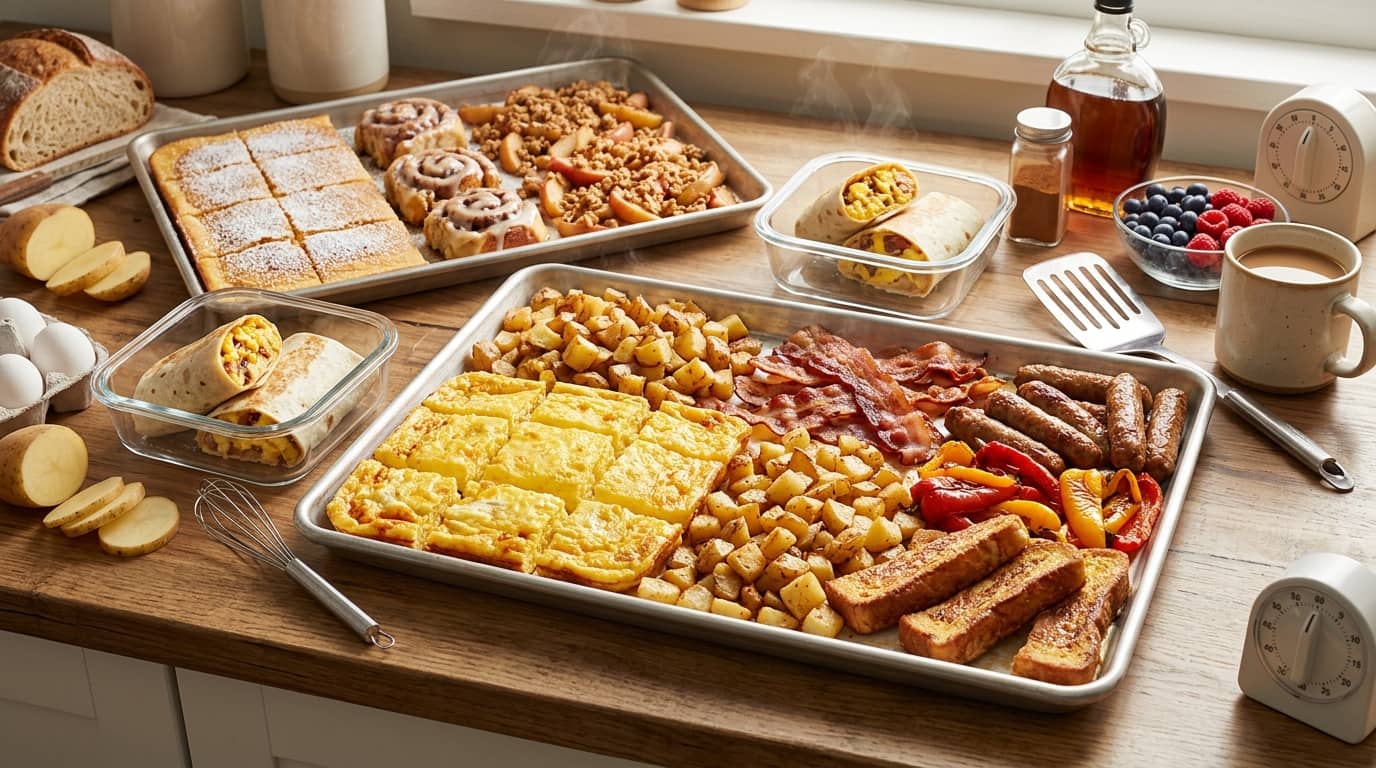
Sunday afternoon spent hovering over three or four different pans, timing everything so it all finishes at once, isn’t most people’s idea of meal prep that actually saves time. That’s usually where sheet pan meal prep recipes earn their keep, since one pan and one oven timer replace the juggling act entirely.
These eighteen ideas cover a real range, chicken, salmon, tofu, shrimp, built around the same basic method of protein and vegetables roasted together on a single tray. Portion them into containers once they’re done, and the week’s lunches or dinners are handled without touching a stove again until Thursday.
None of these require special equipment beyond a sheet pan and some parchment paper. What they do require is a little attention to cut size and timing, which this list covers alongside the actual combinations, so the vegetables come out roasted instead of steamed and mushy.
Grab a couple sheet pans and get ready to make prep day genuinely simpler.
1. Honey Garlic Chicken and Broccoli Portioned Across Five Containers
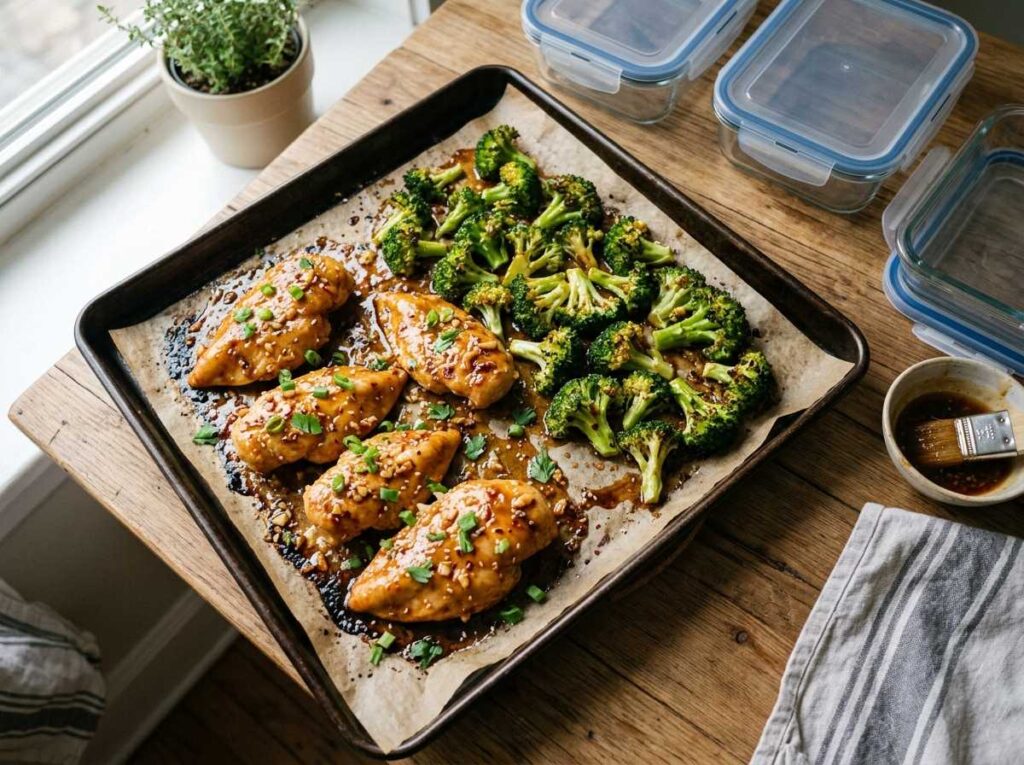
This combination earns its spot first because it’s genuinely hard to mess up, even for someone newer to meal prep.
Toss chicken thighs and broccoli florets with a honey garlic glaze, spread in a single layer, and roast at 400 degrees for about 25 minutes. Portion into five containers with rice once cooled, and lunch is handled for most of the work week.
2. Greek Chicken and Vegetables Roasted With Just Lemon and Oregano
Some of the best sheet pan meals don’t need a long list of ingredients, just a few that actually complement each other.
Toss chicken breast, zucchini, red onion, and cherry tomatoes with olive oil, lemon juice, and dried oregano, then roast at 425 for about 20 minutes. The lemon brightens everything without needing a separate sauce or dressing added later.
💡 Quick Tip
Add crumbled feta after roasting, not before, so it doesn’t melt into a greasy layer on the pan.
3. Sausage and Peppers Built Around One Pan and One Cleanup
Sliced sausage already comes fully or partially cooked, which shortens the whole process compared to raw proteins that need a longer roast.
Slice smoked sausage and toss with bell peppers and onion, spread on a lined sheet pan, and roast at 400 for about 20 minutes. Line the pan with parchment first and cleanup is genuinely just folding the paper up and tossing it, no scrubbing required.
4. Fajita Chicken Sheet Pan That Doubles as Three Different Meals
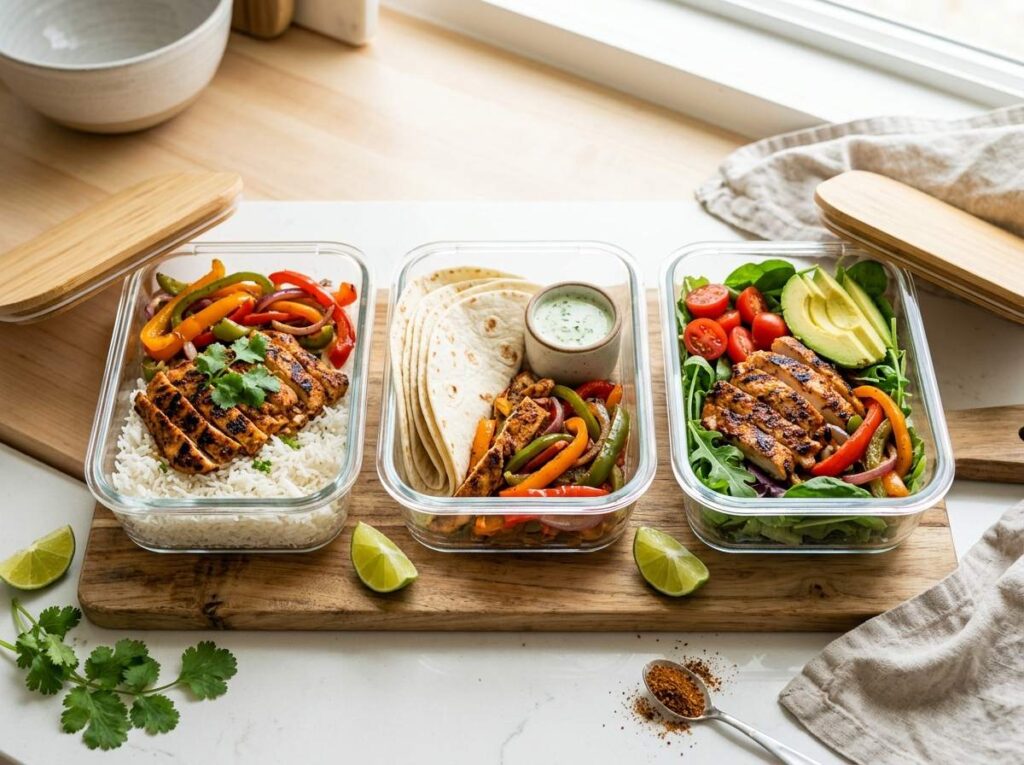
One batch of fajita chicken and peppers doesn’t have to mean fajitas every single day of the week, it can stretch further than that.
- Roast sliced chicken breast with peppers and onion tossed in fajita seasoning.
- Portion a third into containers with rice for burrito bowls.
- Save another third for tacos and the last third for a quick salad topper.
Roast the seasoned chicken and peppers together on one pan.
Split the batch into thirds before storing anything.
Store each third separately, labeled for its intended meal.
5. Balsamic Salmon and Asparagus Timed So Nothing Overcooks
Salmon and asparagus cook at different rates, and adding them to the pan at the same time usually means one of them finishes wrong.
Roast the salmon fillets alone for about 8 minutes first, then add the asparagus to the same pan for the final 7 minutes. That staggered timing keeps the salmon from drying out while still giving the asparagus enough time to roast properly.
Start the salmon alone for the first 8 minutes.
Add asparagus to the same pan partway through.
Adding both to the pan at exactly the same time.
Ending up with dry salmon or undercooked asparagus.
6. Cutting Vegetables the Same Size Is the Real Secret to Even Roasting
Uneven pieces are the most common reason a sheet pan comes out with some vegetables burnt and others still raw in the center.
- Cut all vegetables to roughly the same size before they hit the pan.
- Group vegetables with similar cook times together on the same side.
- Leave enough space between pieces so they roast instead of steam.
What to grab first
7. Parchment Paper Versus Foil for Easier Sheet Pan Cleanup
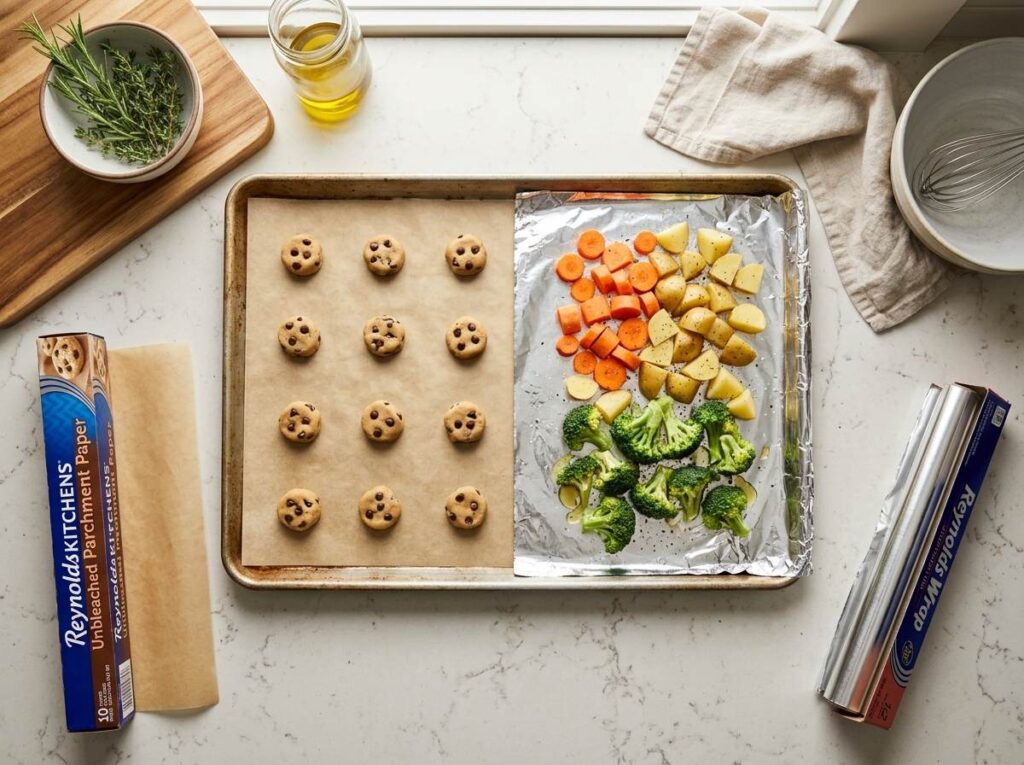
Both liners protect the pan, but they behave differently once food and sauce actually hit them during roasting.
Parchment paper releases food cleanly without sticking, even with sugary glazes like honey or teriyaki. Foil handles high heat better and works well for anything that needs a very hot oven, but sticky sauces can bond to it in a way that makes cleanup more of a fight.
| Parchment paper | Foil |
|---|---|
| Releases sticky glazes cleanly. | Sugary sauces can bond and stick. |
| Best under about 425 degrees. | Handles very high heat well. |
8. Teriyaki Tofu and Vegetables for a Fully Plant Based Prep Day
Tofu has a reputation for being bland on a sheet pan, but that’s almost always a pressing and sauce timing issue, not a tofu problem.
Press extra firm tofu for 15 minutes, cube it, toss with cornstarch and teriyaki sauce, and roast alongside broccoli and carrots at 425 for 25 minutes. The cornstarch is what gives it a slightly crisp edge instead of a soft, steamed texture.
Soft, steamed tofu with almost no texture to it.
Crisp edged tofu that holds up well through the week.
9. The One Rule That Keeps Every Sheet Pan Meal From Turning Soggy
Every combination on this list runs into the same risk if one basic rule gets ignored.
Never crowd the pan. Vegetables and protein need actual space between pieces to let hot air circulate and roast the surface, instead of trapping steam and turning everything soft. If ingredients don’t fit in a single layer with a little breathing room, use two pans instead of one overcrowded one.
Give everything room to breathe, or use a second pan instead of crowding one.
10. Cajun Shrimp and Vegetables That Cook in Under Fifteen Minutes
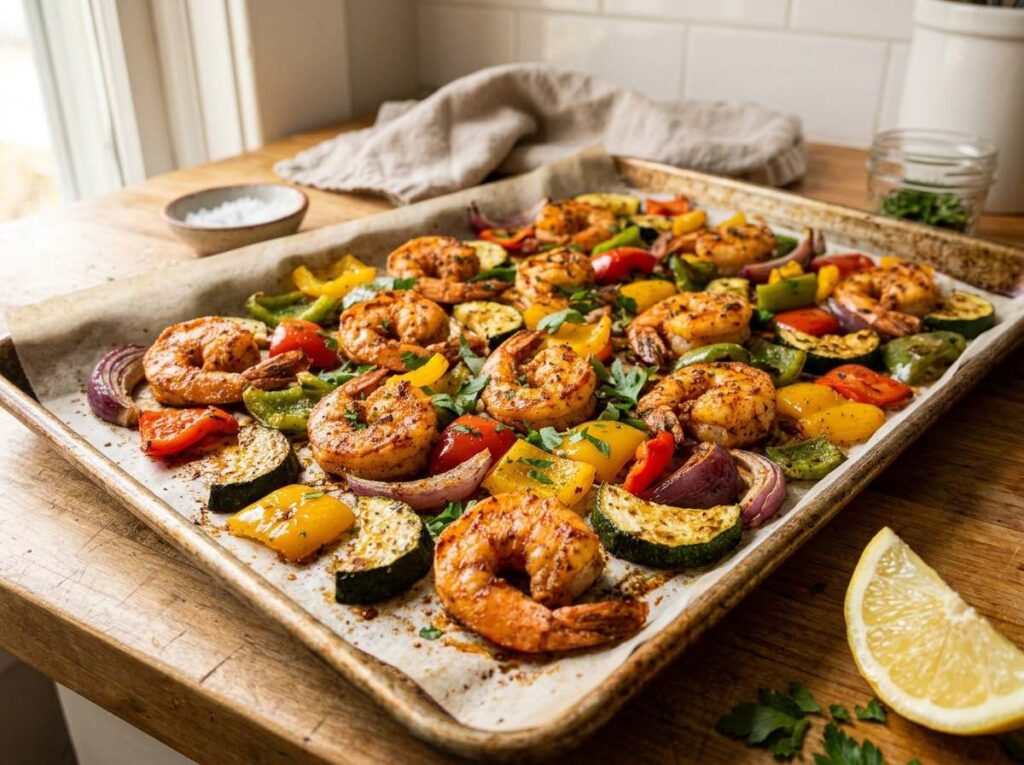
Shrimp is one of the fastest proteins to prep, which makes it a good option on a night the rest of prep day ran long.
Toss shrimp with bell pepper and zucchini in cajun seasoning and olive oil, then roast at 425 for just 10 to 12 minutes. Watch it closely near the end, shrimp goes from perfectly cooked to rubbery within just a couple extra minutes.
💡 Quick Tip
Shrimp is done the moment it turns pink and opaque, pull it right at that point rather than waiting longer.
11. Turkey Meatballs and Roasted Vegetables Portioned for Five Lunches
Ground turkey meatballs roasted alongside vegetables cover both protein and sides in one single pan, no separate cooking step needed.
Mix ground turkey with breadcrumbs, egg, and Italian seasoning, roll into balls, and roast alongside broccoli and cherry tomatoes at 400 for 20 minutes. Portion into five containers with a scoop of rice or quinoa, and lunch is set for most of the work week.
12. Buffalo Chicken and Sweet Potatoes Layered on One Pan
Buffalo sauce tends to overpower whatever’s near it, so keeping the chicken and sweet potatoes in their own separate sections of the pan matters more than it seems.
- Toss diced chicken thighs in buffalo sauce and place on one half of the pan.
- Toss cubed sweet potato in olive oil and seasoning on the other half.
- Roast at 425 for 25 minutes, then combine only after portioning into containers.
Keep the buffalo chicken on one clear section of the pan.
Keep the sweet potato separate on the other side.
Combine the two only once portioning into containers.
13. Five Vegetables That Roast Perfectly Alongside Any Protein
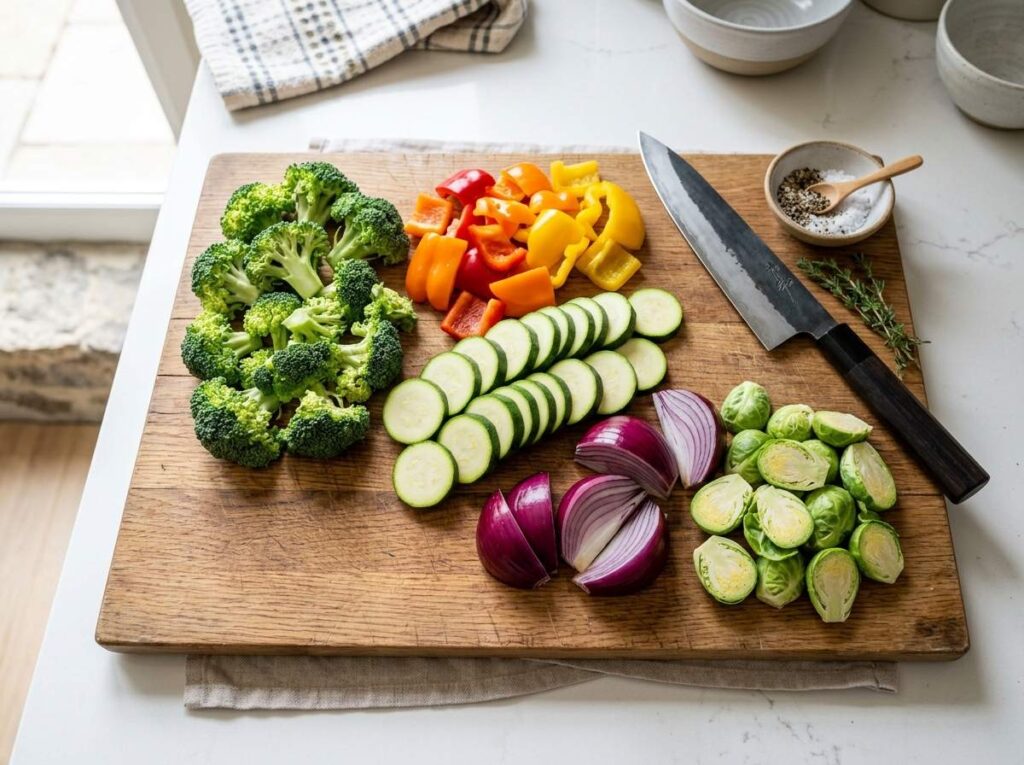
Some vegetables handle a sheet pan better than others, holding their texture instead of turning limp or falling apart during roasting.
Broccoli, bell peppers, zucchini, red onion, and Brussels sprouts all roast reliably well with almost any protein and seasoning combination on this list, making them the easiest starting point for building your own version.
14. Pesto Chicken and Tomatoes Built Around a Jarred Sauce Shortcut
A good jarred pesto skips a whole step without sacrificing much flavor, and it works especially well brushed onto chicken before roasting.
- Brush chicken breasts generously with jarred pesto sauce.
- Scatter cherry tomatoes around the chicken on the same pan.
- Roast at 400 for about 22 minutes, then top with fresh basil if available.
What to grab first
15. Staggering the Vegetables Instead of Adding Everything at Once
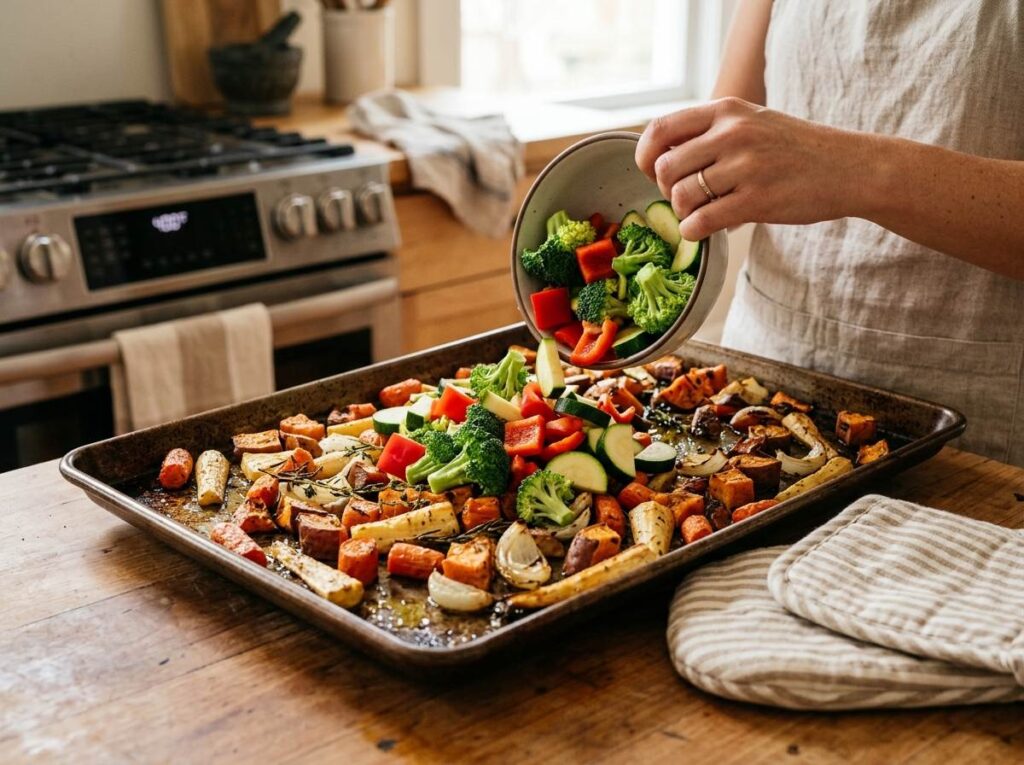
Dense vegetables and delicate ones don’t cook at the same speed, and tossing them onto the pan together usually leaves one or the other wrong.
Root vegetables like potatoes and carrots go in first, since they need the longest roast time. Softer vegetables like zucchini or cherry tomatoes go in partway through, giving each ingredient the exact amount of time it actually needs.
Start dense vegetables like potatoes first.
Add softer vegetables partway through the roast.
Adding every vegetable to the pan at the same time.
Ending up with raw potatoes and mushy tomatoes.
16. Storage Containers Versus Freezing, Which One Fits Your Week Better
Both storage methods work for sheet pan meals, but they suit different weeks depending on how far ahead you’re actually planning.
Fridge storage in containers works well for meals eaten within four to five days, keeping texture closer to fresh. Freezing extends that window to a couple months, but vegetables can lose some texture on reheating, so it fits better for proteins and heartier vegetables than delicate ones.
| Fridge containers | Freezer |
|---|---|
| Best within 4 to 5 days. | Good for up to a couple months. |
| Keeps texture closest to fresh. | Vegetables can soften on reheat. |
17. Blackened Chicken and Zucchini Cooked Hot and Fast
A hotter oven than most of the other recipes on this list gives blackened seasoning the char it actually needs to taste right.
Toss chicken breast strips and sliced zucchini in blackened seasoning and a little oil, then roast at 450 for 15 minutes. That higher heat is what creates the slightly charred edges blackened seasoning is supposed to have, something a gentler 375 degree oven can’t really deliver.
Blackened seasoning that never actually gets that char.
A hot oven that actually delivers the charred edges.
18. How to Batch Two Sheet Pans at Once and Cut Prep Time in Half
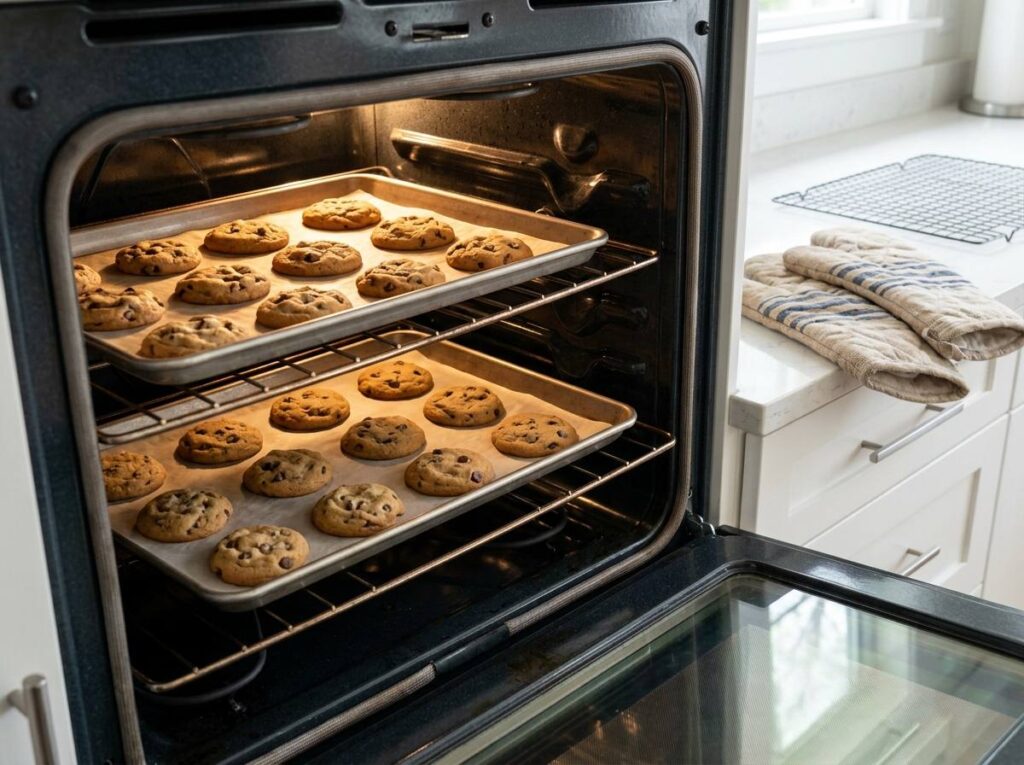
Running two ovens isn’t realistic for most kitchens, but running two pans in one oven at once is easier than it sounds.
Place one pan on the upper rack and one on the lower rack, then swap their positions halfway through the roast time. That single swap evens out the heat difference between racks, so both pans finish close to the same time instead of one being noticeably more done than the other.
Swap the pans halfway through, that one move evens out two ovens’ worth of prep in one session.
Conclusion
None of this requires more than a couple sheet pans, some parchment paper, and a little attention to timing. These sheet pan meal prep recipes cover enough range that a whole week of lunches or dinners can come together in one afternoon instead of scattered across five separate cooking sessions.
Start with something forgiving, the honey garlic chicken or the sausage and peppers, before working up to the trickier timing combinations like salmon and asparagus. Once cutting vegetables evenly and staggering cook times becomes second nature, almost any protein and vegetable combination can get the same treatment.
Save this list for the next Sunday that needs the whole week handled in one sitting.